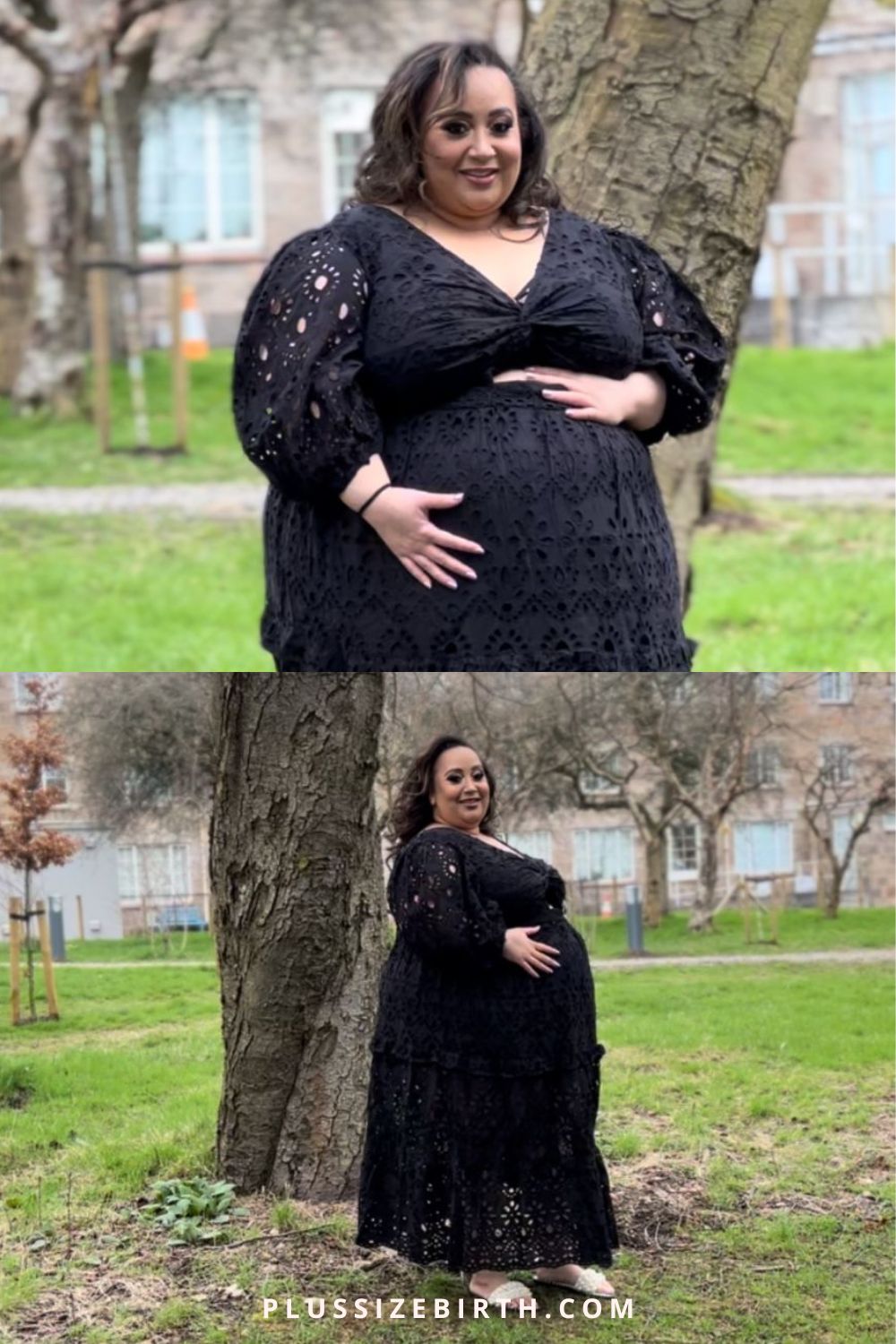

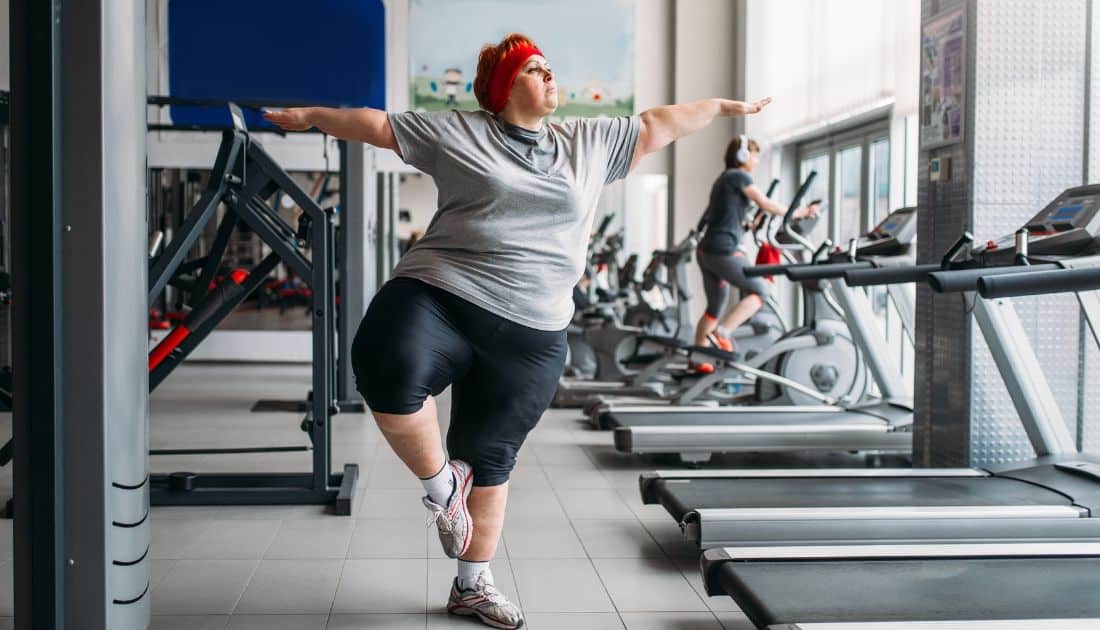
Imani left her OB’s office in March 2025 with a printout that said “moderate exercise recommended” across the top in 12-point Arial, and not one other word of guidance underneath. She was 33, a size 22, 19 weeks along, and had never been to a gym in her life. The nurse who handed her the page smiled the way people smile when they have already moved on to the next chart. Imani sat in the parking lot trying to figure out what “moderate” was supposed to mean in a body that had spent thirty-three years not exercising. She typed “pregnancy workout plus size” into her phone and got six minutes of videos with size-6 women in Beyond Yoga sets. She put the phone face-down. This article is the version of the conversation her OB did not have time for.
The harder question underneath Imani’s printout is not “what is moderate.” It is what does pregnancy fitness even look like in a plus-size body when the prenatal yoga class is full of women in their first pair of $108 leggings, when the only modifications the instructor knows are for a B cup, and when the medical advice you get assumes you already know how to read your own effort. The honest answer is that it looks different than what social media sells, and it is more doable than most plus-size women have been told.
What ACOG actually says
The American College of Obstetricians and Gynecologists published Committee Opinion 804 in April 2020 and reaffirmed it in 2023. The recommendation is 150 minutes per week of moderate-intensity aerobic activity for healthy pregnancies, and it explicitly includes pregnancies categorized as obese by BMI. Exercise during pregnancy lowers the risk of gestational diabetes, hypertensive disorders, preterm birth, cesarean delivery, and excessive weight gain. The risks of not exercising are higher than the risks of exercising for almost every pregnant person without a specific contraindication.
ACOG also clears light-to-moderate resistance training in the same document, and the same Committee Opinion confirms strength training with progressive load is safe for healthy pregnancies. Dr. Heather Irobunda, the NYC-based OB-GYN who serves as Peloton’s maternal health advisor, has made the point in interviews that the average pregnant patient gets less guidance about exercise than about car-seat installation.
Practically, 150 minutes breaks down to 30 minutes five days a week, or 22 minutes seven days a week, or three 50-minute walks. Shape matters less than the total.
The “moderate” question, and why heart rate is a bad answer
For two decades the standard answer was “keep your heart rate under 140.” ACOG retired that guidance, and Committee Opinion 804 spells out why: pregnancy raises baseline resting heart rate by 10 to 20 beats per minute, and the elevation is not uniform across people or trimesters. A 140 cap is meaningless if your resting heart rate has already moved from 70 to 88. The number does not map to effort the way it does outside pregnancy.
The two replacements ACOG recommends are the talk test and the Borg rating of perceived exertion. The talk test is simpler. Moderate intensity is the pace at which you can speak in full sentences but not sing. If you cannot finish a sentence without a breath, you have crossed into vigorous. If you can sing, you are below moderate. The Borg scale ACOG uses is 0-to-10, with moderate at 5 to 6. Five is “I notice I am breathing.” Six is “I notice I am working, but I could keep this up for a while.”
Dr. Sarah Ellis Duvall, a physical therapist who founded Core Exercise Solutions, teaches the talk test as the single most useful tool a pregnant beginner has, because it self-calibrates to fitness level. A walk that feels moderate for a marathoner is a saunter; the same walk for a size-22 first-time exerciser at 19 weeks is a real workout. Both are correct.
What’s safe: the actual list
ACOG’s safe list for healthy pregnancies, including patients with higher BMIs and patients new to exercise, is shorter than the internet suggests. Walking is the top of the list. Swimming and water aerobics are the gentlest on joints and the hardest to overheat in, both of which matter more at a higher weight. Stationary cycling is recommended specifically because it removes the fall risk that comes with center-of-gravity changes. Prenatal yoga and prenatal Pilates are cleared, with a note about avoiding any pose flat on the back after the first trimester. Light-to-moderate strength training is cleared. Low-impact aerobics including modified dance and step classes are cleared.
What ACOG warns against: contact sports (basketball, soccer, ice hockey) because of abdominal trauma risk. High-fall-risk activities (downhill skiing, surfing, off-road cycling, gymnastics, horseback riding). Scuba diving at any depth, because the fetus is not protected against decompression sickness. Hot yoga and hot Pilates because of overheating risk, especially in the first trimester. Exercise at altitude above 6,000 feet if you are not acclimatized. And any supine exercise after about week 16, because the weight of the uterus on the inferior vena cava reduces blood return to the heart and can drop your blood pressure.
A 2022 study in Obstetrics & Gynecology on exercise interventions in pregnancies categorized as obese found that supervised moderate exercise reduced gestational diabetes by roughly 30 percent versus no-intervention controls, with adverse events essentially identical between groups. The harm comes from inactivity, not activity.
Trimester by trimester
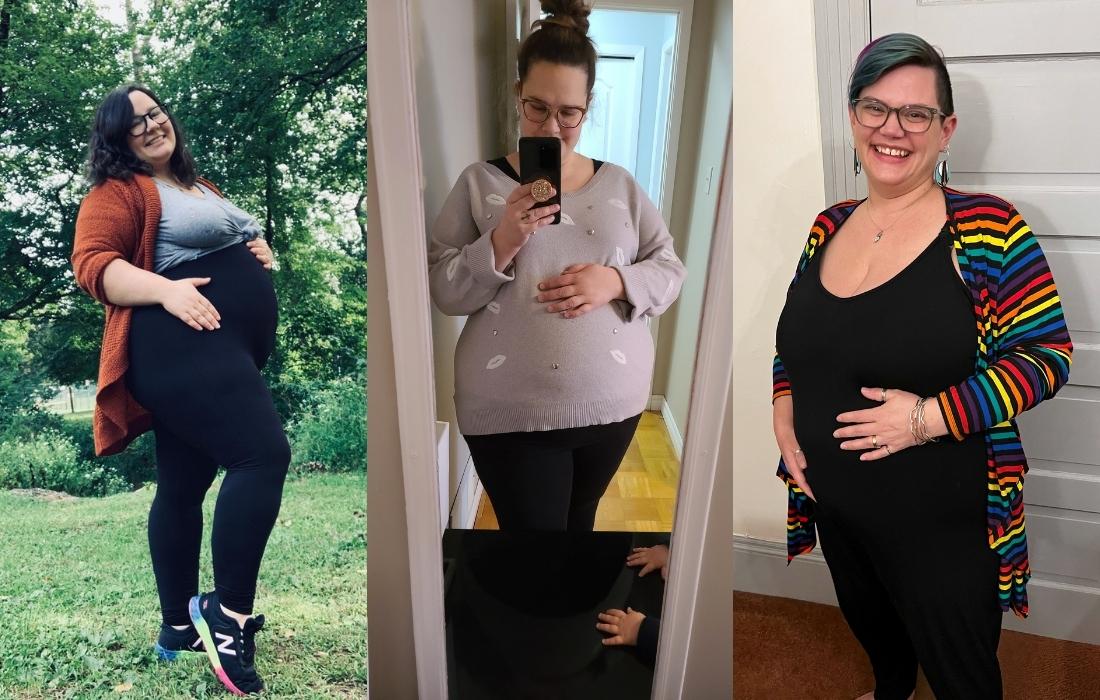
The first trimester, weeks 1 through 13, is the maintain-baseline window. If you were walking before pregnancy, keep walking. If you were not, start small and stay there, because first-trimester fatigue and nausea are not the time to launch a program. Twenty minutes of walking, three times a week, is an adequate floor. Hydration matters more than usual because plasma volume is expanding, and overheating is the biggest first-trimester risk, especially in the first six weeks when neural tube development is most temperature-sensitive.
The second trimester, weeks 14 through 27, is the peak window. Energy returns. Nausea lifts. The belly is showing but has not yet redistributed the center of gravity enough to make most movement awkward. This is when the bulk of the 150 weekly minutes gets earned, and the window for adding light strength work. Brittany Robles, an OB-GYN who founded the Postpartum Trainer Academy, calls weeks 14 through 24 “the golden window,” and her clinical position is that women who use this window to build strength have measurably easier third trimesters and shorter labors.
The third trimester, weeks 28 through delivery, is the focus-shifts window. Aerobic minutes do not go away, but they slow down. The work moves toward pelvic floor coordination, posture, and mechanical preparation for labor. Walking becomes shorter and more frequent, three 10-minute walks instead of one 30. Strength work moves to bodyweight or very light load with an emphasis on hip mobility and breath. Diastasis-recti screening becomes important, and any exercise that domes the abdomen forward is dropped. The third-trimester goal is not to add fitness. It is to preserve what you built in the second.
Five prenatal-safe strength moves
These five are the ones Dr. Sarah Ellis Duvall and Brittany Robles teach across body sizes, and they require either no equipment or a resistance band and a pair of light dumbbells.
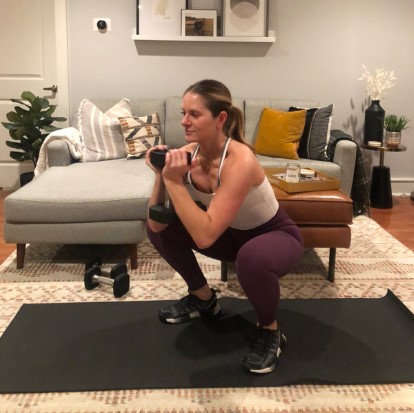
Goblet squat to a chair. Stand in front of a sturdy chair, feet a little wider than shoulder width, toes turned slightly out. Hold a 5-to-10 pound dumbbell at chest height with both hands. Sit back to the chair as if you are about to land on it, tap the seat, and stand back up. Three sets of 8 to 10. This trains the mechanics of getting up and down from the toilet at 38 weeks, which is not a joke.
Wall push-up. Stand an arm’s length from a wall, hands at shoulder height, slightly wider than the shoulders. Lower the chest in a controlled count of three, then press back. Three sets of 10. The wall version protects the abdomen and the wrists.
Bird dog with breath. On hands and knees, hands under shoulders. Extend the right arm and the left leg, exhale as you reach, hold for two seconds, return. Switch sides. Three sets of 8 per side. You are training the deep core to coordinate with the diaphragm, the foundation of safe lifting later.
Glute bridge. On your back, knees bent, feet flat. One of the few supine exercises that stays safe past week 16, because the duration is short and you can elevate the upper back on a pillow wedge. Press through the heels, lift the hips to a line from knees to shoulders, lower with control. Three sets of 12. Trains the posterior chain that carries a 30-to-40-pound load shift over nine months.
Side-lying clamshell. Lie on one side, knees bent at 90 degrees, hips stacked. Keeping the feet together, open the top knee like a clamshell. Three sets of 15 per side. Targets the glute medius, the muscle that keeps the pelvis level when you walk and the one that gives out first when pregnancy hip pain starts.
Four mobility flows that actually help
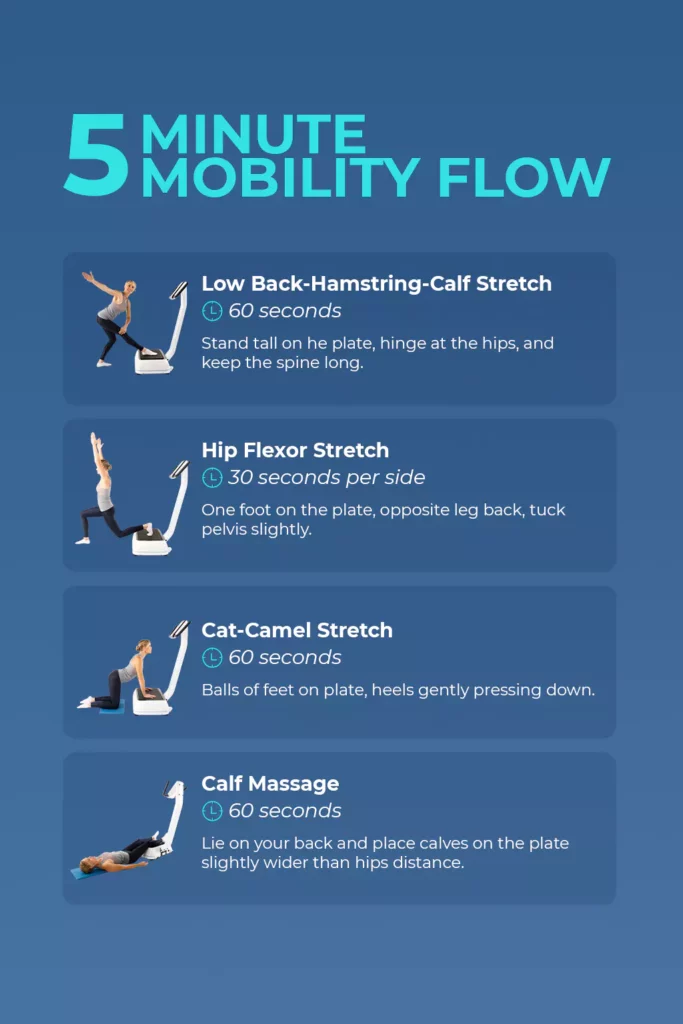
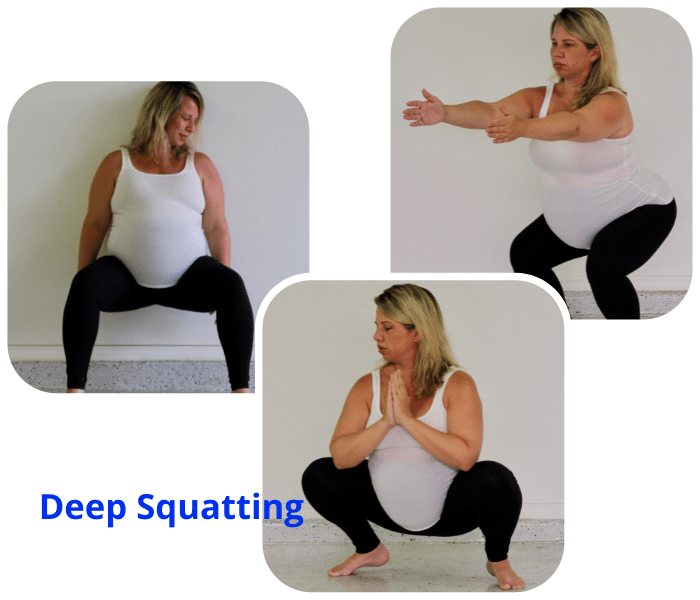
Mobility is where prenatal yoga earns its place, and it does not require a $30 class. Cat-cow, five slow rounds twice a day, keeps the lumbar spine from locking up. Deep squat hold with hands in prayer at the chest, 30 seconds building to 90, opens the hips for the position the pelvis needs for delivery. Pigeon variation with the front leg low and the back leg straight, two minutes per side, counters the sciatic nerve compression that arrives in trimester three. Child’s pose with knees wide, 90 seconds at a time, decompresses the low back. Glo’s prenatal series teaches these in 10-minute blocks.
The pelvic floor coordination piece nobody explains
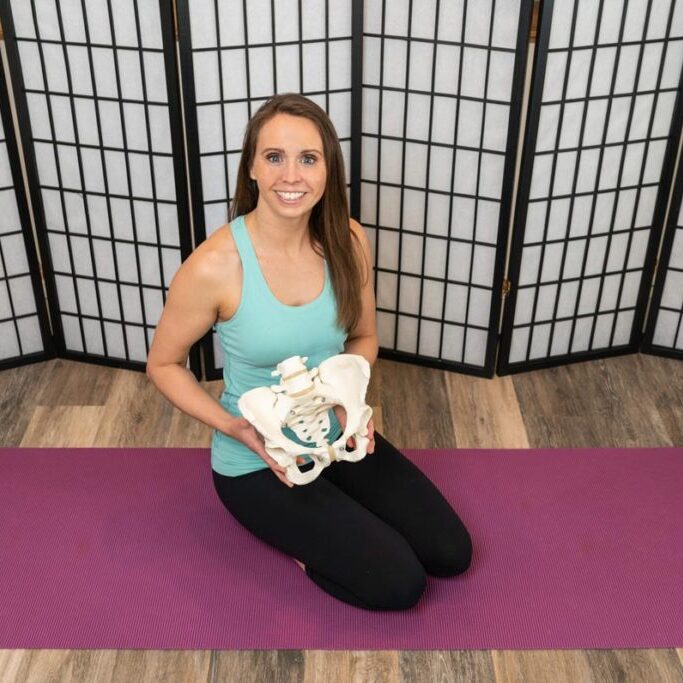
The pelvic floor is a hammock of muscles from the pubic bone to the tailbone, and it is the part of pregnancy fitness that gets ignored or reduced to “do your Kegels.” The actual work is teaching the pelvic floor to coordinate with the diaphragm, not just to contract.
The breath cue, in plain language: when you inhale, the diaphragm drops, the belly expands gently, and the pelvic floor releases downward. When you exhale, the diaphragm lifts, the belly draws gently in, and the pelvic floor lifts. Every breath is a small coordination rep. “Just do Kegels” is bad advice because it teaches the floor to contract but not to release, and a pelvic floor that cannot release does not push a baby out efficiently. The Bloom Method, founded by Brooke Cates, is the diastasis-friendly program built around this coordination piece.
Homework: three rounds of five connected breaths, twice a day, with one hand on the belly and one hand low on the pelvis. Feel the rise on the inhale and the lift on the exhale. It is more useful than any single thing on this list.
Gear that actually fits
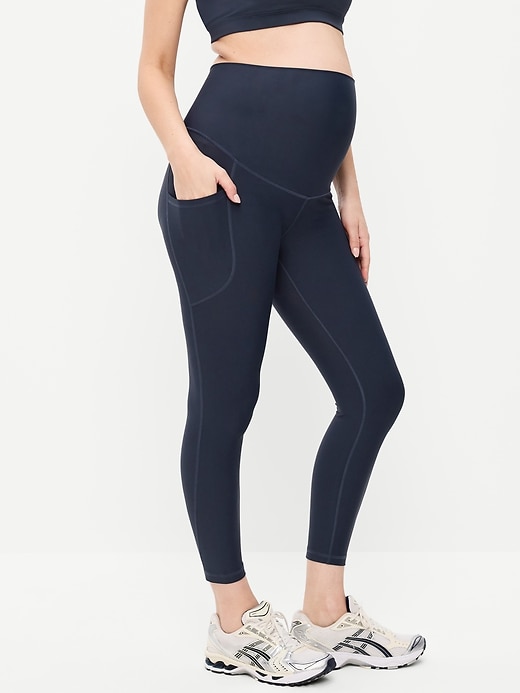
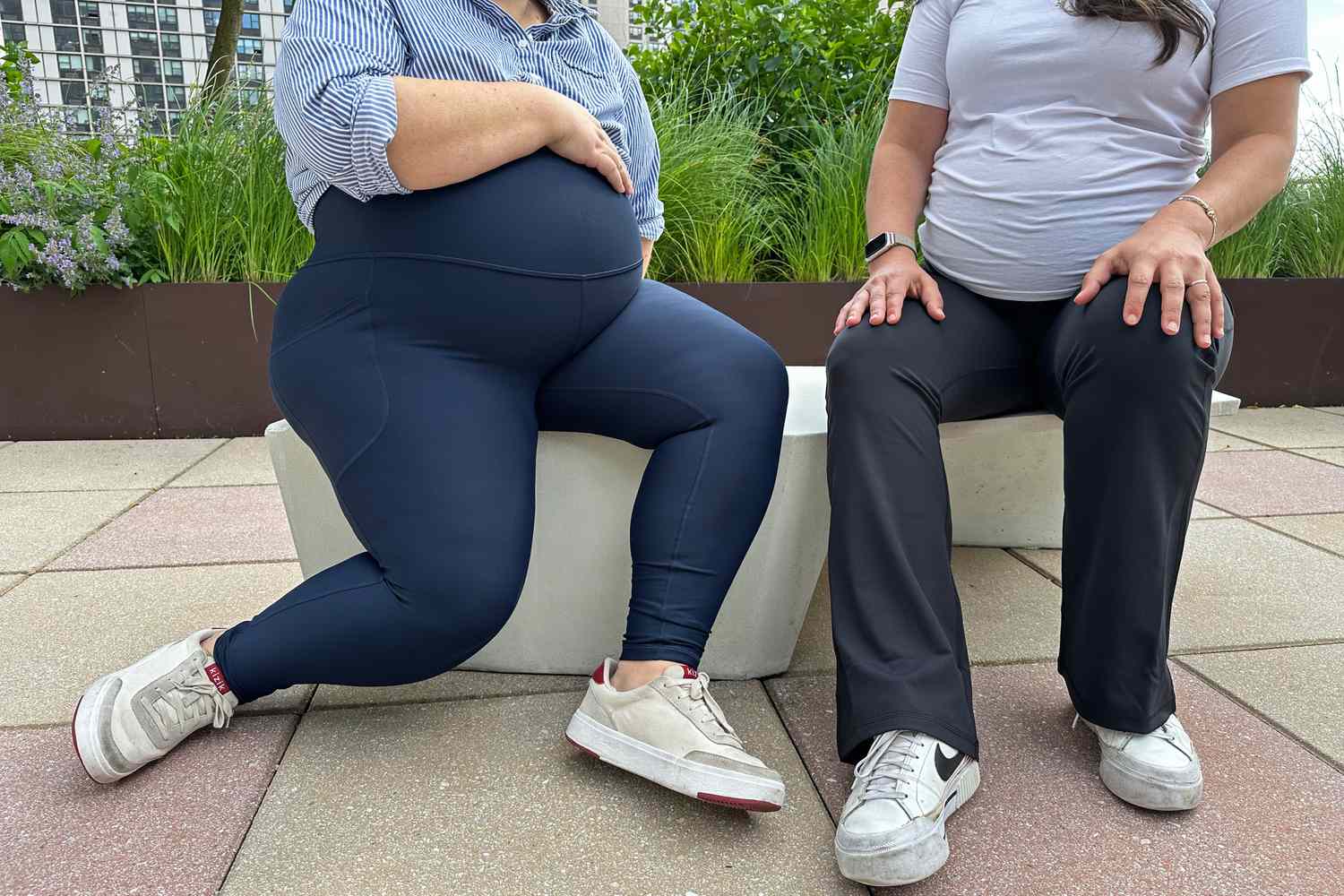
The activewear problem at a size 22 is real. Most maternity activewear stops at XL, about a size 16. Old Navy Active Maternity goes to 4X and runs honest to size; the high-waist Powersoft maternity leggings are $35 and hold the belly without binding. Beyond Yoga Maternity Spacedye goes to 3X, the leggings are $99 and worth it for the second half because the fabric does not lose its recovery. Belly Bandit makes a belly support band that extends the comfortable walking window into the third trimester; the Upsie Belly model goes to 3X. Kindred Bravely makes maternity sports bras to 2X and a band size of 48, the only realistic option for women starting with a DDD or larger.
Shoes matter more than they sound like they should. Foot width increases in pregnancy because relaxin loosens the ligaments of the feet too, and a shoe that fit at week 10 will not at week 30. A wide-toe-box walking shoe with real arch support is the most-used piece of equipment on this list; the Brooks Ghost in a wide width is the most-recommended option in plus-size prenatal forums.
Apps and programs worth the money
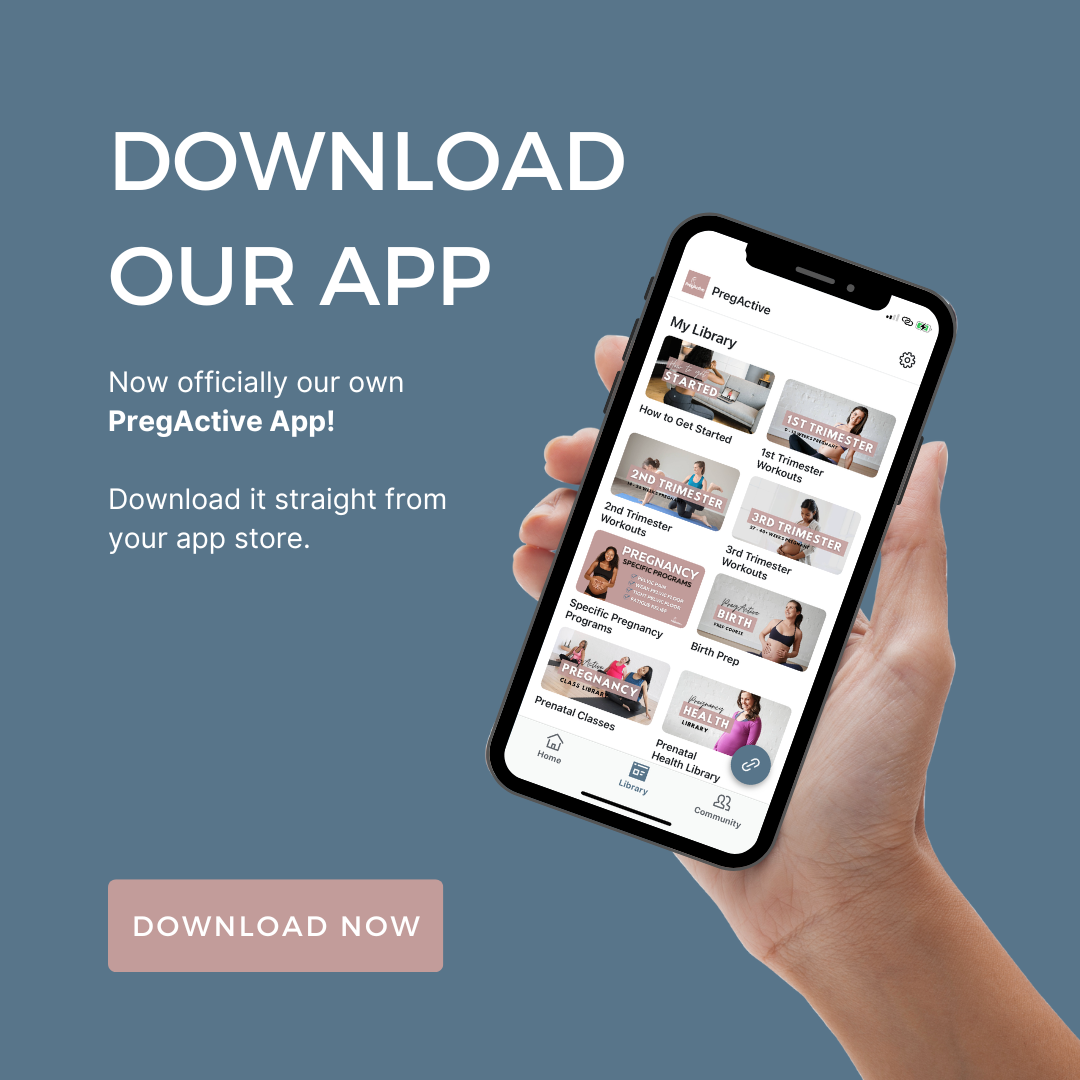
Expecting and Empowered,
built by a perinatal-fitness team including a pelvic floor PT, costs about $20 a month and gives a week-by-week strength and cardio program. Plus-size modifications are not advertised but are built in, because the programming is based on stage of pregnancy rather than fitness level. The Bloom Method, mentioned above, is the diastasis-friendly choice. Glo has a prenatal yoga library with instructors who cue plus-size modifications, including Jacqui Bonwell, whose sequences are built for bodies that need wider stances and propped belly space. None of these will solve the fact that prenatal yoga in person is often a size-6 environment. They will let you do the work at home in a wide T-shirt that fits.
Red flags to stop immediately

Stop and call your provider today if any of these happen during or after exercise: vaginal bleeding, fluid leaking that is not urine, regular painful contractions before 37 weeks, dizziness or feeling like you are going to pass out, headache that does not lift, chest pain, calf pain or swelling on one side only, decreased fetal movement after 24 weeks, or muscle weakness that affects balance. These are ACOG’s listed warning signs from Committee Opinion 804. The list is short on purpose. Everything else - breathlessness, leg burn, the need to sit for five minutes - is information about pacing.
Two more practical signals that come up consistently in prenatal-fitness PT and OB-GYN guidance: if your urine is darker than pale yellow during or after a workout, you’re underhydrated and need 16 ounces before the next session. If you’re losing weight in the second or third trimester while exercising, you’re doing too much or eating too little, and that needs a provider conversation.
What this is actually for
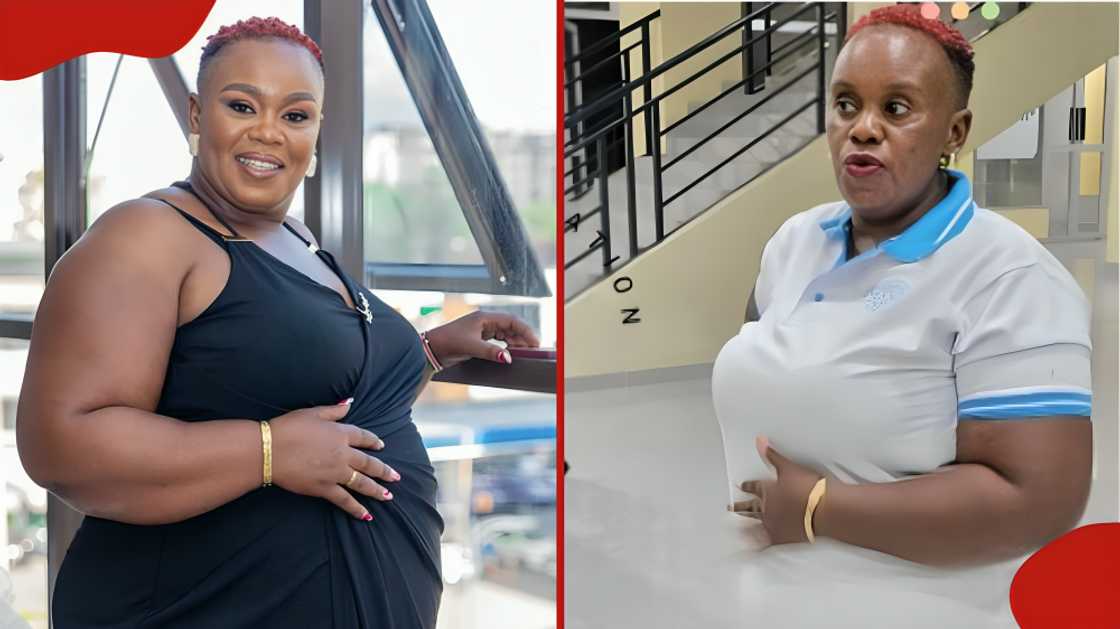
The conversation Imani’s OB did not have time for would not have ended with a heart-rate zone or a list of YouTube channels. It would have ended with the part buried under every prenatal article that uses the word “bounce back.” Fitness during pregnancy in a plus-size body is not about preventing weight gain. It is not about staying snatched. It is about giving your hips, your pelvic floor, and your low back the practice they need to carry a 30-to-40-pound load shift over nine months and then deliver a human being out of your body. The goal is a body that can walk for 30 minutes at 38 weeks without crying. A body that can squat to pick up a dropped pacifier at week 41. A pelvic floor that knows how to release when the work begins. That is the assignment. The 150 minutes a week is the math of how you get there.