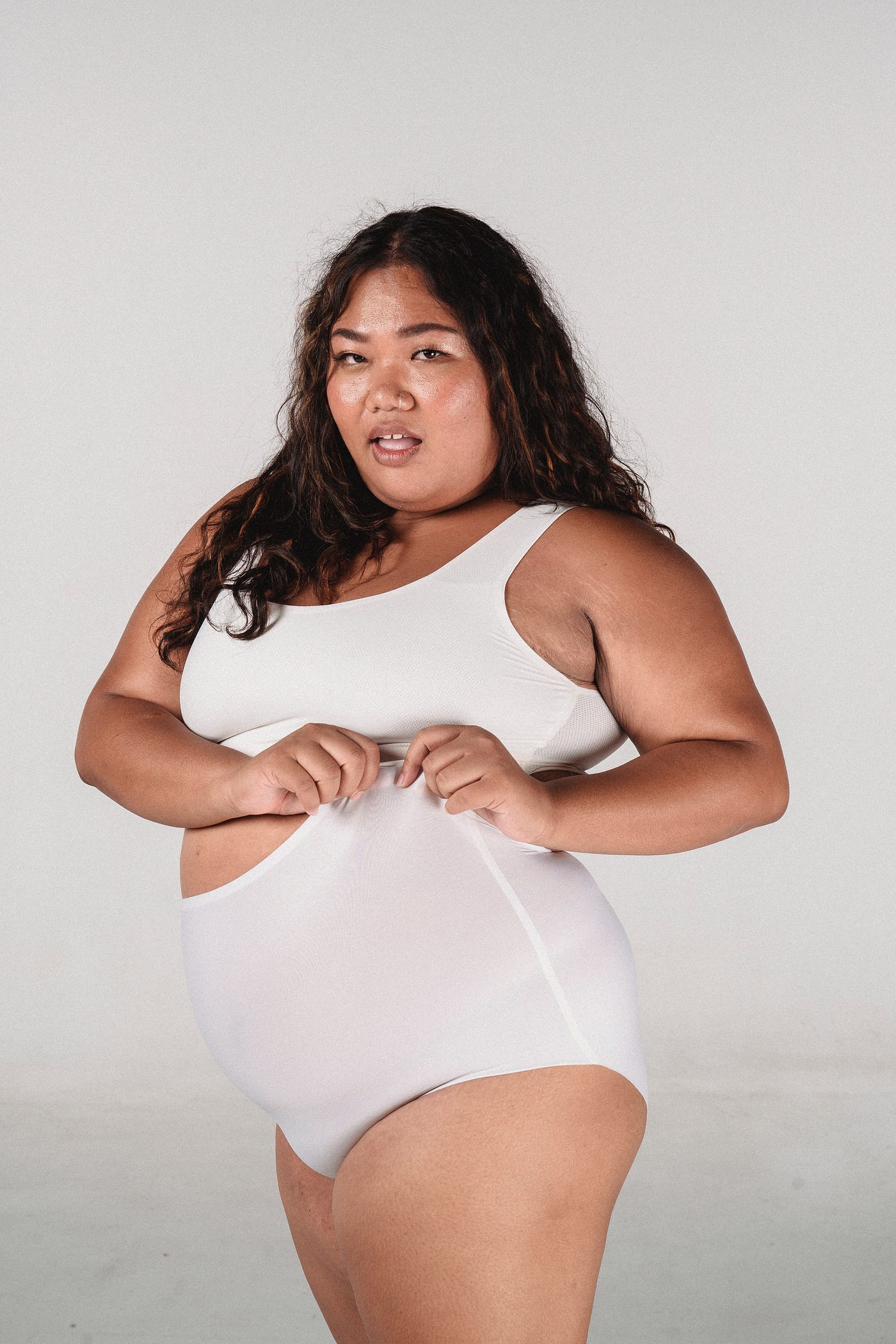
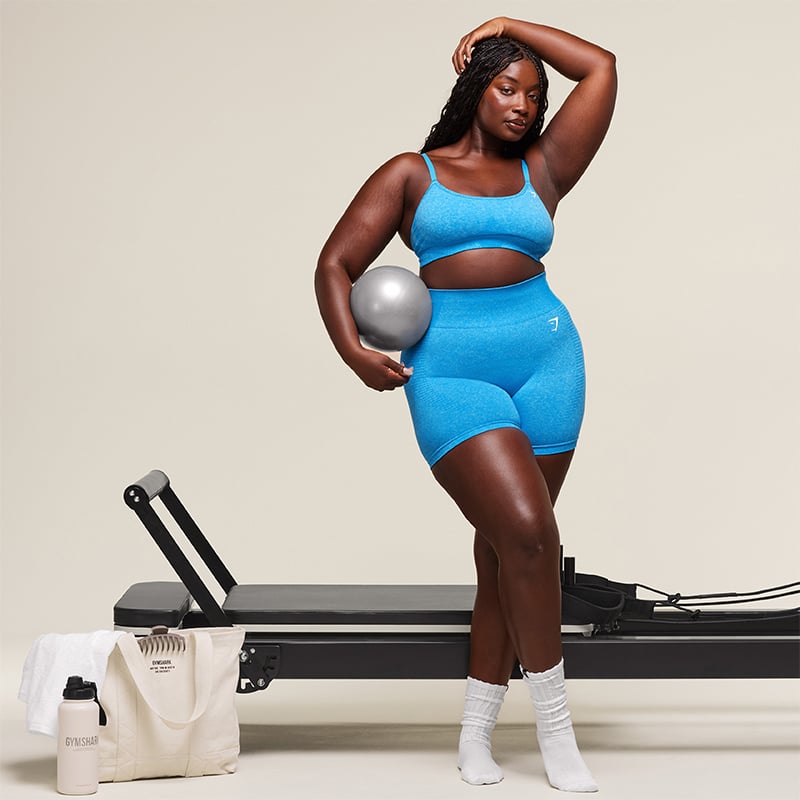

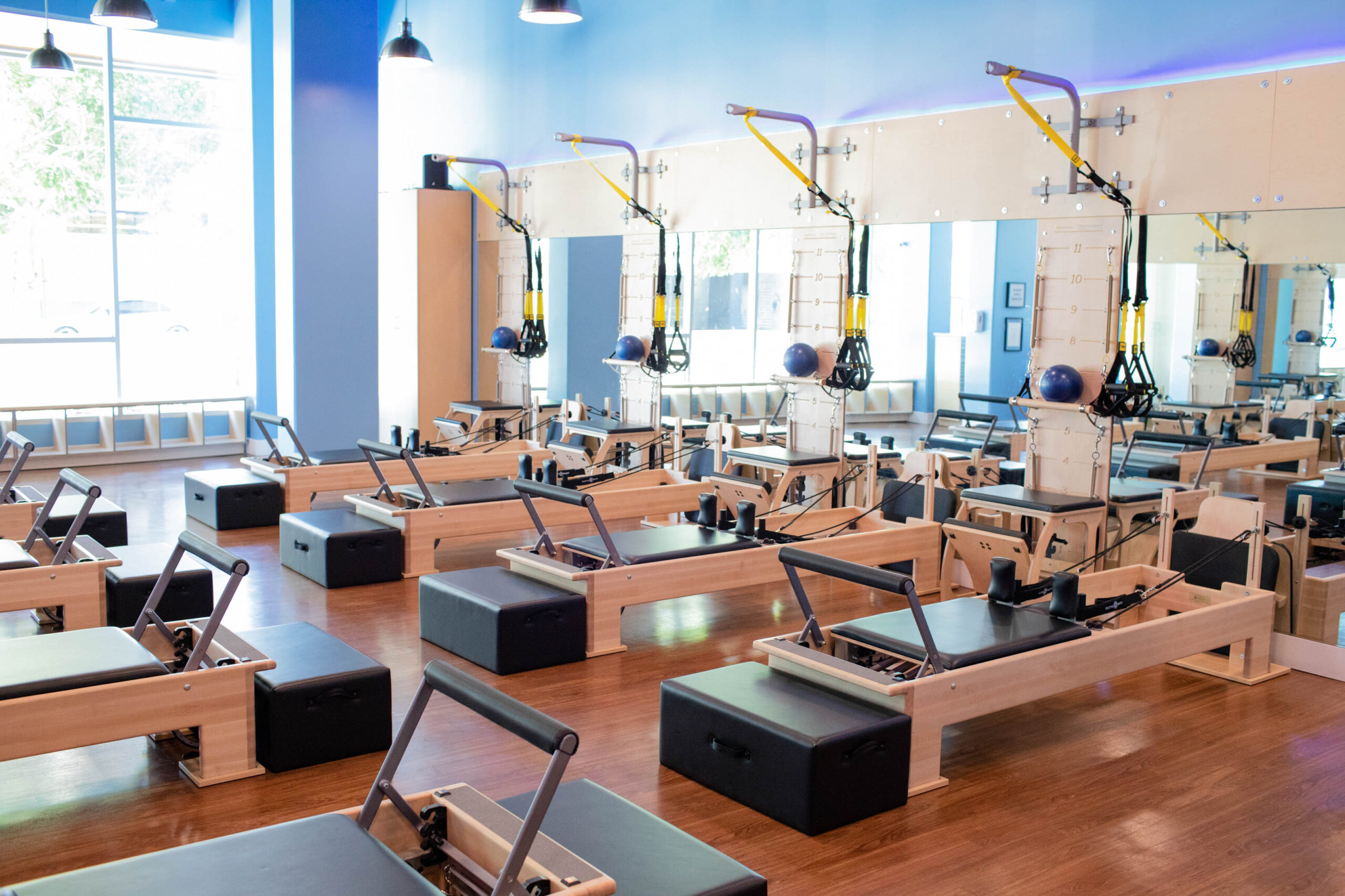
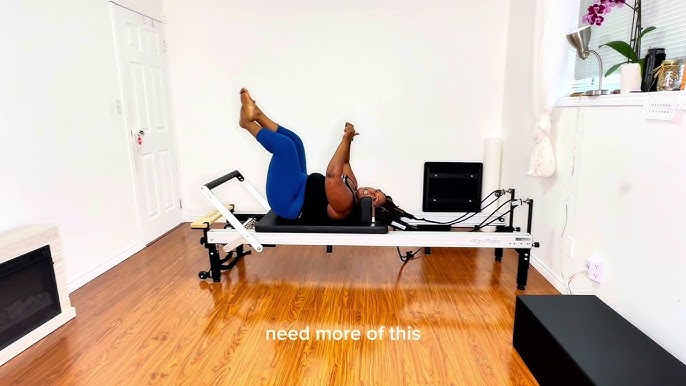
The reformer at the Club Pilates studio I attend in Decatur, Georgia is calibrated to a one-spring resistance for the footwork series, which is the first ten minutes of a beginner class, and the studio’s standard temperature on a Tuesday evening in February 2026 is cool enough that you feel it on your shoulders before you start moving. I am a size 22. I am lying supine on the carriage, my feet on the foot bar in heels-together, toes-apart Pilates V, and I have already failed at four pieces of my wardrobe in the first six minutes of the class. The leggings, a pair of Old Navy PowerSoft 7/8 high-rise in a heather charcoal that I had bought in size XXL the previous week at the Edgewood Retail District store, have started a slow migration along the inner thigh seam from the moment Mariel cued the first footwork rep. The seam is now tracking inward toward the center of my body with every single press of the carriage out, and by rep eight on a set of ten, the seam has rotated nearly an inch off true. The cropped tank top I had paired with it, a Nike Pro Indy crop in a size 2X that I had assumed would stay put on a Pilates mat, has ridden up to expose three inches of my mid-belly to a ceiling fan I had not noticed before. The Aerie Offline sports bra underneath, a 38DD that the website had assured me would handle “low to medium impact,” is fine on bounce-control because there is no bounce in Pilates, but the band is rolling at the underbust because I am lying on it and my own weight is pressing the elastic out of true. And the grip socks I had grabbed from a clearance bin at TJ Maxx, a no-name brand whose calf circumference cannot accommodate a size 22 lower leg, are biting into my calves so hard that the indentation will still be there four hours later when I am washing my face for bed. Four wardrobe failures. One reformer class. Six minutes in. This is the article I wish someone had written for me before that Tuesday.
I have been writing about plus-size wellness for seven years, and I have spent the last fourteen months attending Pilates and Barre classes twice a week at three different studios across metro Atlanta as part of a personal mobility project that started after a Cooper Clinic functional movement screen flagged a thoracic rotation deficit. I am not a certified instructor. I am a wellness mentor and an essayist, and I am also a working consumer who has spent more on activewear in the last fourteen months than I have ever spent in a comparable window on any other category of clothing. What I have learned is that the activewear industry has gotten meaningfully better at plus-size cardio gear in the last five years, and meaningfully worse at acknowledging that Pilates and Barre are not cardio. The fabric science, the seam engineering, and the elastic placement that work for a thirty-minute interval class on a Peloton bike at size 22 are not the fabric science, seam engineering, and elastic placement that work for a fifty-minute reformer class where you are inverted, supine, and side-lying for at least sixty percent of the session. This piece is the long version of what I have learned. It is meant for the size 14, 18, 22, 26 woman who has been told to “just wear what you’d wear to the gym” by a sales associate who has never done a side-lying leg series on a reformer in a body that ends in a 47-inch hip.
Pilates and Barre body mechanics, and what fabric and seam engineering they actually demand
The structural difference between Pilates, Barre, and cardio is not subtle, and it has direct implications for what your clothes need to do. Cardio modalities involve repetitive impact, sustained heart rate elevation above seventy percent of max, and a body that is largely upright or hinged forward at the hip. The activewear demands are bounce control, moisture management, and a waistband that will not slide during sustained vertical motion. Pilates and Barre are structurally different. Joseph Pilates, who developed the method in the 1920s and named it “Contrology” before his students began calling it by his surname, built the system around six original principles: concentration, control, centering, flow, precision, and breath. The modern Pilates instructor Brooke Siler, who trained directly under Romana Kryzanowska at the original Pilates studio on Eighth Avenue in Manhattan and who wrote “The Pilates Body” in 2000, has talked extensively about how those six principles translate to slow, controlled, gravity-against movement that prioritizes connective tissue and deep stabilizers over the gross movers that cardio targets.
What this means for your clothes is specific. Slow, controlled movement against gravity puts your body in positions you do not occupy during cardio. You are supine for footwork, prone for swan and pulling straps, side-lying for the side leg series, and inverted in short spinal articulations during the short spine massage and the jackknife. In every one of these positions, your clothing is being pressed into your body by your own weight against a vinyl or leather carriage surface, and the fabric is not asked to wick sweat (because you are not sweating heavily, by design) but is asked to stay in place while gravity tries to relocate it. The forces are pressure forces and slow shear forces, not impact forces. The fabric science that handles those forces is heavier knit, denser stitching, and seam placement that does not cross the contact zones between your body and the equipment.
Dr. Stacy Sims, the New Zealand-based exercise physiologist whose book ROAR (first published 2016, revised edition January 2024) is one of the most-cited texts in women-specific sports science, has spent the last decade arguing that women’s connective tissue responds differently to slow, controlled strength work than to high-impact cardio, and that recovery and adaptation windows shift across the menstrual cycle. Sims summarizes the work on her own platform and in the revised edition of ROAR. The relevance for plus-size bodies is the slow eccentric loading Pilates and Barre deliver: the connective tissue around hips, knees, and the lumbar spine is being asked to bear a body it’s already been bearing for years, without the impact spikes that higher-load modalities introduce. The clothing implication is downstream of the science. If you are going to be doing this work for the long haul, and the science says you should be, then the clothes need to be engineered for the actual mechanics, not the marketing version of fitness mechanics.
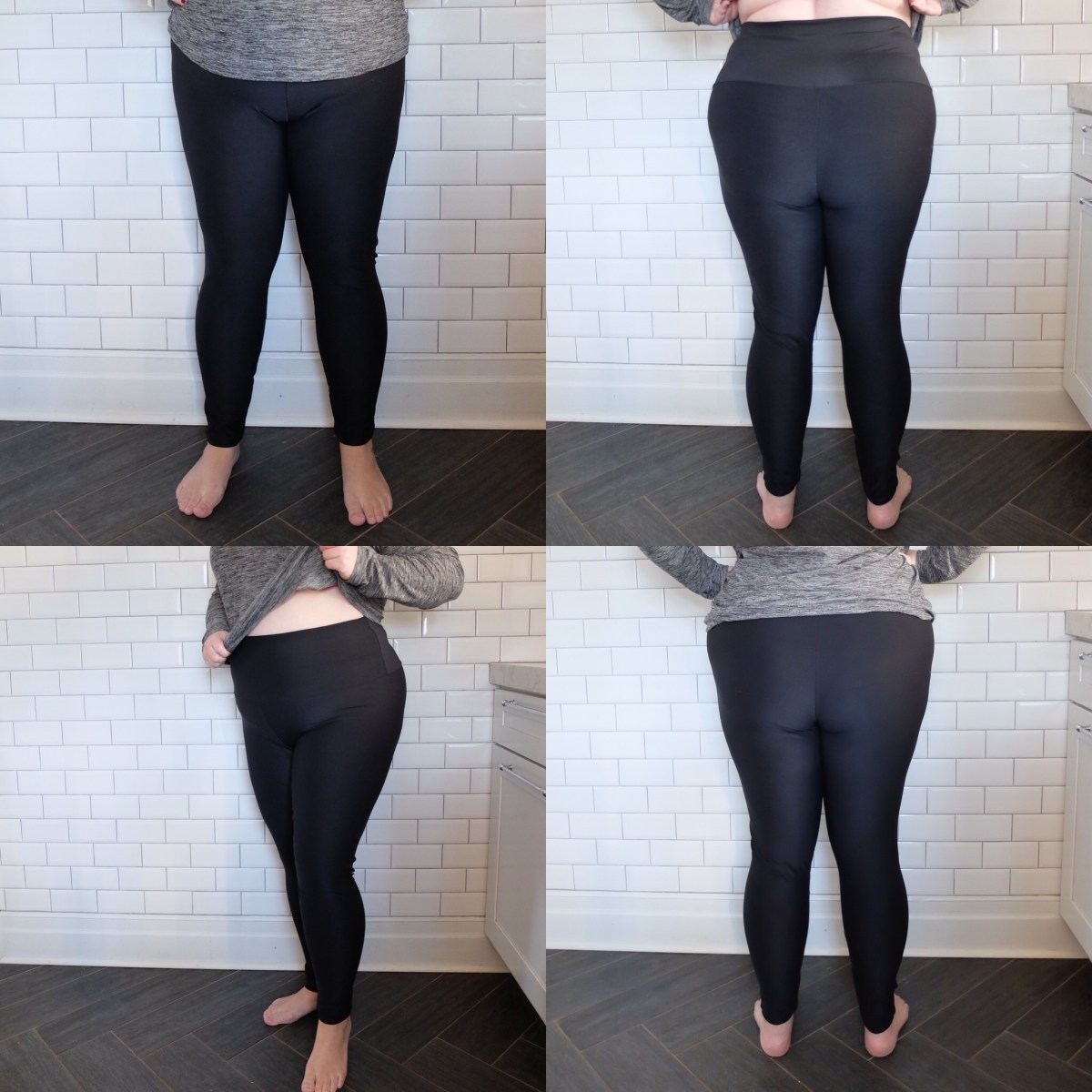
The structural problem the rest of this guide turns on is that the standard activewear seam is engineered for a body whose thighs don’t touch, where the inner-thigh seam never experiences friction during movement. At size 22, where the inner thighs are in continuous contact, that seam is being shear-loaded with every rep. A flatlock seam designed for cardio breaks down within minutes. The plus-size Pilates wardrobe needs a different seam strategy entirely. Either the seam moves (gusset construction), or the seam goes away (seamless knit), or the seam is reinforced (bonded seam tape over the inner thigh). I’ll get to the brands that solve this and the brands that pretend to.
The four wardrobe failures specific to plus-size Pilates
The four failures I experienced in my first Club Pilates class are not random. They are predictable, they are common, and they map to four distinct engineering problems that the activewear industry has not solved at scale. The first failure is inner-thigh seam migration, which I have already named. The second failure is what I am going to call “top creep,” which is the phenomenon where any top that is not engineered for a supine or inverted position will travel up your torso the moment you go horizontal. A cropped tank that sits perfectly at the natural waist when you are standing in front of a mirror in the studio lobby will be at your bra band within six reps of footwork. A standard-length tee will be at your sternum. The structural reason is that the friction between your back and the carriage vinyl is greater than the friction between the fabric and your front, and Newton does the rest.
The third failure is sports bra band rotation under body weight. A bra that fits correctly when you are vertical is fitting against gravity that runs from your shoulders to your hips. Lie down, and the gravity vector runs from your sternum to your spine. The band is now being pressed laterally rather than vertically, and a bra that is engineered for impact (with a wide elastic underband and a high front gore) will rotate out of true because the underband is now bearing weight it was not designed to bear. The fourth failure is the grip sock calf cutoff, which is a flat sizing failure rather than an engineering failure. The grip sock industry, until very recently, sized its products on a straight-size lower leg, and the calf circumference of a plus-size woman frequently exceeds the upper band tolerance of the standard sock. The sock either cuts off circulation, rolls down to mid-calf and bunches, or rips at the heel within three wears.
Knowing the four failures is the first half of solving them. The second half is knowing which brands have actually addressed them, which brands have launched plus-size lines that did not address them, and which brands are using “extended sizing” as a marketing veneer over a straight-size pattern block. I am going to walk through tops, bottoms, sports bras, and grip socks one category at a time, with specific SKUs and specific 2026 prices, and I am going to flag where the brand has solved the problem at the engineering level versus where the brand has solved it on the website.
Tops: the cropped versus tunic-length debate at size 22
The top creep problem has two structurally different solutions, and the plus-size Pilates community is split on which one to use. Solution one is the cropped or fitted tank that is engineered with a band of silicone gripper at the hem to anchor it to the body, the same construction that strapless bras use to stay up. Solution two is the tunic-length top with enough length below the natural hip that even significant upward travel still leaves the torso covered. Both solutions have advocates, and both have brands that execute them correctly at size 22.
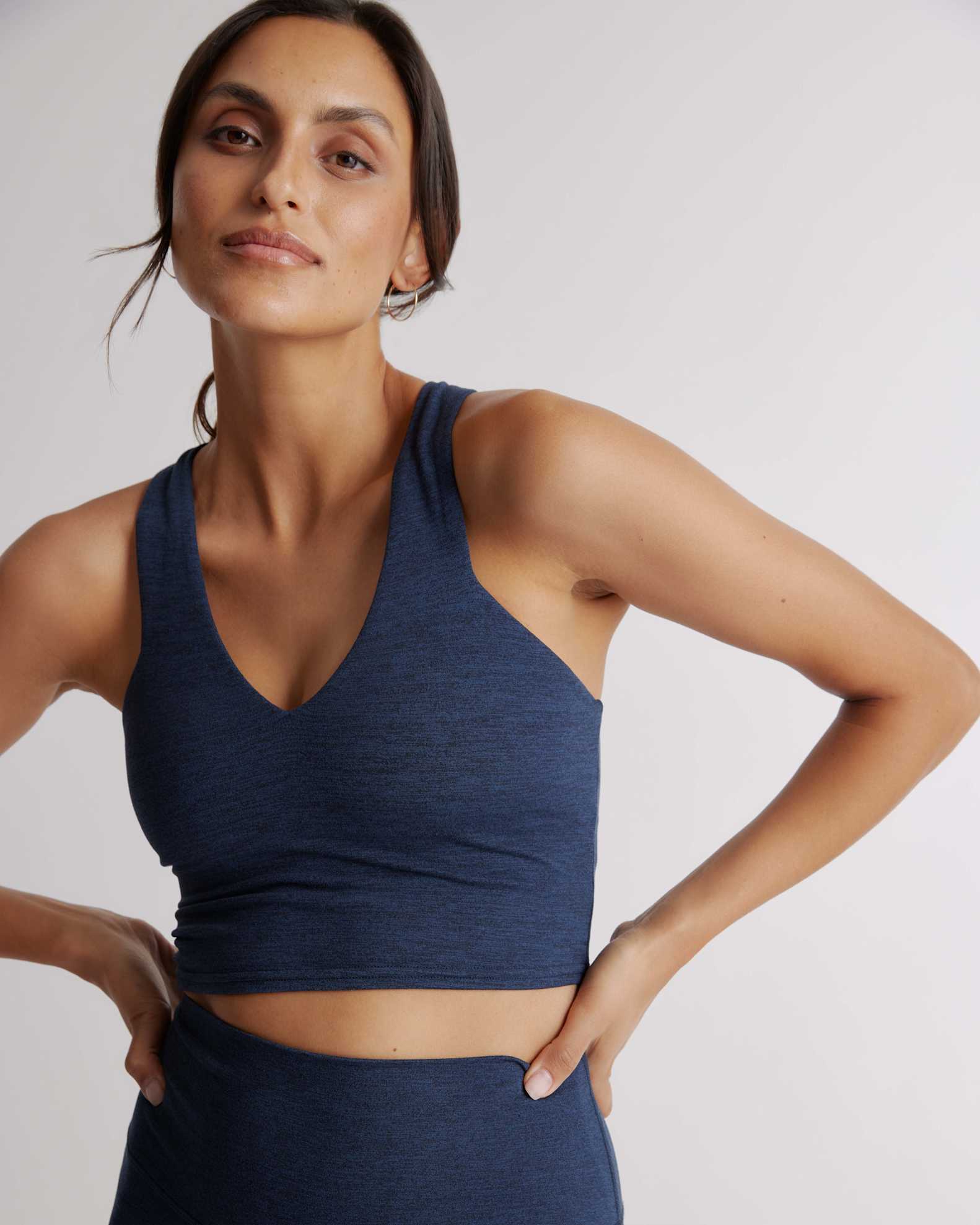
Beyond Yoga Plus is the brand that has executed the gripper-hem cropped tank the most reliably in plus sizes. The Spacedye Lift Your Spirits Cropped Tank in sizes 1X through 4X at $66 in 2026 has a silicone gripper band at the hem and the Spacedye fabric (87 percent polyester, 13 percent spandex) has enough body to lie flat against the torso without bunching. I own this tank in three colors, and it is the only cropped style I will wear to a reformer class. The Beyond Yoga Plus Spacedye Cropped Long-Sleeve at $88 is the cool-weather version of the same engineering choice. Athleta Plus has been pushing the Salutation Mesh Tank at $54 in sizes 1X through 3X as its Pilates-marketed top, and the Salutation Stash Pocket II Crop at $59, but neither has the gripper hem, and both will creep on a supine series. The Salutation Elation cross-back tank, currently $64 in plus, holds its position better because the cross-back construction anchors it to the bra band rather than to the torso, but the bra band itself has to be the right bra for that to work, which I will get to in the sports bra section.
The tunic-length solution is where Universal Standard Movement and Superfit Hero make their case. Universal Standard launched its Movement line in 2022 specifically for low-impact training, and the Movement Tunic in sizes 4XS through 4XL at $98 in 2026 is cut to fall four inches below the natural hip with a curved hem that does not ride up because there is too much fabric below the contact zone for upward travel to expose any midsection. The fabric is a 76 percent recycled polyester, 24 percent elastane blend that is heavy enough to drape without clinging, and the cut is wide enough across the shoulder that it does not pull at the front when you press into footwork. Superfit Hero, the Los Angeles-based brand founded by Micki Krimmel in 2015 and size-inclusive from launch (sizes L through 7XL across most of the line), makes the Body Confidence Tank at $66 with a length that hits at the high hip and a side-shirred construction that lets the fabric move with the torso without traveling upward. Superfit Hero is also the brand in this review whose fit model for the larger sizes is actually a larger-sized woman, not a smaller size graded up, and the difference is visible in the way the armhole sits.
Old Navy Plus Activewear deserves a mention here as the budget option. The PowerSoft Cropped Tank at $24.99 in sizes 1X through 4X has gripper-adjacent construction (a thicker elastic band at the hem, not silicone, but functional) and the PowerSoft Tunic Tank at $26.99 is a workable budget version of the Universal Standard piece at a quarter of the price. Old Navy’s fabric will not last as long, the elastic at the hem will lose its grip after roughly twenty washes, and the fit model is a straight-size graded up rather than a plus-size patterned, but if you are starting Pilates and are not sure you will stick with it, the Old Navy tunic tank is a defensible starting point. I would not recommend it as a long-term solution, but I would recommend it over the wrong tank from a more expensive brand.
Bottoms: leggings versus capri versus shorts, and the inner-thigh seam reality
The inner-thigh seam is the single most consequential engineering choice in plus-size Pilates bottoms. The brands that have addressed it have done so in one of three ways, and the brands that have not addressed it should not be in your Pilates drawer regardless of how comfortable they feel during a standing fitting in the dressing room.
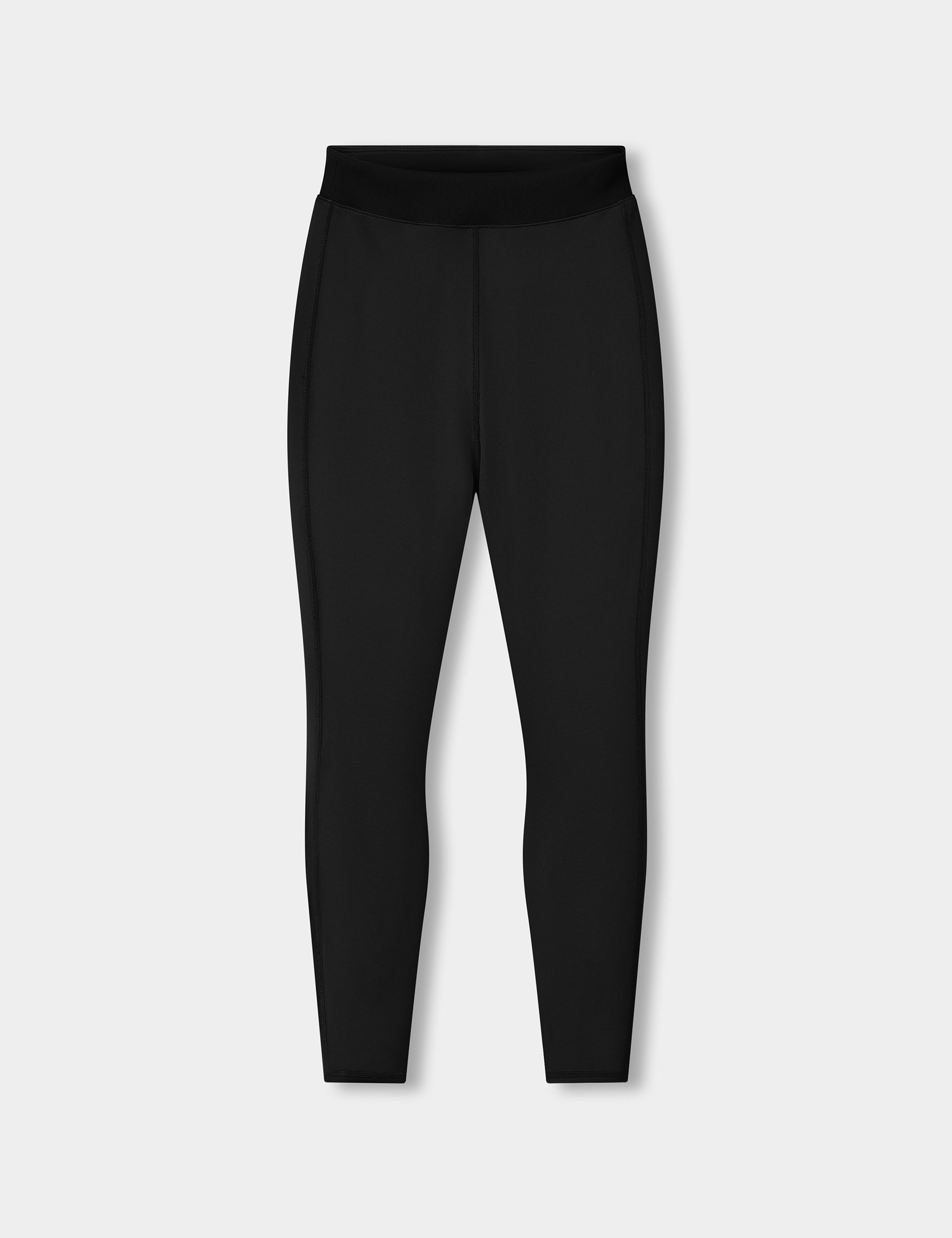
Beyond Yoga Plus uses what the brand calls “no-show seaming” on the Spacedye High-Waisted Midi Legging in sizes 1X through 4X at $97. The construction is a gusset seam at the crotch that distributes the seam load across four panels rather than concentrating it at a single inner-thigh seam, and the inner-thigh itself is essentially seamless, with the fabric panels joined behind the leg rather than at the inner thigh. I have done a fifty-minute reformer class in these leggings, including the side-lying series and a full short spine, and the seam stays where it is supposed to stay. The fabric content is 87 percent polyester, 13 percent spandex, which is the same as the Spacedye tank, and the body of the fabric is heavy enough that it does not show sweat marks (which matter less in Pilates than in cardio, but still matter).
Athleta Plus’s Salutation Stash Pocket II Tight at $98 in sizes 1X through 3X has a standard four-needle flatlock inner-thigh seam, and it is the seam that fails for me at size 22 with predictable consistency. The fabric is the brand’s Powervita, a 79 percent recycled nylon, 21 percent Lycra blend, and the fabric itself is excellent. The seam is the problem. I have bought this legging twice on the assumption that maybe my first pair was a defect, and the seam has migrated on me in both pairs. I do not recommend the Salutation Stash for Pilates at size 22. I recommend it for walking and for upright Barre work, where the seam load is different.
Universal Standard Movement’s Form 73 Legging at $98 in sizes 4XS through 4XL is the brand’s Pilates-specific bottom, and it uses a bonded seam construction on the inner thigh, which is the third engineering solution. The seam is heat-bonded rather than stitched, which eliminates the friction edge that a stitched seam creates. The fabric is a 75 percent nylon, 25 percent elastane blend with the brand’s proprietary Form 73 compression. I have worn these for three months of weekly reformer classes, and the bonded seam has not failed. The legging itself runs longer in the inseam than the Beyond Yoga version (about a 28-inch inseam at the 3X versus 26.5 inches at Beyond Yoga’s 3X), which is something to factor in if you are shorter than 5’6″.
Senita Athletics’s Lux High-Waisted Legging at $59 in sizes XS through 3X is the moderate-price option. The construction uses a curved center-back seam that splits the inner thigh into two shorter seam segments, which reduces the shear load on any single seam point. It is not as elegant a solution as Beyond Yoga’s gusset or Universal Standard’s bonded seam, but it works at the price point. Senita’s plus sizing tops out at 3X, which limits the brand’s usefulness for size 26 and above. Superfit Hero’s Power Move Legging at $94 in sizes XS through 7XL uses a gusset construction similar to Beyond Yoga’s, and the 7XL pattern is actually drafted for that size rather than graded up, which is the brand’s structural differentiator.
On the capri-versus-legging-versus-shorts question, I am firmly on the side of the full-length legging for Pilates, and I am on the side of the capri for Barre. The reason is the contact surface. In Pilates, your lower leg is in contact with the reformer carriage during prone work, and a capri that ends mid-calf will expose your skin to the carriage vinyl, which is not comfortable when the vinyl is cold. In Barre, you are vertical the entire class, and a capri keeps the calf cool during the static-hold work where the lower leg is doing the most. The Beyond Yoga Plus Spacedye Midi Legging is the right product for reformer Pilates. The Old Navy PowerSoft Cropped Pant at $39.99 in sizes 1X through 4X is a workable capri for Barre. I would not wear shorts to either, but that is a personal preference about how my own body interacts with a vinyl surface, not a categorical recommendation. Some plus-size practitioners I know swear by Athleta’s Salutation Stash Pocket II Bike Short at $54, and the bike short does avoid the inner-thigh seam migration problem because the seam is so short. If you are heat-sensitive in a studio environment, that is a real consideration.
Spanx Booty Boost Active Leggings at $98 are the look-versus-function debate in physical form. The shaping panels in the legging deliver a visibly smoother silhouette in the studio mirror, which is a real benefit for some women’s confidence in a public class. The shaping panels also constrict the abdomen in a way that interferes with the diaphragmatic breathing that Brooke Siler and every other working Pilates teacher will tell you is the foundation of the method. You cannot breathe into your low back through a shaping panel. You can breathe into your chest, which is the wrong breath for Pilates. I have worn the Booty Boost to Barre, which is a more upright modality with less emphasis on lateral rib expansion, and they are fine. I will not wear them to a reformer class. The function loss is too high for the look gain.
Sports bras for Pilates and Barre: low-impact engineering at H cup
The plus-size sports bra category is the most over-promised and under-delivered segment of the activewear industry, and the Pilates and Barre-specific subset of that category is the most difficult problem within the difficult problem. The reason is that low-impact engineering for cup sizes above DD has been treated by the industry as a secondary concern to bounce control for high-impact modalities, and the bras that get marketed as “low-impact” in plus sizes are largely high-impact bras with the marketing copy changed.
The structural issue, as I described in the section on the four failures, is that a bra engineered for vertical impact is not engineered for the lateral and supine pressure that Pilates puts on the underband. At an H cup, which is where my own bra sizing lives, the underband is doing roughly seventy percent of the work of holding the breast tissue in place. The cups are doing twenty-five percent and the straps are doing five. If the underband rotates because your body weight is pressing it against the reformer carriage, the bra has failed regardless of how well the cup is engineered.
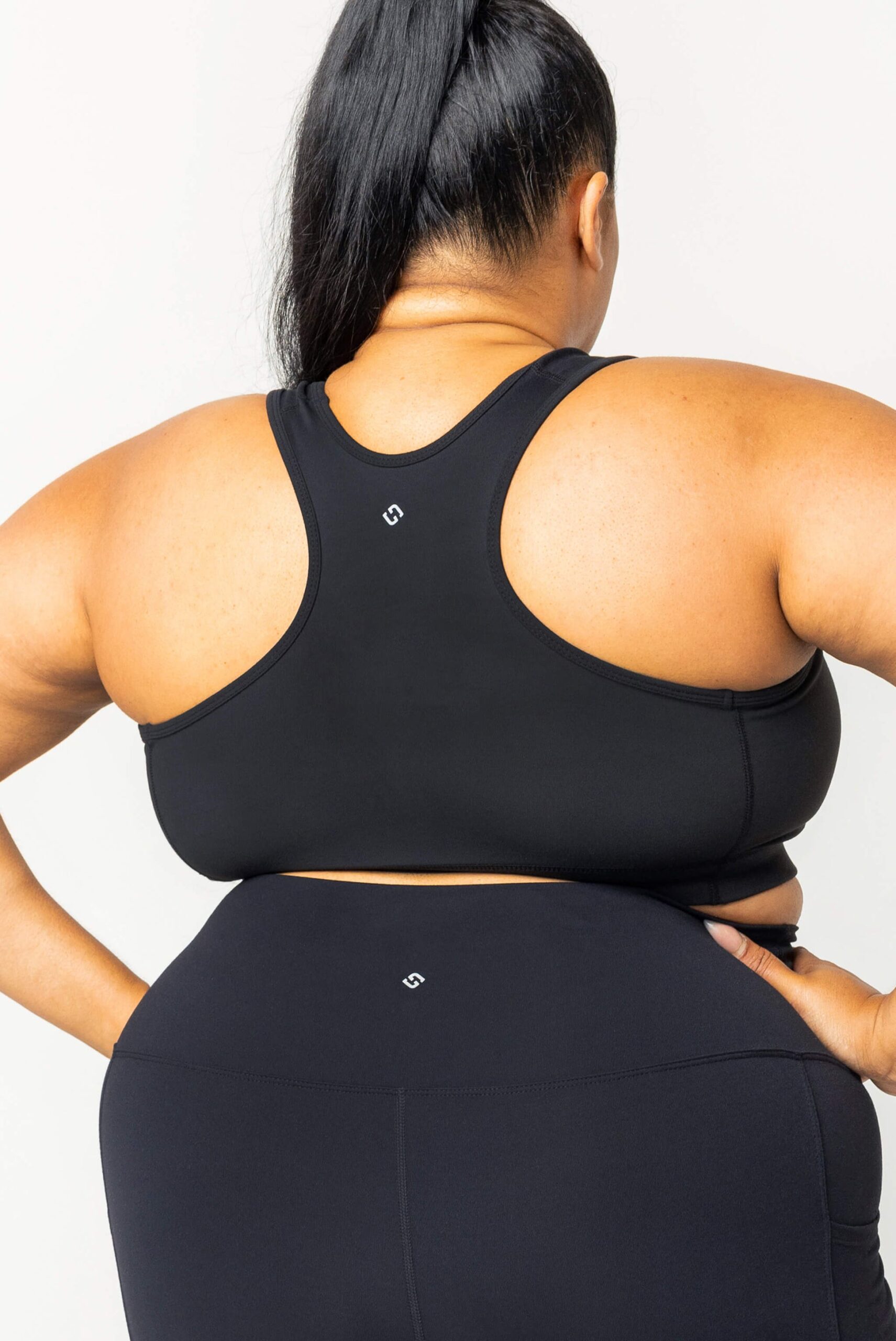
The bra I have landed on after eight months of trial is the Knix Catalyst Sports Bra in sizes 32C through 42H at $98 in 2026. The Catalyst uses what Knix calls a “smooth profile” underband, which is a wider, softer elastic than the standard sports bra underband, and the band is designed to compress laterally without rotating because the elastic tension is distributed across a larger surface area. I have worn the Catalyst through full reformer sessions including supine, prone, and side-lying work, and the band stays in position. The cup is encapsulation rather than compression, which matters at H because compression bras at large cup sizes flatten the tissue in a way that is uncomfortable during the prone work where you are lying directly on the chest.
For practitioners at smaller cup sizes (DD through F), the Beyond Yoga Plus Spacedye Lift Your Spirits Bra at $66 in sizes 1X through 4X is a workable Pilates bra. The construction is a long-line racerback with a wide elastic underband, and the lift is moderate rather than high. The Spacedye fabric carries through from the tank and the legging, which makes for a coordinated set if you care about that. The Athleta Plus Ultimate Bra at $69 in sizes 34D through 44E is the brand’s most-purchased plus bra, and it is engineered for medium-impact rather than low-impact, but the underband construction holds up reasonably well in supine work. I would not recommend it for cup sizes above F.
The bra I would actively recommend against for Pilates and Barre at any plus size is the Aerie Offline Real Me High Neck Sports Bra. The Real Me is excellent for yoga and for walking, and the fabric is soft against the skin, but the underband is engineered for low-tension compression rather than for lateral stability. It rotates on a supine series. It rotates on a side-lying series. The Aerie Offline Real Me is the bra I was wearing during the Club Pilates Decatur class I opened this article with, and it is part of the reason that class became the prompt for this entire piece. The Nike Pro Indy at $50 in plus sizes 1X through 3X has the same engineering profile, and the same problem.
Andrea Speir, the Los Angeles-based Pilates instructor who runs Speir Pilates, has talked publicly about how the bra question is the one her larger-cup clients ask most often, and her general recommendation aligns with what worked for me: an encapsulation bra with a smooth, wide underband. The European option many plus-cup women point to is the Anita Active Momentum (model 5544), available in sizes that go well into the H-cup range and stocked through Bare Necessities. The Anita underband is wider than the Knix, and the fit at H is structurally similar. That’s the bra I’d recommend if the Knix is sold out in your size.
Grip socks: the two brands that fit plus calves
The grip sock problem is the most-overlooked of the plus-size Pilates wardrobe problems, and it has the cleanest solution. There are two brands that have meaningfully addressed plus calf circumference in 2026, and there are roughly a dozen brands that have not.
ToeSox, founded in 2004, is the brand whose Bellarina grip sock (half-toe and full-toe variants) is the legacy product, priced around $20-22 a pair. The construction uses a softer, wider rib at the cuff than most clearance-aisle grip socks, and the silicone grip pattern on the sole catches a reformer carriage and a foot loop cleanly. The half-toe construction (the toes are exposed) is the choice for hot studios. The Full-Toe version is the choice for cooler studios. I own both. I wear the Bellarina Full-Toe to every reformer class. ToeSox’s plus-friendly fit isn’t called out as a separate “Plus” line on the site, but the wider rib at the cuff is the reason this fits where the no-name brands cut off.
Tavi (Tavi Noir / Tavi Active), founded as a sister brand to ToeSox under the same parent group, makes the Emma high-crew grip sock at around $24 a pair, with the Emma running the highest up the calf of any grip sock I’ve tested. The cuff sits at mid-calf rather than lower calf, the elastic is softer than the ToeSox version, and the grip pattern catches the reformer carriage cleanly in side-lying work where the foot is in contact with the foot bar at an angle. Tavi’s sizing officially runs through size L. I’m a 15-inch calf at the cuff line, and the Emma fits me without binding.
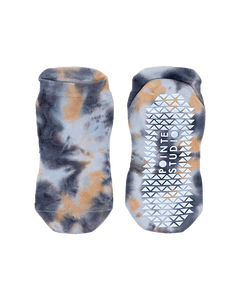
The brands I would not buy for plus calves include Pointe Studio (calf cuff binds at over 14 inches), Lululemon (the brand does not make grip socks in plus sizing at all), and any of the no-name brands at TJ Maxx, Marshalls, and Ross. The clearance bin is not where the plus-size Pilates wardrobe gets built. I learned that the slow way.
The reformer-class specific reality: springs, foot loops, neck pad
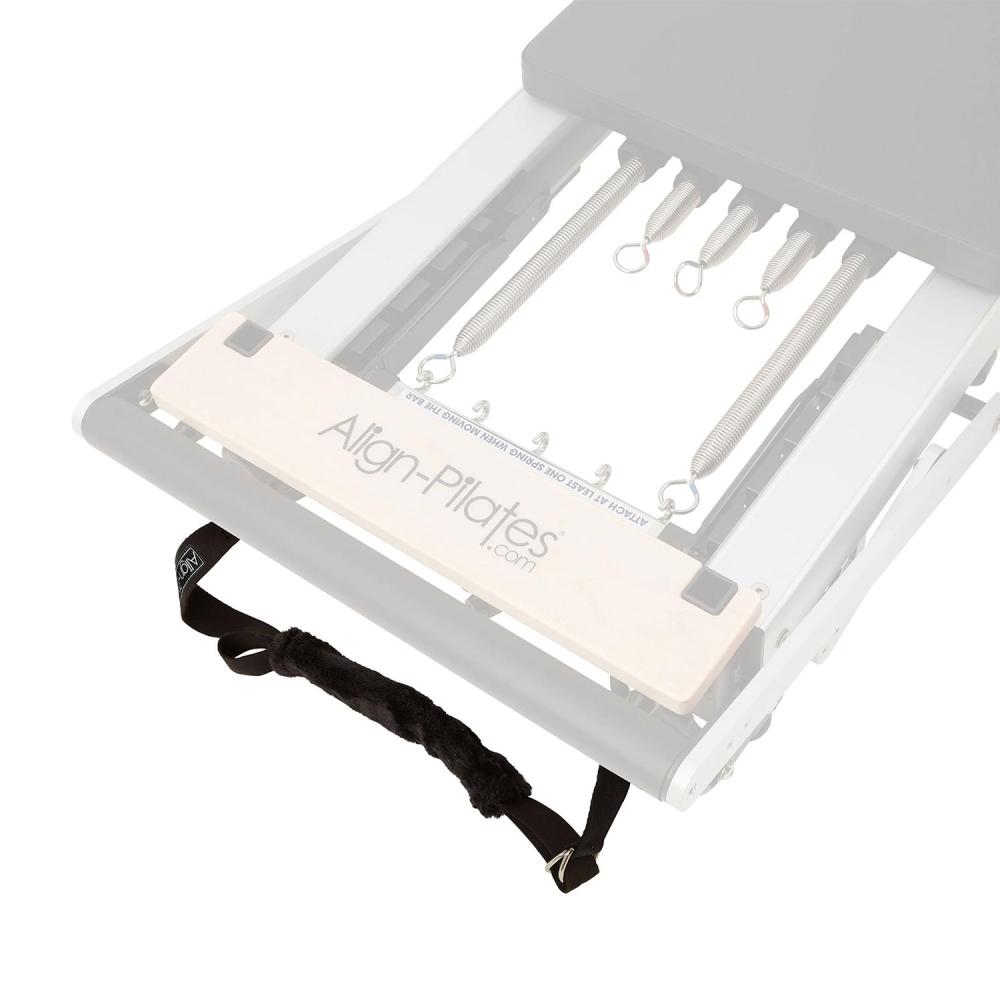
The reformer is the piece of Pilates equipment that introduces wardrobe constraints that the mat work does not. There are three contact points on a reformer that interact with what you are wearing: the spring system at the head of the carriage, the foot loops or straps at the front, and the neck pad at the back of the carriage. Each one has implications for your wardrobe.
The springs are not a direct contact point with your body in a standard class, but the spring tension and the spring sound are sensory elements that affect how you experience the class, and a wardrobe that pulls your attention away from the movement makes the spring cues harder to follow. If your leggings are migrating, your tank is creeping, and your bra is rotating, you are spending mental energy on your clothes that should be going to the breath and the spring transition. This is the case for spending money on the right gear rather than getting by with the wrong gear. The cognitive load of bad gear is real, and Joseph Pilates’ first principle is concentration. Concentration is harder when your wardrobe is broken.
The foot loops are the more direct contact point. In the long spine massage, the jackknife, and several of the spring-supported leg series, your foot is in a leather or canvas loop, and the friction between the loop and your foot determines how stable the position is. Grip socks help here, because the silicone on the sole catches the inside of the loop in a way that bare feet on a sweaty carriage does not. The Bellarina Full-Toe and the Emma High Crew both perform this function well. A standard athletic sock does not. A bare foot is fine in a warm studio for the experienced practitioner, but is a stability risk for the beginner.
The neck pad is the contact point that affects what you wear at the top. In the supine series, your head and upper back are resting on a small leather or vinyl pad at the head of the carriage, and the top of your sports bra band, the back of your top, and the back of your head are all in contact with that surface. A top with a hood, a high collar, or a thick neckline (like a turtleneck Spacedye long-sleeve I tried once) will bunch under the neck pad and pull your head out of alignment for the duration of the supine work. The recommendation is a top with a low scoop neck at the back, no hood, and no collar. The Beyond Yoga Plus Spacedye Cropped Tank, the Universal Standard Movement Tunic, and the Superfit Hero Body Confidence Tank all meet this requirement. The Athleta Salutation Elation cross-back tank also meets it, and the cross-back construction actually performs better against the neck pad than a standard scoop because there is no fabric on the upper back to bunch.
What I wear now versus month one: the four-piece capsule
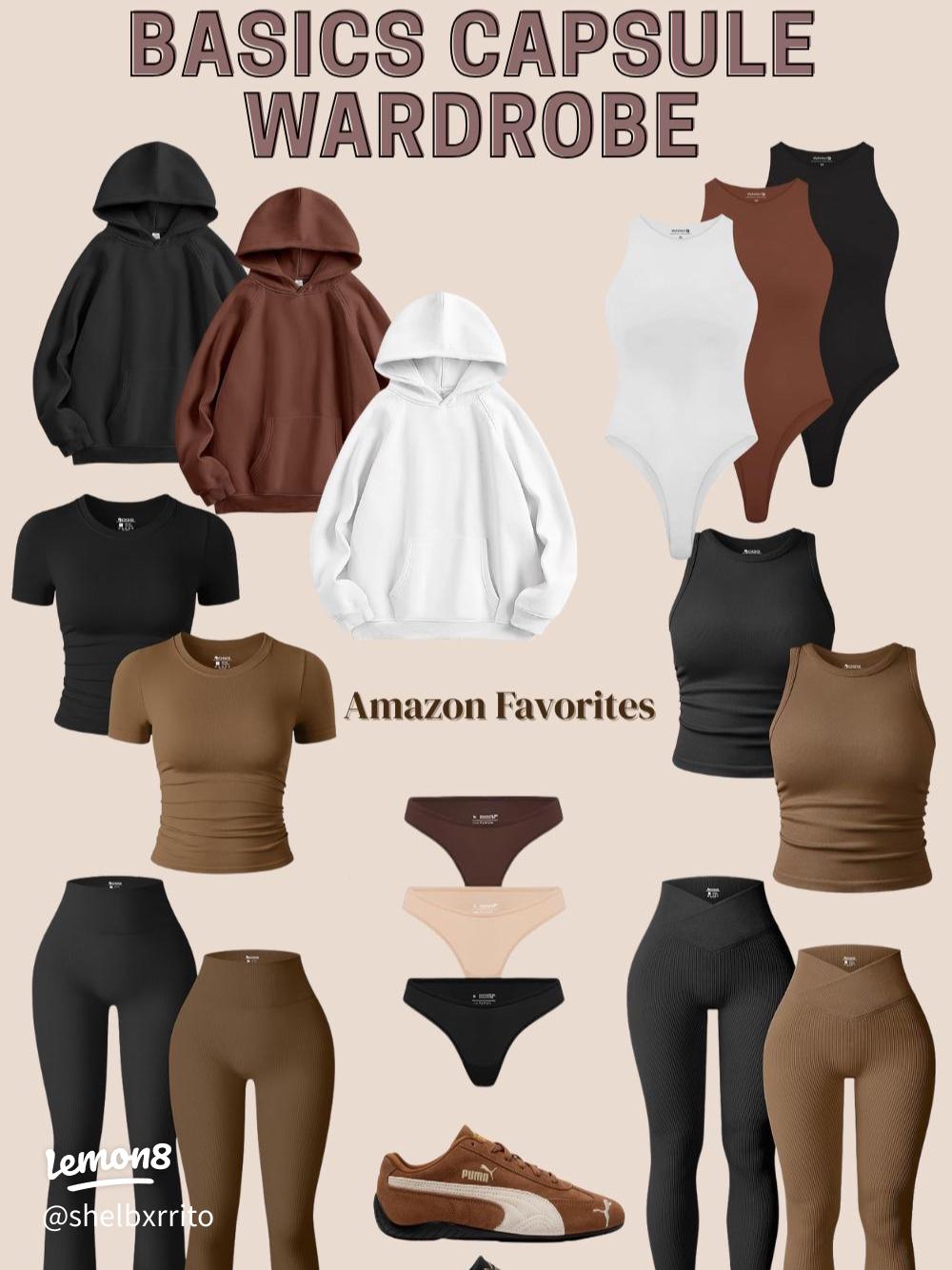
Fourteen months into this project, my Pilates and Barre wardrobe has consolidated into a four-piece capsule that I rotate across two complete sets. The capsule is built around the four engineering solutions I have walked through, and it is meant for a Tuesday-Thursday class schedule with a wash on Friday.
The bottom is the Beyond Yoga Plus Spacedye High-Waisted Midi Legging at $97, in black and in a heather charcoal. I own two pair, I wash them on cold, I hang them to dry, and the gusset seam has not failed at the inner thigh in eight months of weekly wear. The top is the Beyond Yoga Plus Spacedye Lift Your Spirits Cropped Tank at $66, in three colors. The gripper hem holds against top creep, the back is a low scoop that does not interact with the neck pad, and the fabric coordinates with the legging if I care about that on a given Tuesday. The bra is the Knix Catalyst Sports Bra at $98, in two colors. The wide underband holds against lateral rotation, the encapsulation cups are comfortable on prone work, and the bra has survived roughly eighty washes without losing structure. The socks are the ToeSox Bellarina Full-Toe Grip Sock at $22, in three pairs in rotation. The plus calf cuff fits, the grip pattern catches the carriage and the foot loop reliably, and the half-toe option is in the drawer for the rare warm-studio class.
The total replacement cost of the four-piece capsule at one set is $283. At two sets, it is $548 plus an extra pair of grip socks. That is not a small number, and I am not pretending it is. It is also a meaningful step down from what I spent in the first six months of this project on Athleta Salutation pieces, Aerie Offline bras, Old Navy PowerSoft leggings, and the clearance-bin grip socks that started this whole problem. I bought roughly eleven pieces in those first six months at a total spend of about $640, and I now wear three of those eleven pieces, none of them to a reformer class. The cost of getting it wrong is higher than the cost of getting it right. The cost of getting it right is the cost of buying once.
Ragen Chastain, the size acceptance writer and athlete who has been documenting her own plus-size fitness practice publicly since 2007 and whose newsletter Weight and Healthcare is read across the size-acceptance and athletic-fat communities, has written explicitly about the way the industry has tried to monetize the wardrobe failure cycle, where each new “plus extension” capsule from a major brand is sold as the solution to the failures of the previous capsule. Chastain’s argument, which I largely agree with, is that the structural fix has to come from brands like Universal Standard, Superfit Hero, and Beyond Yoga that have built their plus pattern blocks from a plus model rather than from a graded-up straight size. The cycle breaks when the engineering is correct from the start. The cycle does not break by sizing up.
The observation I want to close on is the one that took me fourteen months and roughly $1,200 in activewear to arrive at, and it is the observation that almost no one in the plus-size fitness conversation is making out loud. The reason plus-size women need different fabric and seam engineering for Pilates and Barre than for cardio is not a comfort question, and it is not a vanity question, and it is not a question of bounce control. It is a question of what the modality is actually doing. Cardio asks your body to move fast against itself, and the wardrobe demands of cardio are about managing the speed and the impact and the moisture that come out of that. Pilates and Barre ask your body to move slow against gravity, and the wardrobe demands of those modalities are about managing the pressure of your own body weight against equipment surfaces, and the shear of your own thighs against each other, and the lateral rotation of your own bra band under your own torso. Those are different problems. They require different solutions. The industry has solved the cardio problems for plus sizes at a B-minus level. It has barely begun to solve the Pilates and Barre problems, and the brands that have are not the brands that market themselves the loudest. The seam that holds is not the seam that gets the campaign. The bra that does not rotate is not the bra at the front of the website. The grip sock that fits a 15-inch calf is in a sub-category page three clicks deep on a brand most non-Pilates people have never heard of. The work of finding the right Pilates wardrobe at size 22 is, in 2026, still meaningfully harder than the work of doing the Pilates itself. That is the observation. That is what I would tell the version of myself who walked into Club Pilates Decatur in February 2026 with the wrong leggings, the wrong tank, the wrong bra, and the wrong socks, if I could send her a single piece of information ahead of her first class. The clothes are not an afterthought to the practice. For a plus-size body, in a Pilates studio, the clothes are part of the practice.