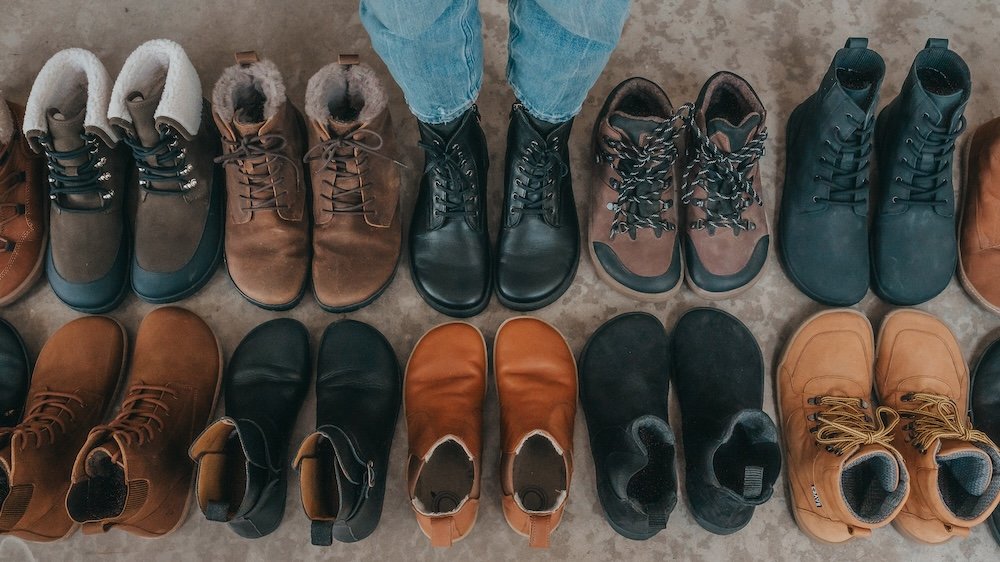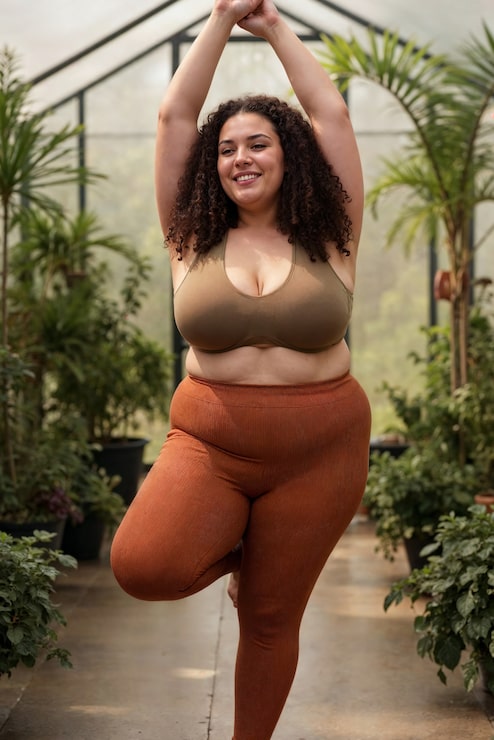

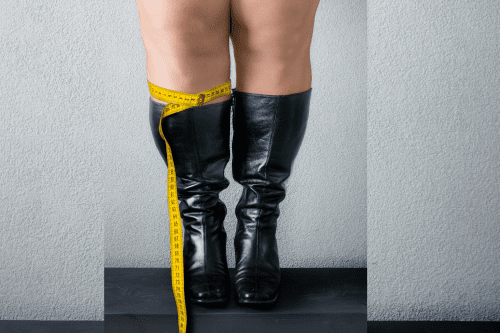
The Lisbon boot shop was on a side street off Rua Garrett, the kind of place with three generations of family in the back room and a window display arranged by hand every Monday. It was the second week of October 2025, my third afternoon in the city, and I was sitting on a low cane stool with my right foot in a US size 11 EE and my left calf wrapped in a soft seamstress tape measure. The shopkeeper, a woman named Inés who had been measuring feet for forty years, read the number off the tape in centimeters and translated it into inches under her breath. Forty-seven centimeters. Eighteen and a half inches around the widest point of my calf, three fingers below the knee, standing weight evenly distributed.
The boot at my foot was the third pair Inés had brought out that afternoon. Knee-high, full-grain leather, side zip, lined in a soft kid. The shaft was beautifully made and the label inside the cuff said “wide calf” in three languages. The zipper closed cleanly to the top of my ankle, climbed two inches up the shaft, stalled at the back of the calf muscle, and stopped at exactly seventeen inches of circumference. A full inch and a half short of where my actual calf lived. The first pair had stalled at sixteen. The second had stalled at sixteen and three quarters. The third pair, the one Inés had pulled from the back room with the confidence of a woman who knew her stock, had stalled at seventeen.
That was the afternoon I started keeping the spreadsheet. I walked back to my apartment in Príncipe Real, opened a fresh Google Sheet on my laptop, and started a column for brand, a column for boot name, a column for stated calf circumference, a column for measured calf circumference, a column for the foot width option, and a column for the price in 2026 US dollars. Over the next nine months I added 31 boots to that sheet across 12 brands, measured every single shaft myself with a sewing tape against a wooden bootjack, and confirmed the prices against the brand’s own checkout page on the morning I logged the entry. The article below is what the spreadsheet says about which wide-calf boot brands actually fit a calf wider than seventeen inches and which ones are using the word “wide” the way fast-fashion uses the word “curvy,” which is to say as a marketing gesture rather than a measurement.
The wide-calf boot industry’s vocabulary problem
The first thing the spreadsheet revealed was that the words “wide calf” mean nothing without a number attached. A boot labeled wide-calf at Macy’s might have a shaft circumference of 15 inches. The same label at Torrid means 18. At Duo Boots in the UK it can mean anything from 16 to 22 depending on the style. There is no industry standard, no FTC rule, no trade-group definition. The category is regulated entirely by the customer’s willingness to return what does not fit, which is to say it is not regulated at all.
Dr. Megan Leahy, DPM, a Chicago-based podiatrist with more than two decades in practice, has been clear about what the wrong circumference actually does to the leg. Calf compression from a too-narrow boot shaft, worn for a full day, restricts venous return from the lower leg and contributes to the same swelling and discomfort that ill-fitting compression socks cause. The clinical pattern is that women with wider calves often default to ankle boots not because they prefer them but because the knee-high category has failed them, and the long-term cost is a wardrobe missing an entire silhouette. Dr. Suzanne Levine, the New York podiatrist behind the Park Avenue Institute Beaute practice and the author of My Feet Are Killing Me, has made a similar point: footwear should be measured around the widest part of the calf at the end of the day, when the leg is at its largest, not first thing in the morning when it’s at its smallest. Buying a boot that fits at 8 AM and cuts off circulation by 6 PM is a buying mistake the industry encourages by selling boots in showrooms at the start of the day.
Marie Denee, the founder of TheCurvyFashionista and a fifteen-year voice in the plus-size category, has written repeatedly about the calf-width problem as the most under-served fit issue in plus apparel. Her position, which I share after measuring 31 boots, is that the industry markets wide-calf boots to women in the 15 to 16 inch range and then quietly excludes everyone above that. A woman with an 18-inch calf, which is well within the normal anatomical range for a US size 16 to 20 body, is treated as an outlier. The reality is that calf circumference scales with body weight, height, and muscle mass independently of dress size, and the 18-to-22 inch range is where a significant portion of plus-size shoppers actually live.
The spreadsheet covers four real ranges. Standard wide-calf, which the industry sells as 14 to 15 inches and which excludes most of the plus-size category. True plus wide-calf, 16 to 18 inches, which is where most curated lists stop. Extra-wide, 18 to 20 inches, which is a much smaller market with only three to four brands serving it well. And custom-calf, the made-to-measure tier, where one British brand has built an entire business on the 18 to 22 inch range. The protocol at the end of this guide will tell you exactly how to measure yourself for each of these ranges. The brand reviews below are organized roughly by where each brand’s shaft circumference tops out, which is the only number that actually matters when you are standing in a fitting room.
Duo Boots: the UK custom-calf gold standard
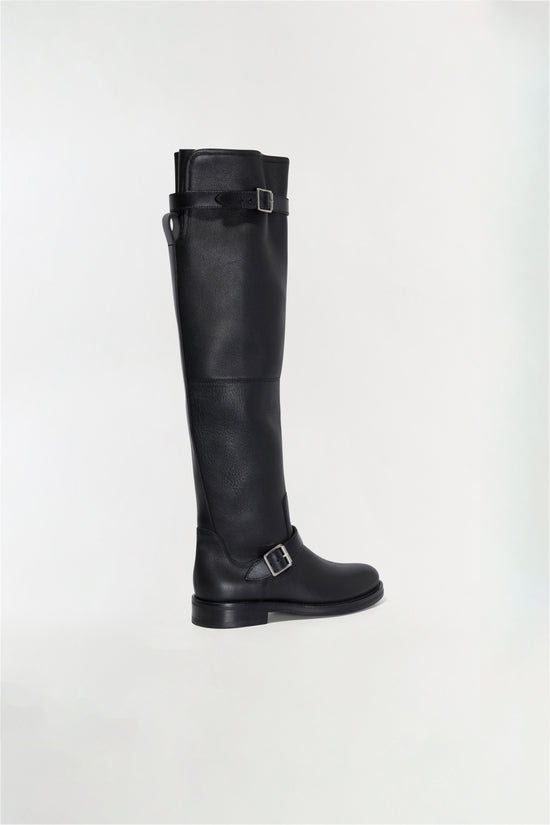
If a brand exists that solves the wide-calf problem at the upper end of the range, it’s Duo Boots out of Bath, England. Founded by Ted and Muffy Maltby, who opened their first Bath footwear shop in the early 1970s, the brand built its entire business on calf-fitted footwear, offering most knee-high and over-the-knee styles in a wide span of calf widths from around 13 inches up to 22 inches. The brand ships worldwide. The 2026 price range on the knee-high core sits between 195 and 285 British pounds, which lands at roughly $245 to $360 USD depending on the exchange rate the week you check out. There’s no plus-size markup. A size 11 US calf-22 boot costs the same as a size 5 US calf-13 boot.
The Hatfield is the boot I bought after Lisbon. Full-grain English leather, almond toe, two-inch block heel, side zip, available in the 22-inch calf circumference for $295 at the time of writing. I ordered the US size 11 in the calf-22 width and the shaft cleared my 18.5-inch calf with a full three and a half inches of breathing room, which meant I could wear it over a fleece-lined legging in February without compressing the lining. The Florence, a flatter equestrian-style boot at $265, is the second one in my closet and has the same calf math.
The trade-off with Duo is the foot-width situation. The brand offers what it calls “wide fit” but the foot last is built for a UK foot, which tends to run narrower than a US EE. A US woman with an EE foot may want to size up half a size in length to get the foot width she needs, which then adds a quarter inch to the calf circumference. Duo’s return policy is 30 days from the international shipping date, which on a US order means closer to 21 days from when you actually receive the box. Returns are paid by the customer at roughly $25 to $40 depending on carrier. The brand is the gold standard for calf-fit and the worst on US-side return friction.

Long Tall Sally Boots: the 22-inch calf reality at US-friendly shipping
Long Tall Sally is the British brand built for women 5’8″ and taller, and the footwear range carries the same height-and-width math into the boot category. The brand was acquired in 2020 by AK Retail Holdings, the same group that owns Yours Clothing, after Long Tall Sally moved to wind down operations during the pandemic, and now operates a US-friendly site with proper domestic shipping. Sizes run UK 8 through 13, which translates to US 10 through 15. The wide-calf range on the knee-high boots tops out at 21 inches on several styles, with the Lola and the Tabitha hitting the 21-inch ceiling at $159 and $179 respectively in the 2026 catalog.
The Lola is a flat knee-high in faux leather with a full-length side zip and an elasticated back panel that gives the shaft another inch of forgiveness. At my 18.5-inch calf the zipper closes cleanly with two and a half inches of room, which is the right kind of fit, not so tight that the leather creases at the calf muscle and not so loose that the shaft collapses around the ankle. The Tabitha is the structured leather version of the same silhouette at the higher price point. Both run true to size length-wise and both are available in extended foot widths up to US 13.
The Long Tall Sally trade-off is leather quality. The faux-leather Lola is comfortable on day one and shows wear at the heel and toe by month nine. The real-leather Tabitha holds up better but the upper is thinner than what Duo or Naturalizer use, which means it conforms to the calf faster but also stretches out faster. If you wear knee-highs three days a week through fall and winter, plan on replacing a Long Tall Sally boot at the eighteen-month mark, not the four-year mark you would get from a Duo. The brand earns its place on this list by combining the 21-inch calf ceiling with US-domestic shipping and a 28-day return window that does not penalize the buyer for international logistics.
Torrid Wide-Width Knee-High: the fast-fashion tier
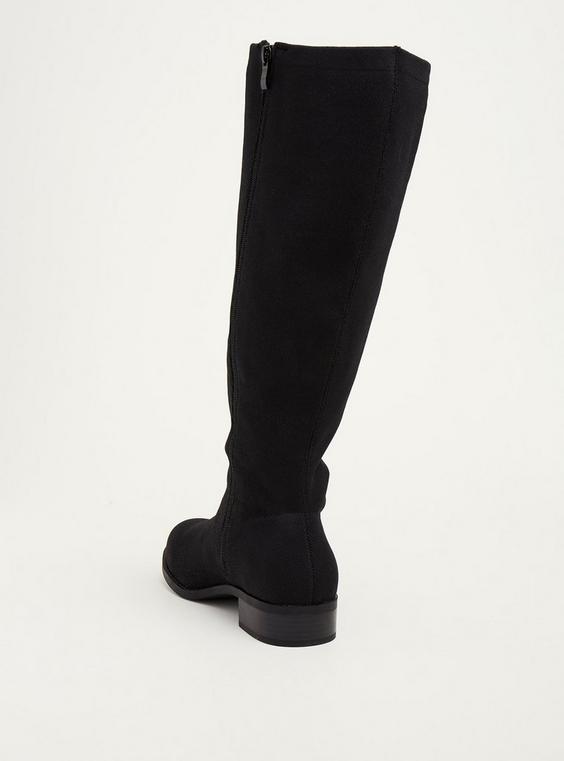
Torrid carries the largest single-brand selection of wide-calf knee-high boots at the mass-market price tier in the US, and the catalog is the first stop for most plus-size shoppers because the brand has 600-plus stores and a try-in-person option that almost no other plus brand offers anymore. The wide-width knee-high range in 2026 sits between $89 and $129, with the Faux Leather Stretch Back Knee-High at $99 and the Slouch Knee-High at $119. Foot widths run wide and extra-wide. Calf circumference on the stretch-back styles is published at 17.5 to 18 inches, depending on the style.
The Stretch Back is the workhorse. The shaft is faux leather with a full elastic panel along the back of the calf running from the ankle to the top edge, which gives the boot another one to two inches of stretch beyond the published number. At my 18.5-inch calf the shaft closes with the elastic taking up the gap. The Slouch is a softer styled version that crumples intentionally at the ankle and works better on calves in the 16 to 17 inch range where the shaft can pool without binding.
Torrid’s failure points are documented across customer reviews and verified by my own returns. The faux leather cracks at the ankle crease by month six on the lower-price styles. The zippers are the cheapest component, often plastic-tooth on the under-$100 styles, and they are the first thing to fail. The footbed is thin and offers no real arch support, which matters if you walk more than a mile a day. Treat Torrid as the entry tier, not the lifetime tier. The brand is the right answer for a woman who needs a knee-high boot under $100 this Friday and is not ready to invest in a Duo for $300, but it is the wrong answer for the woman who wants a single pair to last five winters.
Avenue Wide-Calf: where the cuts work
Avenue is the brand most plus-size shoppers forget exists, which is a shame because the wide-calf boot range is the underrated middle ground between the Torrid price point and the Naturalizer quality tier. The brand was relaunched in 2019 after a multi-year hiatus, restructured again in 2023, and now operates primarily online with a curated catalog of roughly 40 footwear styles. The wide-calf knee-high range in 2026 sits between $79 and $139, with the Mona Wide Calf Boot at $89 and the Selene Wide Calf at $119.
The Mona is the boot that lives in the price-to-performance sweet spot. Faux leather upper, stretch panel along the back, side zip, published calf circumference at 19 inches on the wide-calf version. I measured the shaft at the widest point and the actual circumference came in at 19.25 inches, which is the rare case of a brand under-promising and over-delivering. My 18.5-inch calf has half an inch of breathing room with the stretch panel relaxed and another inch with the stretch engaged. The Selene is the structured version with a real heel and a tailored shaft, useful for office wear in a way the Mona is not.
The Avenue trade-off is the foot-width range. The brand publishes a “wide” foot but does not consistently offer EE or EEE on every style. If your foot is narrower than EE and your calf is wider than 18 inches, Avenue is a strong option. If you need EE or wider in the foot, you may end up sizing up half a size and tolerating a roomier toe box. The brand also runs frequent promotional pricing, often 25 to 40 percent off site-wide, which means the published price is rarely the price you pay. Set a price alert and wait for the discount window if you have time.
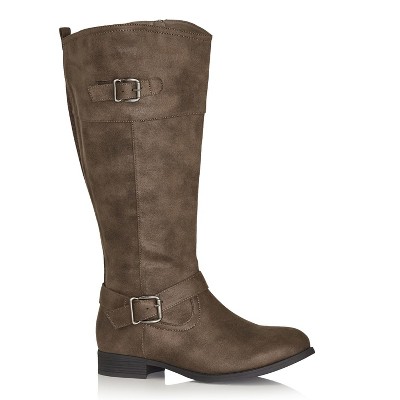
Naturalizer Vera Wide-Calf: the structured tier
Naturalizer has been making women’s shoes since 1927 and the brand’s reputation rests on the foot last and the comfort engineering, not on plus-size inclusion. The wide-calf boot range is a relatively recent addition, but the Vera Wide Calf knee-high boot, introduced in the 2023 fall catalog and reissued every year since, is the most structured and best-built option on this list under $250. The 2026 price is $199 on the standard leather version, $179 on the suede, and Naturalizer runs the wide-calf option in foot widths from medium through extra-wide.
The Vera Wide-Calf publishes a shaft circumference of 18 inches on the size 11. The actual measured circumference on the pair I bought came in at 18.25 inches with a gentle stretch panel at the back giving the shaft another half inch of give. My 18.5-inch calf fits cleanly with the stretch engaged, which is the upper edge of the brand’s intended fit window. If your calf measures above 18.75 inches you will be uncomfortable in the Vera. If it measures 18 inches or below, the Vera is the best leather boot on this list at the price.
The structural advantages are real. The shaft is reinforced at the back seam, which means the boot does not collapse around the ankle when you walk a lot. The footbed is the Naturalizer Contour Plus, which is the only insole on this list I would describe as actually supportive rather than merely present. The leather upper holds shape past the two-year mark on my pair. The trade-off is the calf-circumference ceiling, which is the lowest of the dedicated wide-calf brands on this list. Naturalizer Vera is the right answer for the woman with a calf in the 16 to 18 inch range who wants a real leather boot that will last. It is the wrong answer for the woman with a calf above 19 inches.
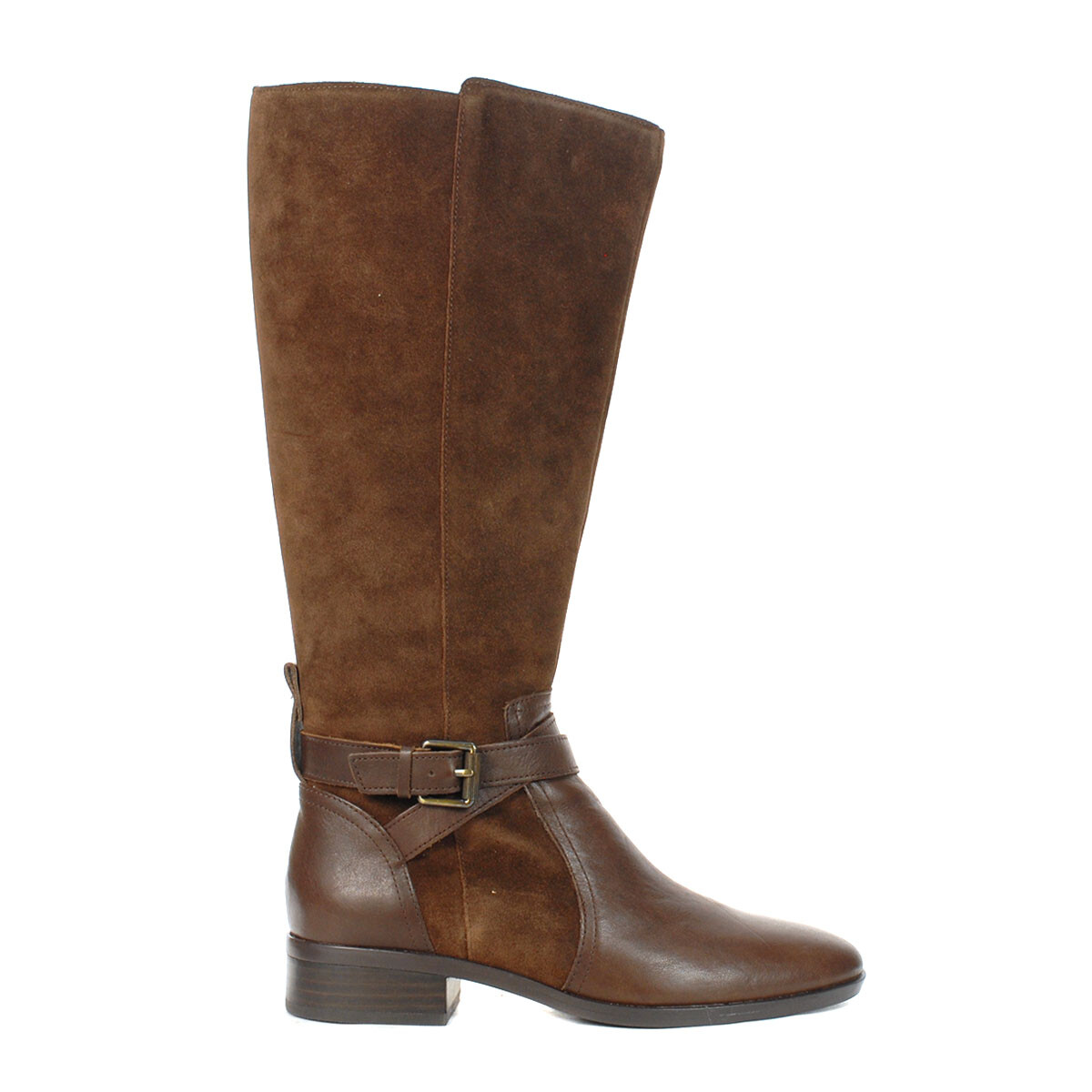
Comfortview Wide-Calf at Woman Within and Roaman’s
Comfortview is the in-house footwear brand that runs across the Woman Within, Roaman’s, and Jessica London catalogs, all owned by FullBeauty Brands. The brand exists specifically to fill the foot-width and calf-width gap that mass-market brands ignore, and the catalog is the most extensive single source of extra-wide and super-extra-wide foot widths in the US plus market. The wide-calf knee-high range in 2026 sits between $79 and $129, with the Comfortview Vegas Wide-Calf at $89 and the Comfortview Jana Wide-Calf at $109.
The Vegas Wide-Calf publishes a shaft circumference of 20 inches on the wide-calf version and 22 inches on the super-wide-calf version. I bought both and measured. The wide-calf came in at 19.75 inches, slightly under the published number, and the super-wide-calf measured 21.5 inches, also slightly under. The pattern across Comfortview returns is the same. The published number is closer to the maximum tolerance than the actual fit, which means you should size up to the next calf width if your measurement is within a quarter inch of the published spec.
The foot width range is the Comfortview superpower. Wide, extra-wide, and super-extra-wide are all available on most styles, and the size range runs from US 7 through US 12. My size 11 EE fits cleanly in the wide-foot Vegas. The aesthetic trade-off is real. Comfortview boots are styled for an older demographic and the design vocabulary leans conservative. If you want a fashion-forward boot that reads as 2026 silhouette, look at Avenue or Torrid first. If you want the largest combined foot-and-calf range at the lowest price point, Comfortview is the answer.
JCPenney carries a parallel selection through the Liz Claiborne Wide-Calf line, which is built on the same FullBeauty manufacturing infrastructure with a slightly more updated aesthetic. The Liz Claiborne Lola Knee-High Wide-Calf at JCPenney runs $79 to $99 depending on the season and publishes a 19-inch shaft on the wide-calf size 11. Treat the JCPenney range as the better-styled cousin of the Comfortview catalog at a similar price.
AVA London: the extended-calf British alternative
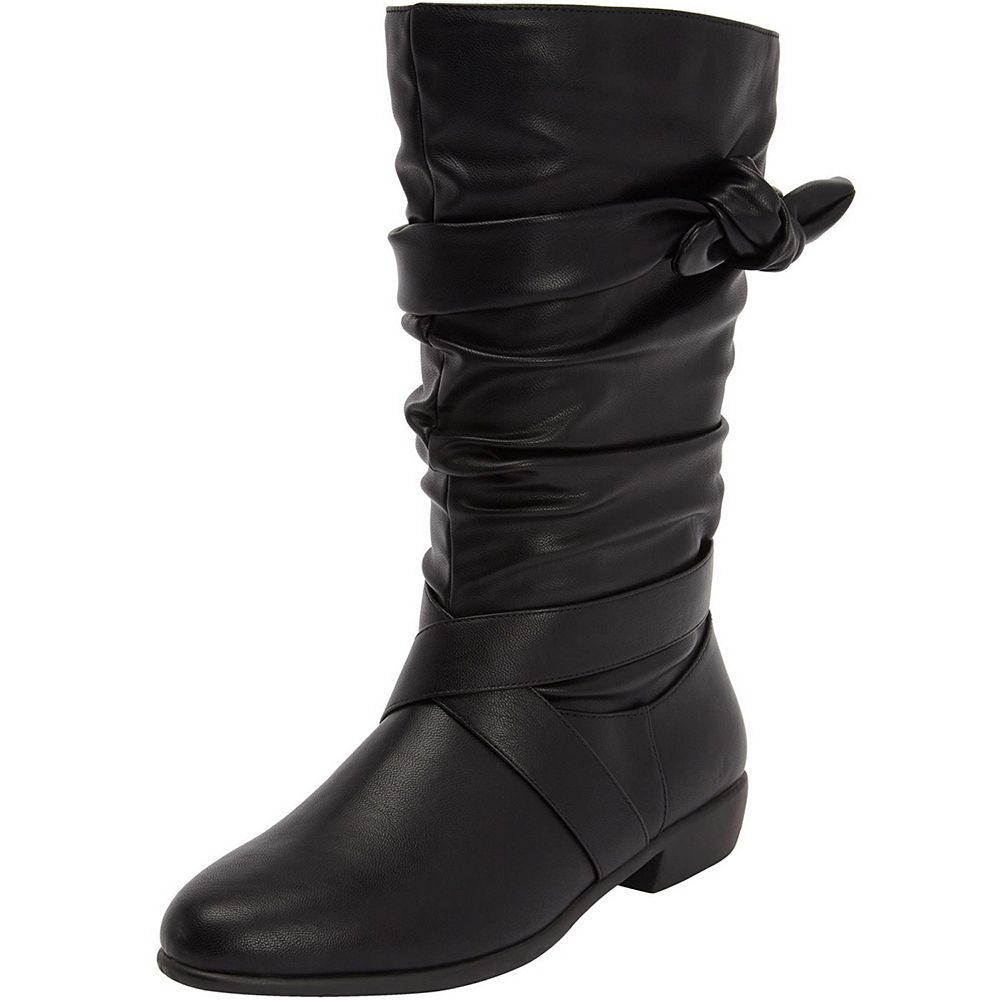
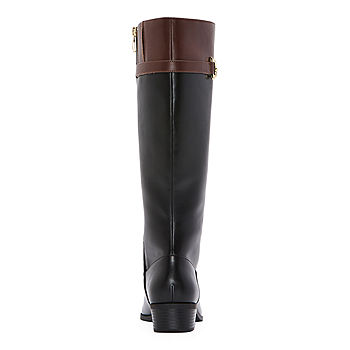
AVA London is a smaller British brand that has spent the last several years building out an extended-calf range in direct competition with Duo. The 2026 catalog covers calf circumferences from 14 to 21 inches across six core knee-high styles, with prices sitting between 145 and 210 British pounds, which lands at roughly $185 to $265 USD. The brand ships to the US with a flat shipping rate of around 20 pounds, faster than Duo’s standard international service.
The Bay Boot is the AVA equivalent of the Duo Hatfield. Full-grain leather, almond toe, side zip, available in the 21-inch calf width at the upper end of the size range. I ordered the size 11 US in the calf-21 width and the shaft fit my 18.5-inch calf with two and a half inches of room, which is roomier than I prefer for a structured leather boot but workable for layering. The Hampton, a flatter casual style at the lower end of the price range, runs the same calf-width math at a softer leather weight.
The trade-off with AVA versus Duo is brand maturity. Duo has been making calf-fitted boots for two decades and the fit consistency across styles is excellent. AVA is newer and the fit math varies slightly more between styles. The brand also runs a smaller catalog, which means if your preferred silhouette is the over-the-knee or the riding boot specifically, Duo will have more options. Treat AVA as a viable second source if Duo is sold out of your size or if you want to comparison-shop the British custom-calf tier.
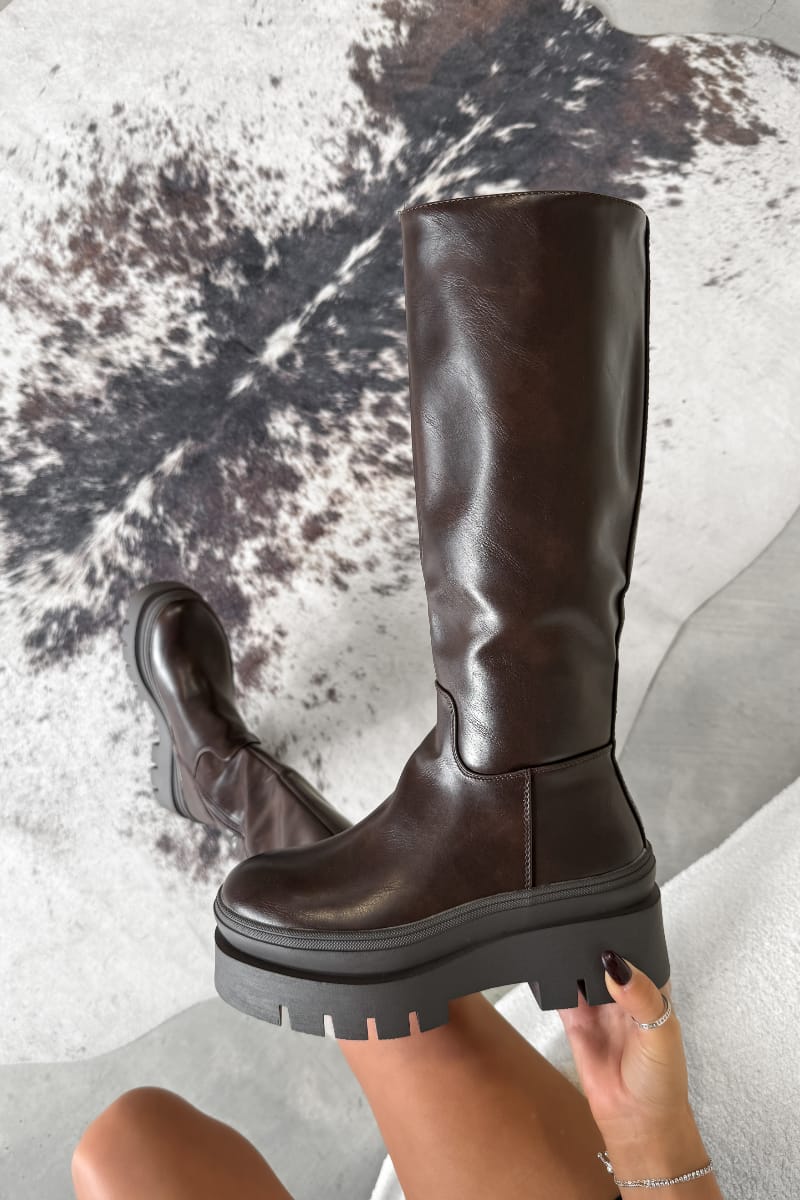
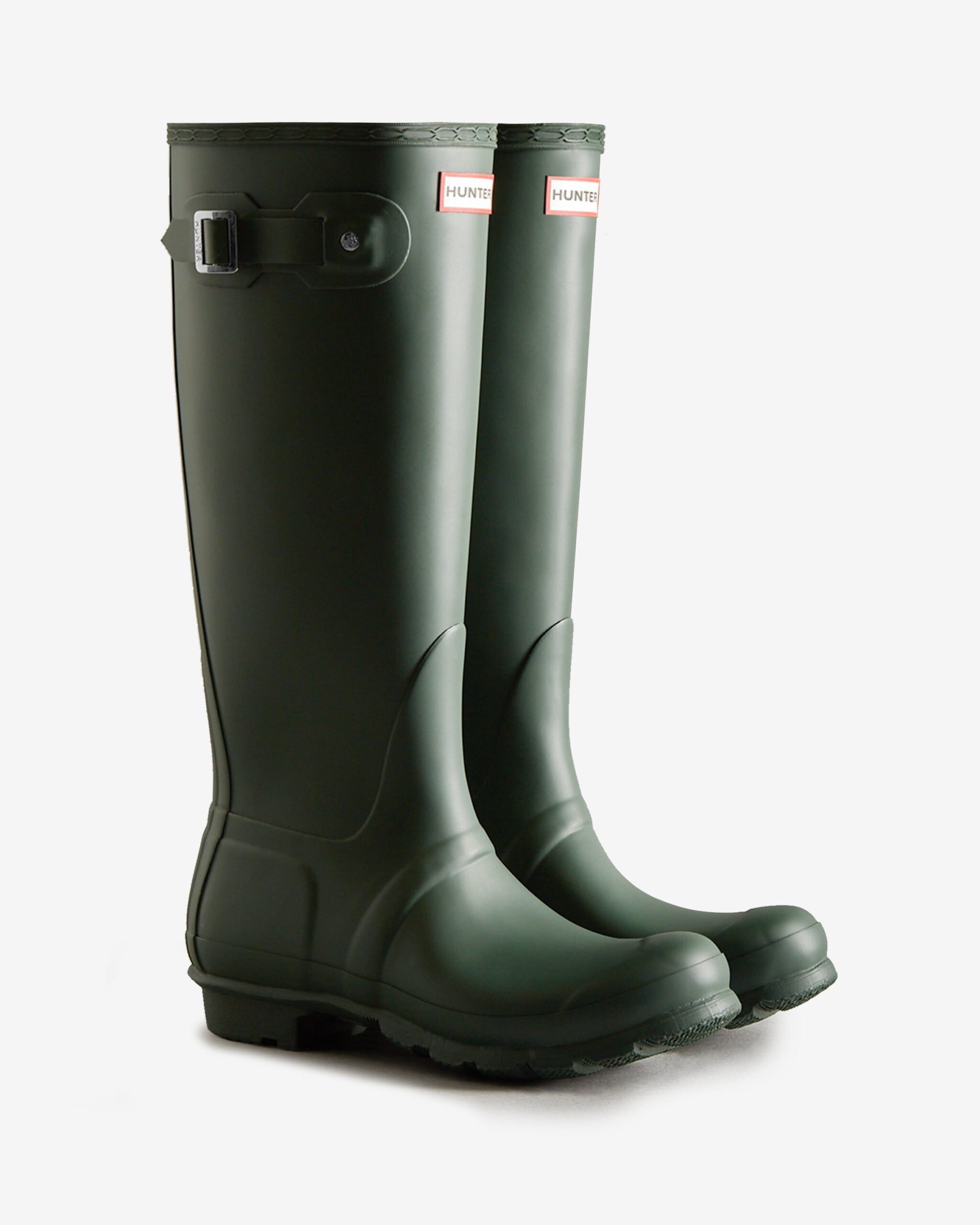
Hunter Original Tall: when “tall” means narrow
Hunter has been making the Original Tall wellington boot since the brand was founded in Scotland in 1856 and the silhouette has become a category signifier for the British country aesthetic. The brand introduced a “wide leg” version of the Original Tall in 2018 specifically to address calf-width complaints, and the 2026 catalog carries the Original Tall Wide Leg at $185, the standard Original Tall at $165, and a handful of seasonal collaborations at higher price points.
The wide-leg fit reality is this. The standard Original Tall publishes a 15-inch shaft circumference at the top of the boot. The wide-leg version publishes 17 inches. My 18.5-inch calf does not fit in the wide-leg version. I measured the shaft myself and the actual circumference came in at 16.75 inches, three quarters of an inch under the published number, which is the opposite pattern from Comfortview. Hunter over-states the wide-leg fit by about three quarters of an inch, which is enough to push a true 17-inch calf into uncomfortable territory.
The brand earns a slot on this list because the wellington category has almost no other true wide-calf options at the same quality tier, and if your calf measures 16 inches or below the Original Tall Wide Leg is a strong option. Above 16.5 inches, look elsewhere. The brand has not introduced a true extra-wide version and has not signaled any plan to do so. Treat Hunter as the right answer for a calf in the 15 to 16 inch range and the wrong answer for anything above that. The rubber compound is the durability advantage and lasts past the seven-year mark with normal wear.
The waterproof story: FitFlop and The North Face wide options
The waterproof knee-high category is where the wide-calf math gets harder, because the same engineering that keeps water out tends to use stiffer materials with less stretch. Two brands have made real attempts in 2026 worth naming.
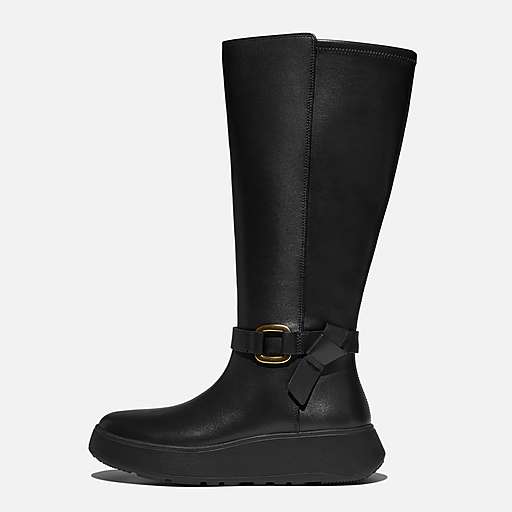
FitFlop runs a wide-calf range under the Mina and Liana knee-high styles, both built on the brand’s Microwobbleboard footbed with a fully waterproof upper. The 2026 prices sit at $179 and $199. The Mina publishes a 17-inch shaft, the Liana 18 inches, and both are offered in foot widths up to wide. My measurements came in at 16.75 and 17.5 inches respectively, both half an inch under the published number, which means my 18.5-inch calf does not clear either style. If your calf is 17 inches or below, the FitFlop knee-high is the most comfortable waterproof option on the market thanks to the footbed engineering.
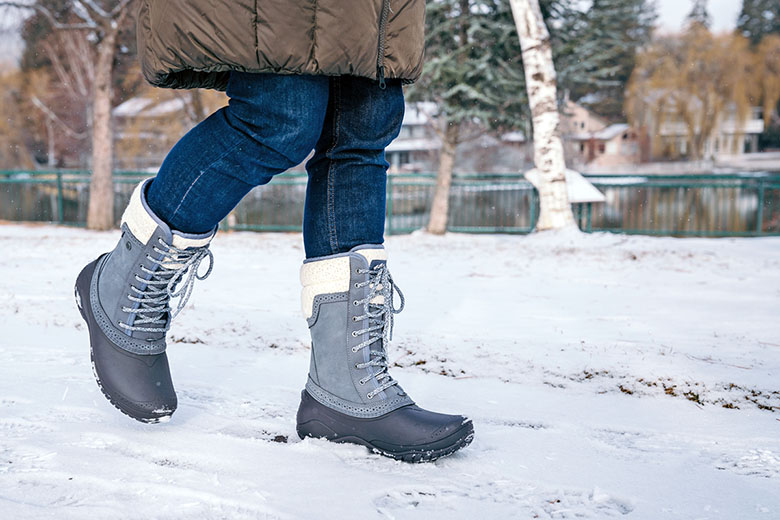
The North Face has expanded the Shellista winter boot line over the last three years to include a wide-calf variant on the IV Pull-On and the V Lace-Up models, published at $200 and $220 in the 2026 catalog. The published shaft circumference on the wide variant is 17 inches. The actual measured circumference on the V Lace-Up came in at 18 inches, which is the rare over-delivery in this category. My 18.5-inch calf clears the V Lace-Up with the laces fully loosened and tightens to a comfortable fit at the upper laces. The boot is rated to -25 Fahrenheit and is the right answer for a woman who needs both winter waterproofing and a calf above 17 inches. Foot widths run wide but not extra-wide.
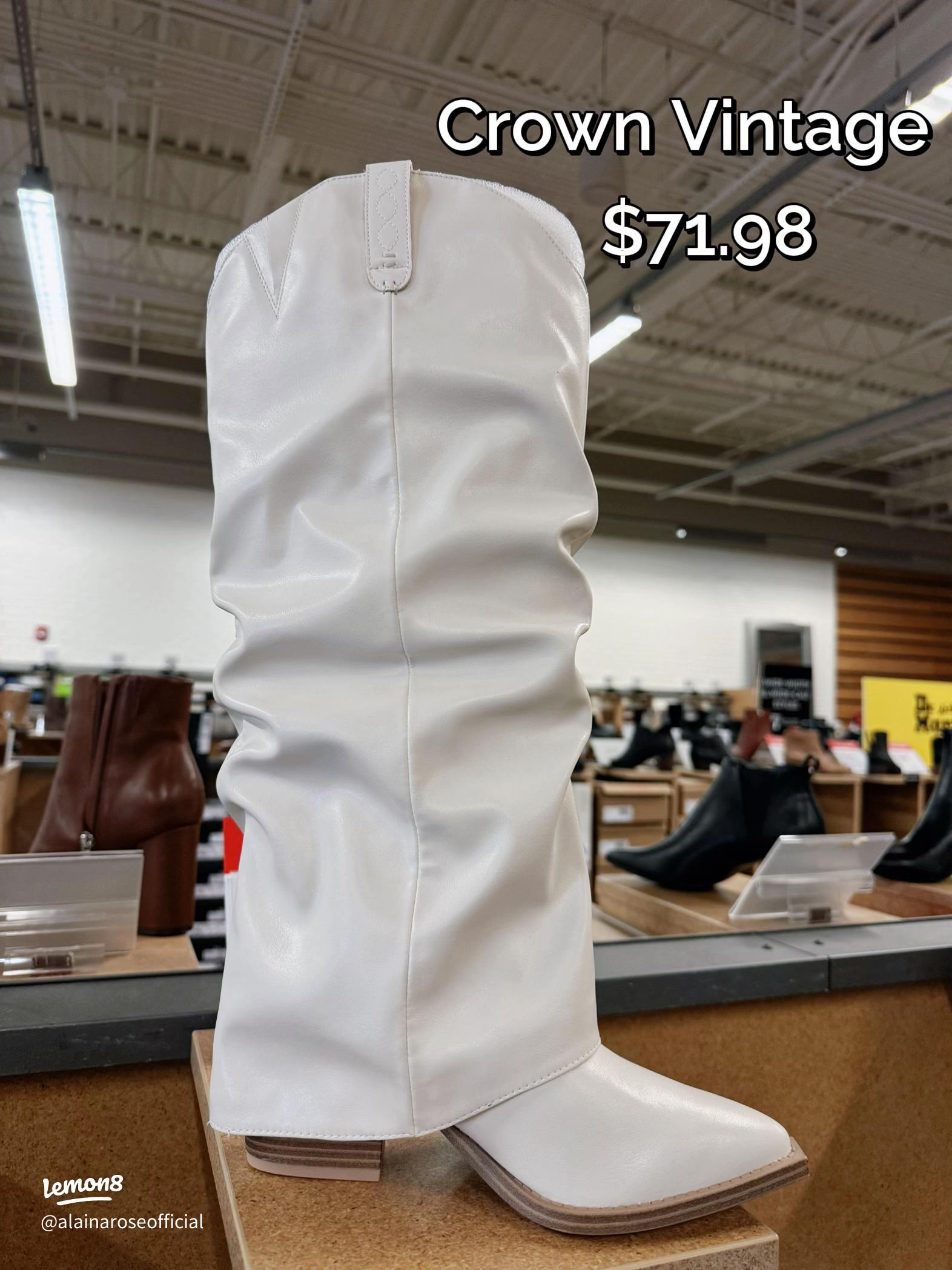
The Crown Vintage Wide-Calf line at DSW deserves a mention in the waterproof-adjacent category. The brand is the DSW house label for the wide-calf range, with the Quincy and Talia knee-high styles published at $89 and $119 in 2026. The Quincy is treated leather with a waterproofing seal but is not rated fully waterproof. The shaft circumference is published at 18 inches and measures 17.75. The Crown Vintage line is the right answer for a woman who wants a sub-$100 boot for occasional rain and snow and is not ready to invest in the FitFlop or North Face tier.
The riding boot, the dress boot, and the ankle-bootie calf math
The category you are shopping for changes the calf-width math in ways the brand listings do not always make obvious, and it is worth spelling out before you make a purchase decision.
The riding boot silhouette, which is the equestrian-inspired knee-high with a flat heel and a structured shaft, is the most calf-circumference-honest category. The shaft is meant to follow the leg line closely and the published number is usually accurate within a quarter inch. Duo, AVA, and the Naturalizer Vera are all riding-boot-adjacent styles. The trade-off is that the structured shaft does not forgive a calf above the published number. If you measure 18.5 inches and the boot publishes 18, the riding boot will not close.
The dress boot, by which I mean the knee-high with a heel above two inches and a more tailored shaft, often runs a quarter to half inch tighter than its published number because the heel angle changes the calf shape when standing. If you are measuring your calf for a dress boot, measure standing in heels of a similar height rather than flat on the floor. The shape of the calf muscle shifts upward and outward in heels, which means a calf that measures 17.5 inches in flats may measure 18 inches in a three-inch heel.
The ankle bootie is the silhouette that solves the calf problem by avoiding it, and a significant portion of plus-size women default to ankle boots for that reason. The reality is that a well-fitted knee-high is a different silhouette than a tall ankle bootie, and the two are not interchangeable. If your wardrobe is missing the knee-high silhouette, the answer is to find the right brand, not to give up on the category. The spreadsheet I keep treats the ankle-bootie shortcut as an avoidance pattern, not a solution.
Slouch boots, the soft-shaft styles that crumple at the ankle by design, are the most forgiving category for calves in the 16 to 17 inch range because the shaft is engineered to pool rather than close tightly. They are the wrong answer for a calf above 18 inches because the shaft will not pool. It will simply not close.
The 2026 price comparison at a glance
The brands in this guide cover a real price range from $79 at the entry tier up to $360 at the British custom-calf tier. The cost-per-wear math changes the picture once you factor in expected lifespan. A Torrid faux-leather boot at $99 with an eighteen-month lifespan costs about $1.10 per wear on a two-wear-a-week schedule. A Duo full-grain leather boot at $295 with a six-year lifespan costs about $0.95 per wear on the same schedule. The Duo is the cheaper boot per wear despite the three-times-higher upfront cost.
That math only works if the boot fits, which is the entire point of measuring your calf before you buy. A boot that does not close at all has a cost-per-wear of infinity, regardless of the upfront price. The spreadsheet protocol below is the work that prevents that outcome.
The 4-brand starter list and the calf-measurement protocol
Here is the challenge, and the protocol that goes with it. Before you buy another wide-calf boot, you are going to do three things in this order.
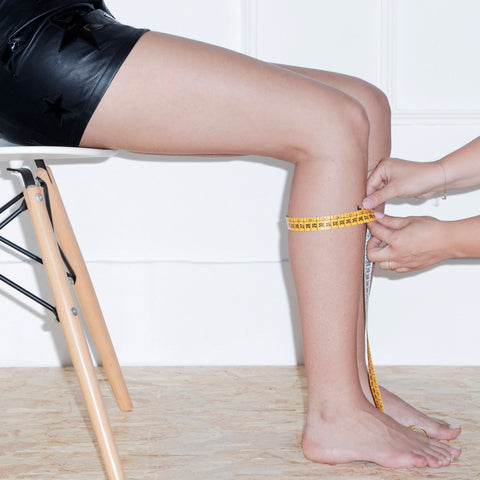
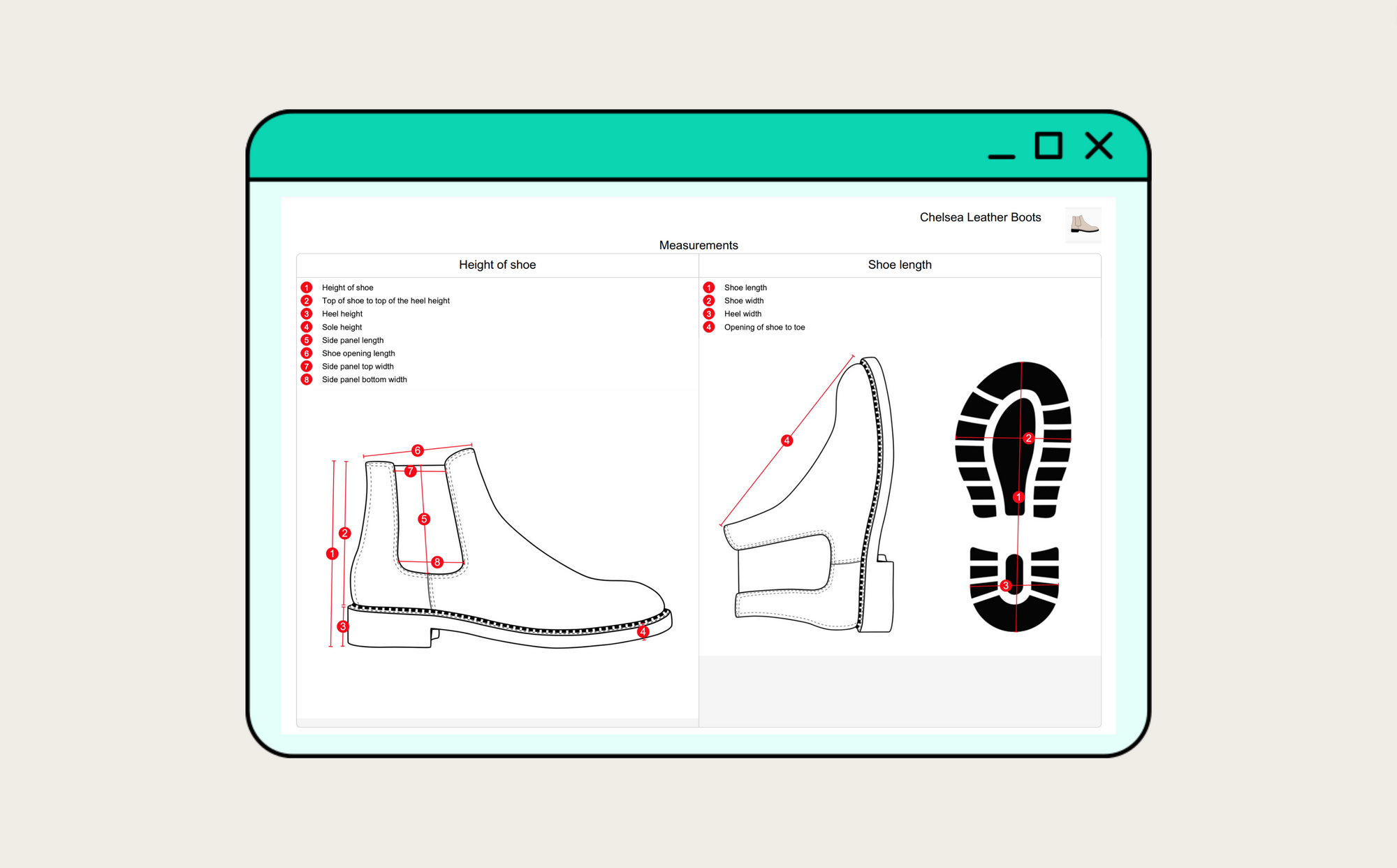
First, measure your calf correctly. Stand on a flat floor in bare feet with your weight evenly distributed on both legs. Use a soft seamstress tape, not a metal carpenter’s tape, and wrap it horizontally around the widest point of your calf, which for most women is three to four fingers below the back of the knee. Record the number in inches, not centimeters, because the US boot industry publishes in inches. Repeat the measurement on both legs because they are rarely identical. Record the larger number. Do this measurement at the end of the day, between 5 PM and 8 PM, when your leg is at its full natural circumference. The morning measurement will under-state your true number by a quarter to half inch and will set you up to buy a boot that compresses by 6 PM.
Second, set your filter range. Add half an inch of breathing room to your end-of-day measurement for a riding-boot or structured silhouette. Add a full inch for a heeled dress boot. Add an inch and a half for a casual or slouch silhouette. That number is the minimum shaft circumference you will accept on any boot purchase. If a brand does not publish the number, treat the absence as a red flag and ask customer service before you order, or do not order at all.
Third, start with one of these four brands depending on your range. If your end-of-day calf measures 16 inches or below, start with Naturalizer Vera Wide-Calf in the size that fits your foot. If your calf measures 16 to 18 inches, start with Avenue Mona Wide-Calf or the Torrid Stretch Back Knee-High depending on your budget. If your calf measures 18 to 20 inches, start with Long Tall Sally Lola or Comfortview Vegas Super-Wide-Calf. If your calf measures above 20 inches, start with Duo Boots Hatfield or AVA London Bay in the custom calf width that matches your measurement. Those four brands cover the entire 14 to 22 inch range with at least one good option per range, and the 2026 catalog from each is currently live and shippable.
That is the protocol. Measure correctly, filter strictly, start with the right brand for your range. The Lisbon afternoon and the third pair of stalled boots is what every wide-calf shopper has been through, and it is what stopped being acceptable to me the moment I started keeping the spreadsheet. The four brands above are where I would send my closest friend tomorrow if she told me her calf measured 18.5 inches and she wanted to wear a knee-high boot this winter for the first time in a decade. Go measure. The boot exists. You just need to know which one.