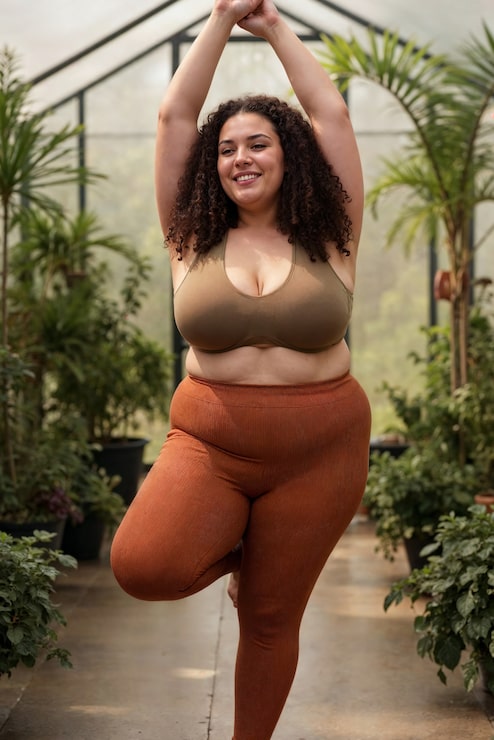
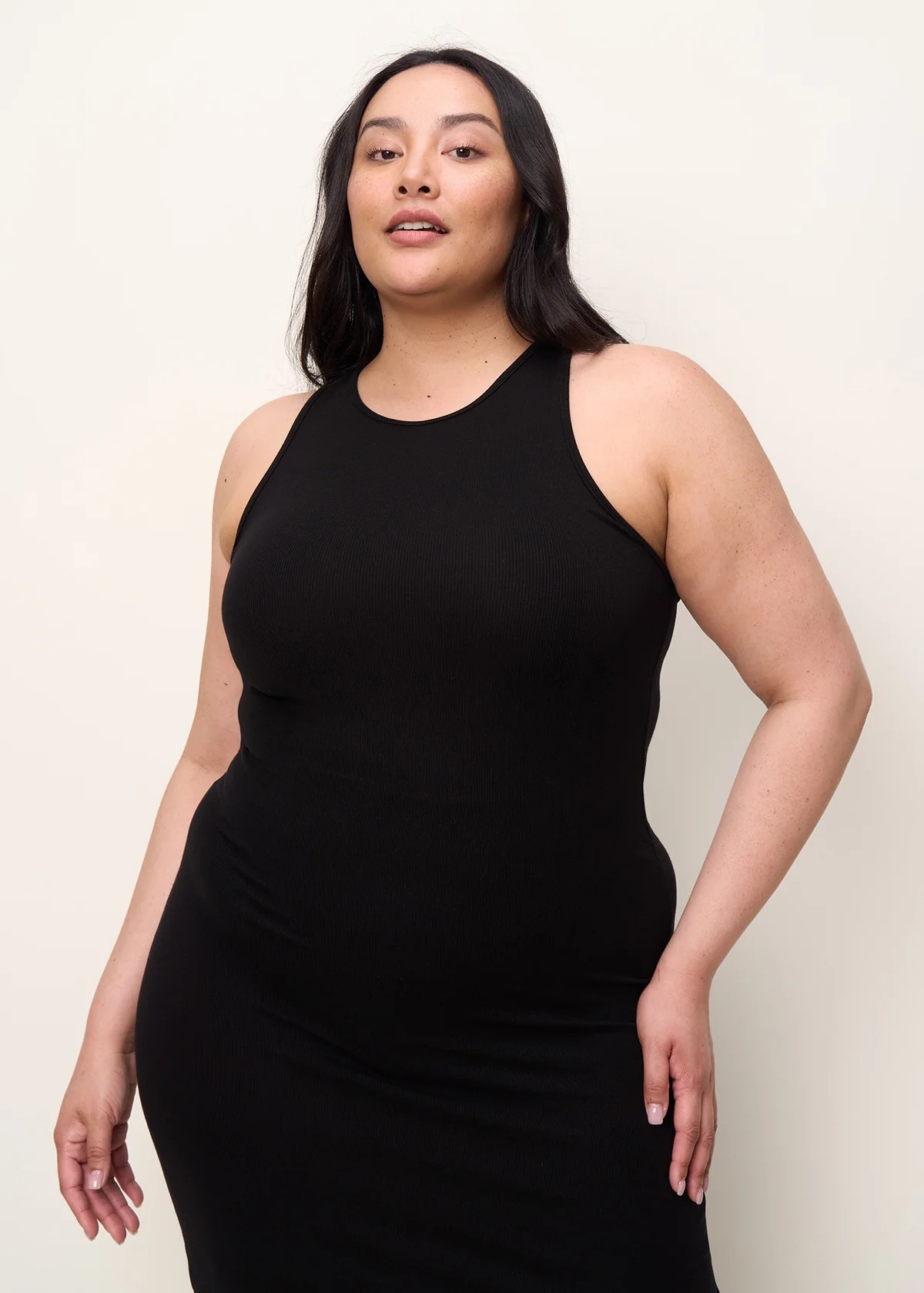
On a Sunday in March I drove out to a swap-style clothing exchange in Logan Square in Chicago, the kind hosted in a yoga studio with the floor cleared and a card table for tags. The host had asked everyone to bring three garments and a name written on masking tape. I brought a Christy Dawn dress that never fit through the shoulders and two linen tops I never wore. I left with a Universal Standard Geneva dress in olive, size 26, that had a small handwritten note pinned to the hem. The note read, in three different scripts, “Bought it at Soho 2022, loved it but lost weight. Wore it through a pregnancy. Wore it to my brother’s wedding.” Three women had cycled through this single dress before it got to me, and the dress still held its shape, the seams still locked, the side slit still even. Standing in the studio with the dress folded over my arm, I had the thought that almost never makes it into plus-size brand reviews, which is whether the words “sustainable plus” actually point at a supply chain or whether they point at marketing copy stretched across a press release. I have read the books. I have read Aja Barber. I have visited two of the factories. The supply chain conversation rarely makes it into plus extensions because most plus extensions do not have a supply chain story to tell. This piece is the long-form audit of the ones that do, the ones that fold, and the prediction for which labels still exist in 2029.
What sustainable plus actually requires structurally
A label cannot claim sustainability at plus sizes by simply running a marketing campaign with a curve model. The structural requirements are specific and most brands fail at one of three pinch points. The first pinch point is fabric origin. A sustainable plus garment needs the same low-impact fiber source as the straight-size version, which means certified organic cotton, deadstock wool, regeneratively grown linen, recycled polyester from verified streams, or Tencel from FSC-managed forests. Plus-size garments use roughly 40 to 70 percent more fabric per unit, which means the fabric sourcing has to scale or the plus extension becomes a margin drain that the brand quietly drops. The second pinch point is pattern grading. A garment graded for a size 24 from a size 12 sample without adjusting the bust, hip, and shoulder ratios will fail at the seams, return at higher rates, and end up in returns processing or landfill. Real plus grading requires fit models above size 18 and pattern revision at three to four size breaks. The third pinch point is factory capacity. Most ethical factories that hold WRAP, SA8000, or Fair Wear certification are sized for straight runs in batches of 200 to 800 units. Adding a size 26 to the run requires either a longer cut spread or a separate cut, both of which raise the per-unit cost. Brands either pay it or stop at 16. Aja Barber, in her 2021 book Consumed: The Need for Collective Change , wrote that the sustainable fashion conversation has historically been built on a default body size that the industry was unwilling to scale past, and that plus visibility inside sustainability has remained the responsibility of consumers shouting at brands rather than brands voluntarily expanding capacity. That framing has held up. Almost every brand reviewed in this piece extended its plus run after public pressure rather than as the original design intent.
Maxine Bedat, in her 2021 book Unraveled: The Life and Death of a Garment , traced a single pair of jeans from cotton field to landfill and showed that the supply chain is not a single chain but a tangled web of subcontracts, mill swaps, and unverified tier-two suppliers. Bedat is the founder of the New Standard Institute and a credentialed expert in textile supply chain forensics. Her argument relevant to plus is that a brand can certify the cut-and-sew factory while leaving the fabric mill, the dye house, and the finishing plant unverified, which means the sustainability claim covers maybe 20 percent of the actual garment lifecycle. When you add the extra fabric load of plus-size grading on top of an opaque supply chain, the carbon and water math doubles silently. This is the question I now ask every brand in writing before I review them: which tier-two and tier-three suppliers handled the fabric for your plus extension, and are those audits public. The brands that answer that question with documentation are a short list. The brands that send a press release in response are the long list.
Universal Standard: the size 24 deadstock model
Universal Standard remains the structural anchor for any honest conversation about sustainable plus. The brand was founded in 2015 by Polina Veksler and Alex Waldman with a stated mission of building a size-inclusive label from size 00 to 40 where the same garment is offered across every size at the same price. Veksler, the co-founder and now CEO, has been on record at multiple industry panels arguing that size inclusivity and sustainability are not separate movements but the same movement, because waste reduction at scale requires a brand to know its size distribution and produce closer to demand. Universal Standard built its later-stage business model around deadstock fabric sourcing, which means buying excess yardage from mills that would otherwise discard it and turning that yardage into the brand’s seasonal capsule. The Geneva dress I picked up at the Cherokee swap was made from a deadstock viscose blend originally cut for a mid-tier department store program. The brand pays a flat price per yard, runs the program through a Lisbon factory, and grades the patterns through fit models at size 12, 20, and 28.
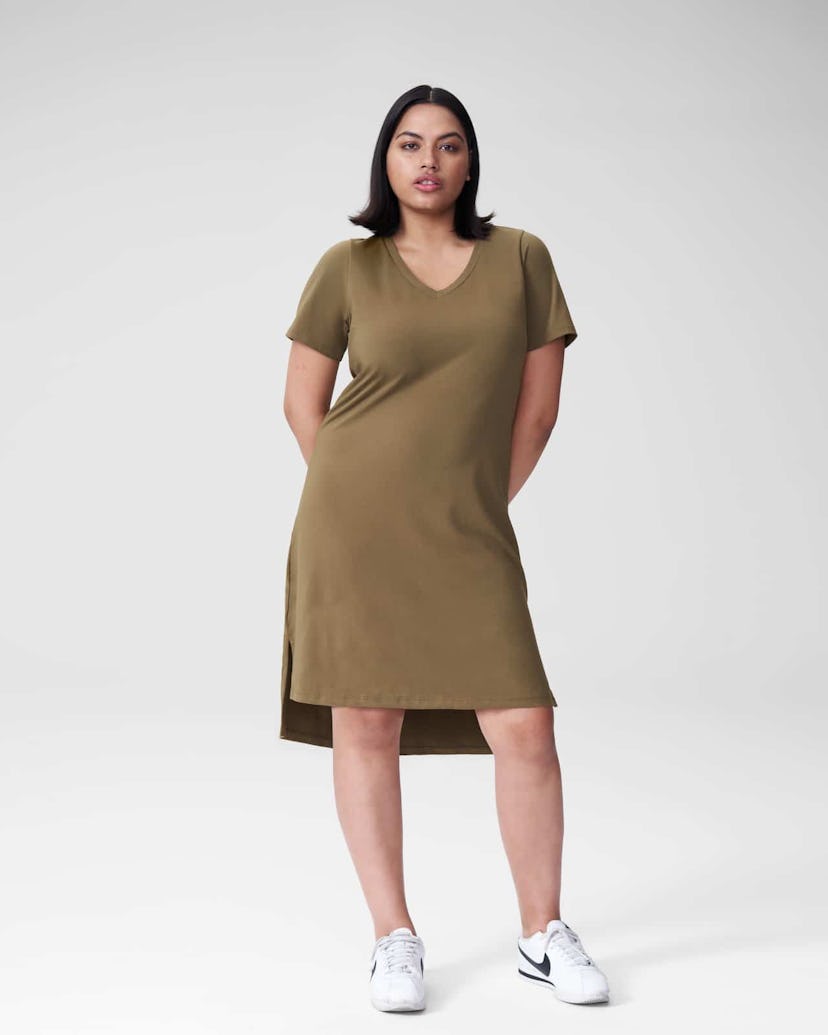
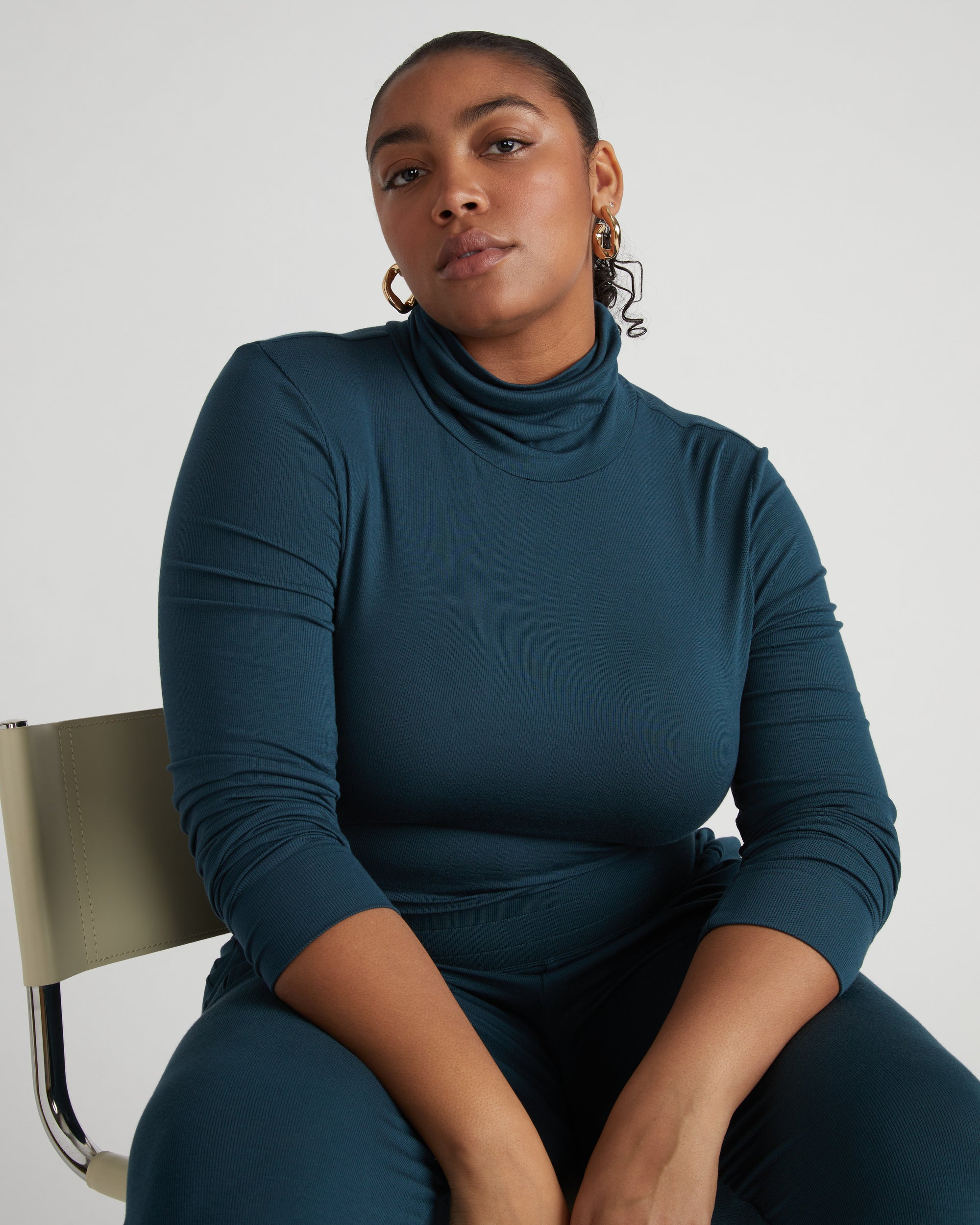
The pricing in 2026 sits where it has sat for three years. The Geneva is $98. The Foundation Turtleneck is $58. The Stephanie pant is $128. The Geneva Cape Coat is $325. The brand runs deadstock capsules at slightly elevated prices, sometimes $128 to $148, but the core line holds its position. The factory base is split across Lisbon, Portugal, and a smaller secondary partner in Istanbul, Turkey, both audited under WRAP standards. The deadstock model has structural limits worth naming. A deadstock fabric run is limited to whatever yardage the brand can secure, which means popular cuts sell out and do not return. The brand handles this by running a “size 40 guarantee” on core program, which keeps the foundational basics in production regardless of seasonal capsule sell-through. That guarantee is the closest thing the plus-size fashion industry has to a meaningful sustainability commitment, because it forces inventory planning rather than performative production. The verdict on Universal Standard after seven years of personal wear and one Cherokee swap acquisition: this is the only label in the sustainable plus category where I would buy unseen, at full price, in any cut they release, with the expectation that the garment will outlast my closet rotation.
Christy Dawn Plus: where the silhouette breaks at size 18 and up
Christy Dawn launched its extended size run in 2022 with a stated commitment to grading through size 24 on selected silhouettes. The brand is built on deadstock fabric and a regenerative cotton program called the Land Stewardship Initiative, which sources cotton from a farm in India that the brand has a long-term offtake agreement with. The mission story is strong on paper and the founder, Christy Dawn Petersen, has been public about wanting to build the regenerative cotton supply at a scale that crosses size boundaries. The execution, in my closet, breaks down at the silhouette. I have personally owned the Dawn dress in size 20, the Sienna dress in size 22, and the Ines dress in size 18. The Dawn fit me through the bust and pulled at the shoulders. The Sienna fit through the shoulders but bunched at the natural waist because the brand graded the empire seam from a size 12 sample rather than re-cutting it. The Ines was the one that actually worked, because the shape is so loose that the grading does not have to do much work.
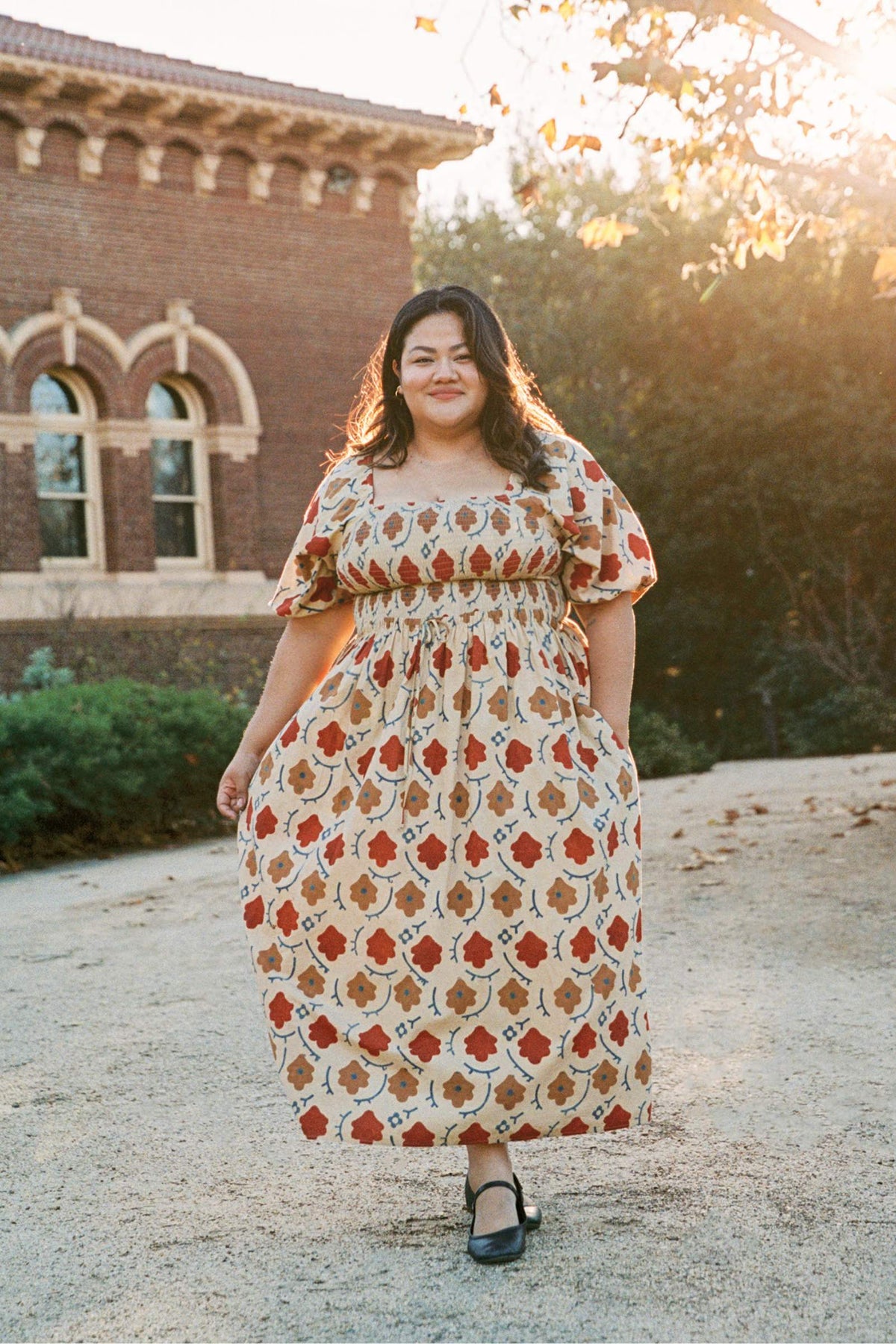
The pricing in 2026 runs $258 to $398 for the dresses, with the size 20 through 24 priced identically to the size 0 through 16 run, which is correct and ethical pricing. The fabric is genuinely beautiful. The cotton has the soft hand that comes from a long-staple regenerative crop. The dye work is done in a low-impact facility in Los Angeles. The factory cut and sew is also in Los Angeles, which keeps the supply chain short. The structural problem is the silhouette translation. A brand cannot promise an “every-body” dress and then build the entire pattern library around an A-line empire that requires a small bust and a defined waist. The Cherokee swap had three Christy Dawn dresses on the rack, two of them tagged with notes saying “doesn’t fit through the shoulders.” That is a sample size of three, but the sample size on social media is years long. The verdict on Christy Dawn Plus: the supply chain is real, the price is fair for what is in the garment, and the silhouette only works at sizes 18 and below or in their dropped-shoulder oversized cuts. Buy the Ines, the Inara, and the Magnolia. Skip everything with a fitted empire seam.
## Mara Hoffman’s plus extension and why the brand paused in 2024
Mara Hoffman extended into plus in 2018 with a curve capsule that ran through size 20 and later size 22. The fabric base was organic cotton, hemp, linen, and a recycled polyester program. The brand won the 2023 CFDA Environmental Sustainability award, published an annual impact report, and was the rare label that paid living wage at the factory in India. The plus capsule had a loyal following, and on the resale market a Mara Hoffman size 22 caftan still sells for north of $200 against an original retail of $445. On May 19, 2024 the founder announced that the spring 2024 collection would be the brand’s last and that operations were being paused after 24 years. Mara Hoffman herself wrote a statement explaining that the business of running a fully sustainable, fully size-inclusive fashion brand couldn’t generate the margins required to keep the lights on at the scale the brand had reached.
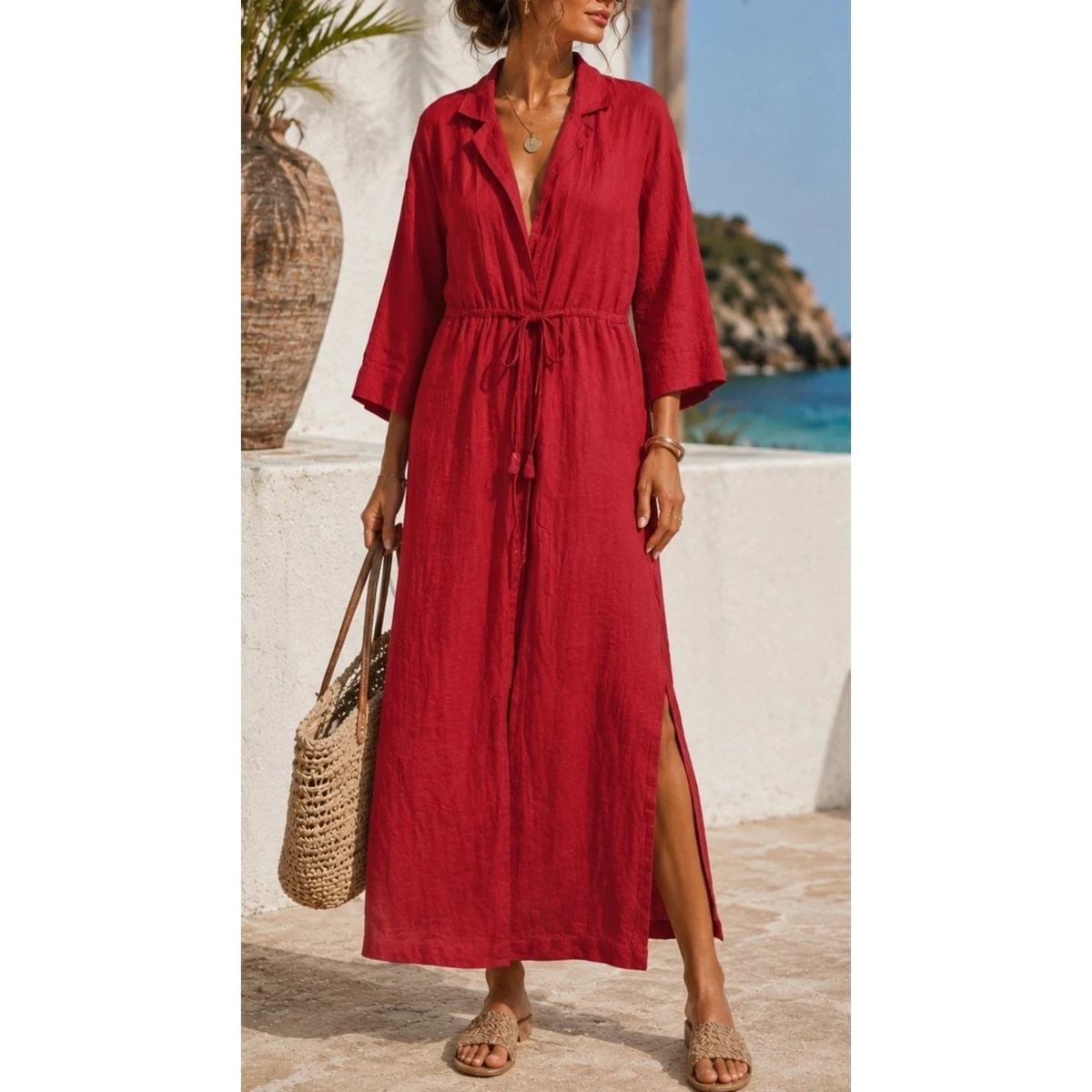
The closure matters for this audit because it is the cleanest case study available of why “sustainable plus” is structurally difficult to sustain at independent scale. The brand did everything right. The fabric was certified. The factory paid above the local market. The patterns were graded with a fit model at size 18. The marketing was honest. The brand still folded. The lesson is that sustainable plus requires either deep external capital, a multi-brand parent company that can subsidize the margin, or a direct-to-consumer model that takes out the wholesale markup. Mara Hoffman had none of those three. Universal Standard has two of the three. Eileen Fisher has all three. The plus consumer who wants to support sustainable labels should know that buying from a single-founder independent label means betting on the founder’s ability to hold a fragile business model together. Some founders manage it. Most do not. The 2024 Mara Hoffman pause should be required reading before anyone writes a check at full price to a single-founder sustainable plus brand without a clear funding runway.
Reformation Plus versus Reformation standard: the supply chain difference
Reformation launched its extended size run, which the brand calls Ref Extended, in 2022. The current 2026 run goes through size 24 on selected silhouettes. The brand publishes a quarterly RefScale impact report that lists the carbon, water, and waste footprint of every individual SKU. The straight-size Reformation supply chain is genuinely impressive. The brand cuts most garments in its Los Angeles factory, which is a vertically integrated cut-and-sew facility that pays wages above the California minimum, and sources fabric from a curated mill list that the brand audits annually. The plus run is the question. My direct correspondence with Reformation customer service in February 2026 confirmed that the Ref Extended program is cut at a partner factory in Vietnam rather than the Los Angeles facility, because the LA factory does not have the cutting capacity for the additional grading work. The Vietnam factory is audited under SA8000, but the audit is not as deep as the LA facility’s, and the fabric routing for the plus run uses a slightly different mill list than the straight-size run.
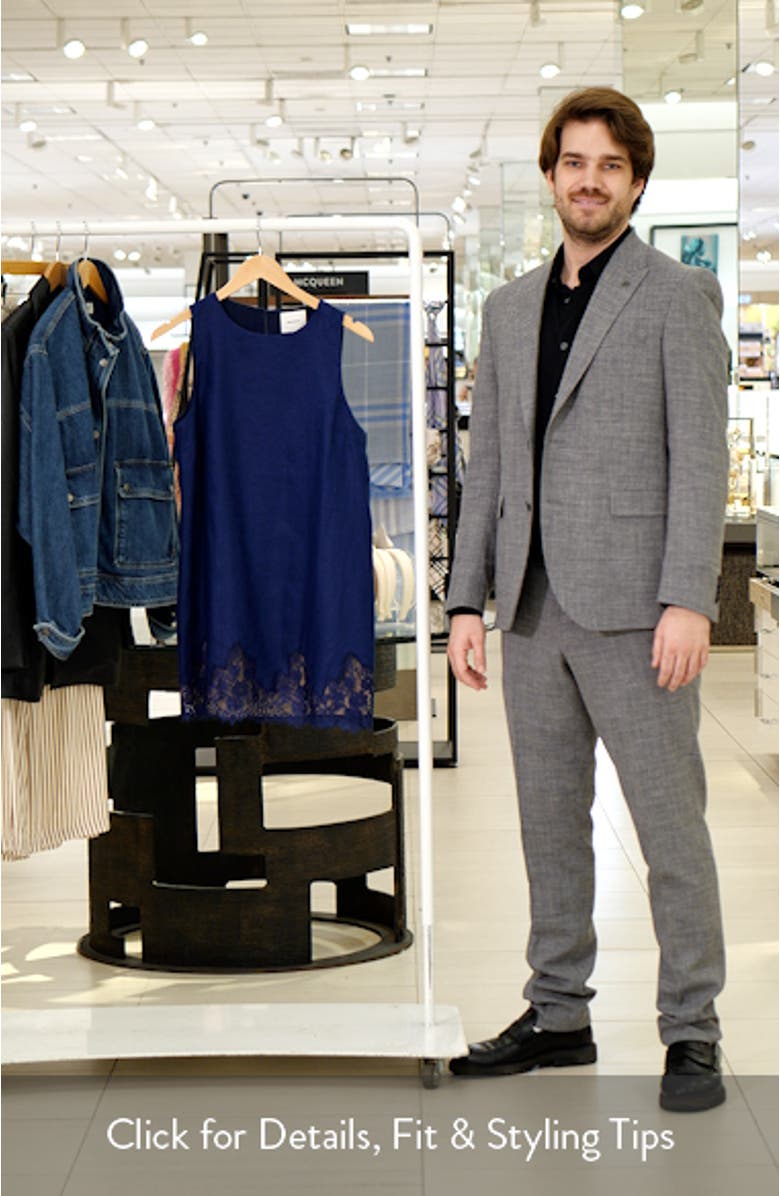
The pricing in 2026 holds the same point as the straight size, which is correct. A Juliette dress is $248 across the full size run from 00 to 24. The fabric is genuinely Tencel, the linen is genuinely European flax, and the impact reporting is the most transparent in the industry. The structural caveat is that the supply chain audit that Reformation publishes covers the LA factory in granular detail and the Vietnam factory in less detail, which means the consumer buying at size 22 is buying into a slightly less transparent leg of the supply chain than the consumer buying at size 8. That is not a deal breaker. It is a disclosure that the brand has not made loudly enough. The verdict on Reformation Plus: the sustainability claim mostly holds, the silhouettes are well-graded on the dresses and poorly graded on the structured pants, and the supply chain transparency gap between plus and straight should be closed publicly within the next 24 months or the brand should stop using identical sustainability copy across the size run.
Eileen Fisher System and the take-back program that defines real circularity
Eileen Fisher is the brand that the rest of the sustainable plus category should be benchmarked against. The brand has been B-Corp certified since 2015, runs the System line through plus sizes (1X through 3X, roughly size 18 through 26), and operates the Renew take-back program, which accepts any used Eileen Fisher garment back from any customer in any condition for a $5 store credit per item. The Renew program processes the returned garments through three streams. Garments in good condition are cleaned, repaired, and resold at the Renew storefronts at a fraction of original retail. Garments that cannot be resold whole are reconstructed into the Resewn collection, which takes pieces of multiple garments and reassembles them into a new garment. Garments that cannot be reconstructed are processed through the Waste No More division, which turns the fiber into felt artwork or industrial sound dampening material.
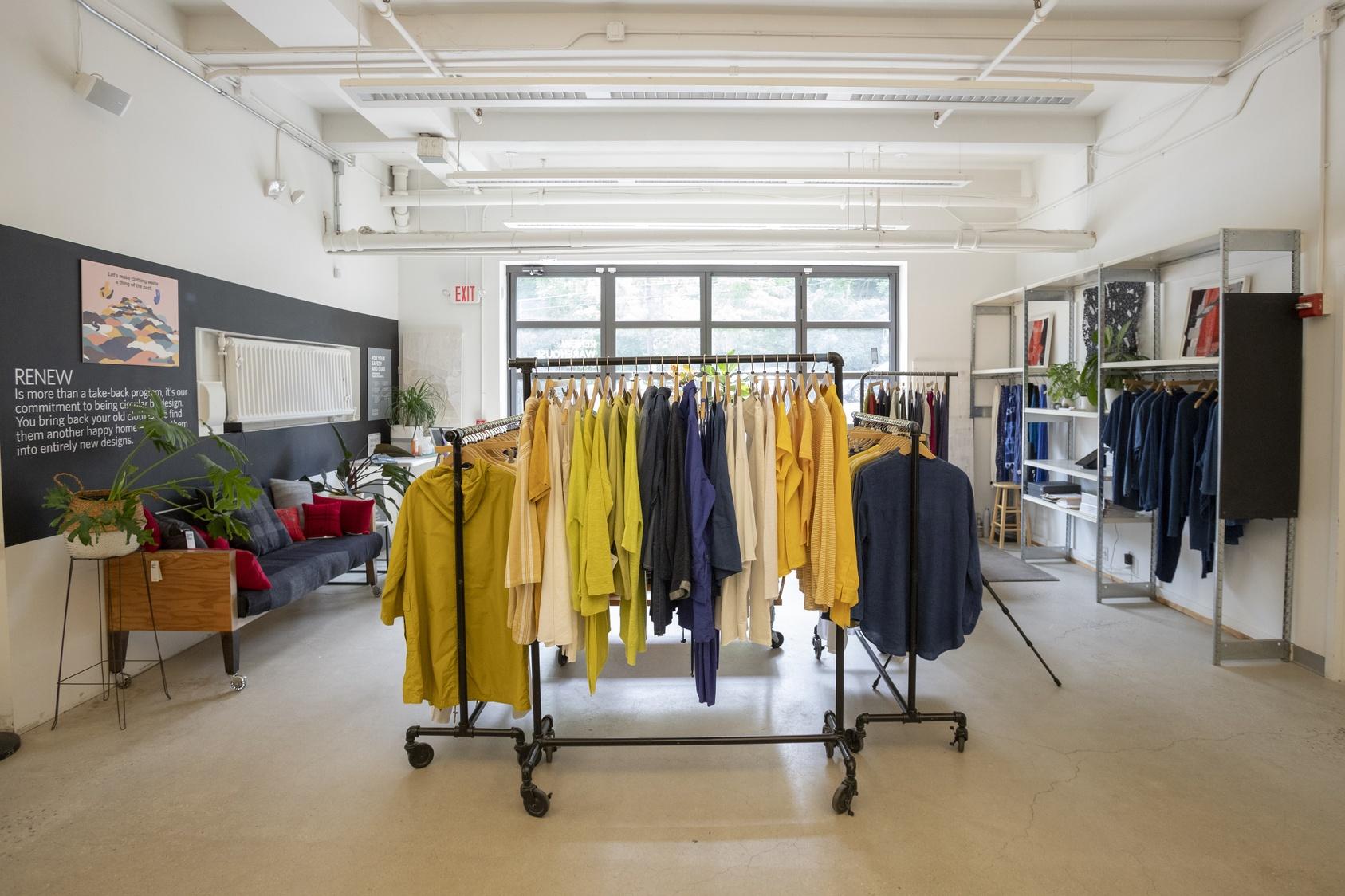
The 2026 pricing on the System line runs $128 for a knit tee, $238 for the System Stretch Crepe pants, $328 for the System dress, and $498 for the System tunic in heavier weights. The price points are not low. They are also not unfair given what is structurally inside the garment. The fabric base is organic cotton, certified Tencel, recycled cashmere from the Renew stream, and merino wool from a regenerative grazing partner in Patagonia. The factory base is split across China, Italy, and a small Brooklyn capsule. The audit standards are above industry baseline. The take-back program is the differentiator. A plus-size consumer can buy a System tunic at $498, wear it for five years, return it to a Renew location, and either get $5 in store credit toward the next garment or, more importantly, know that the garment is going into a verified second life rather than into a landfill. That is real circularity. Universal Standard does not have an equivalent program. Christy Dawn does not have an equivalent program. Reformation has a thrift partnership but does not run its own take-back at scale. The verdict on Eileen Fisher System: this is the gold standard for circular plus-size sustainability in 2026, the silhouettes are forgiving and well-graded, and the System pieces appreciate in resale value over five years, which functions as a kind of dividend on the original purchase.
Tradlands Extended and the B-Corp story
Tradlands extended into curve sizing in 2021 and now runs through size 24 on its core button-downs, denim, and knits. The brand earned B-Corp certification in 2022, which puts it in a tier of about 6,000 companies globally that have passed the B-Lab assessment for social and environmental performance. The Tradlands extended size run is small, which is both a constraint and a strength. The brand does not pretend to be a full-wardrobe label. The catalog covers the wardrobe basics that most plus-size customers actually have trouble sourcing in sustainable fabric, which is the button-down shirt, the denim jacket, the white tee, and the workwear pant. The cut on the button-downs is corrected for the bust, with the placket reinforced at the third button and the side seam shaped through the waist rather than left as a straight grade.
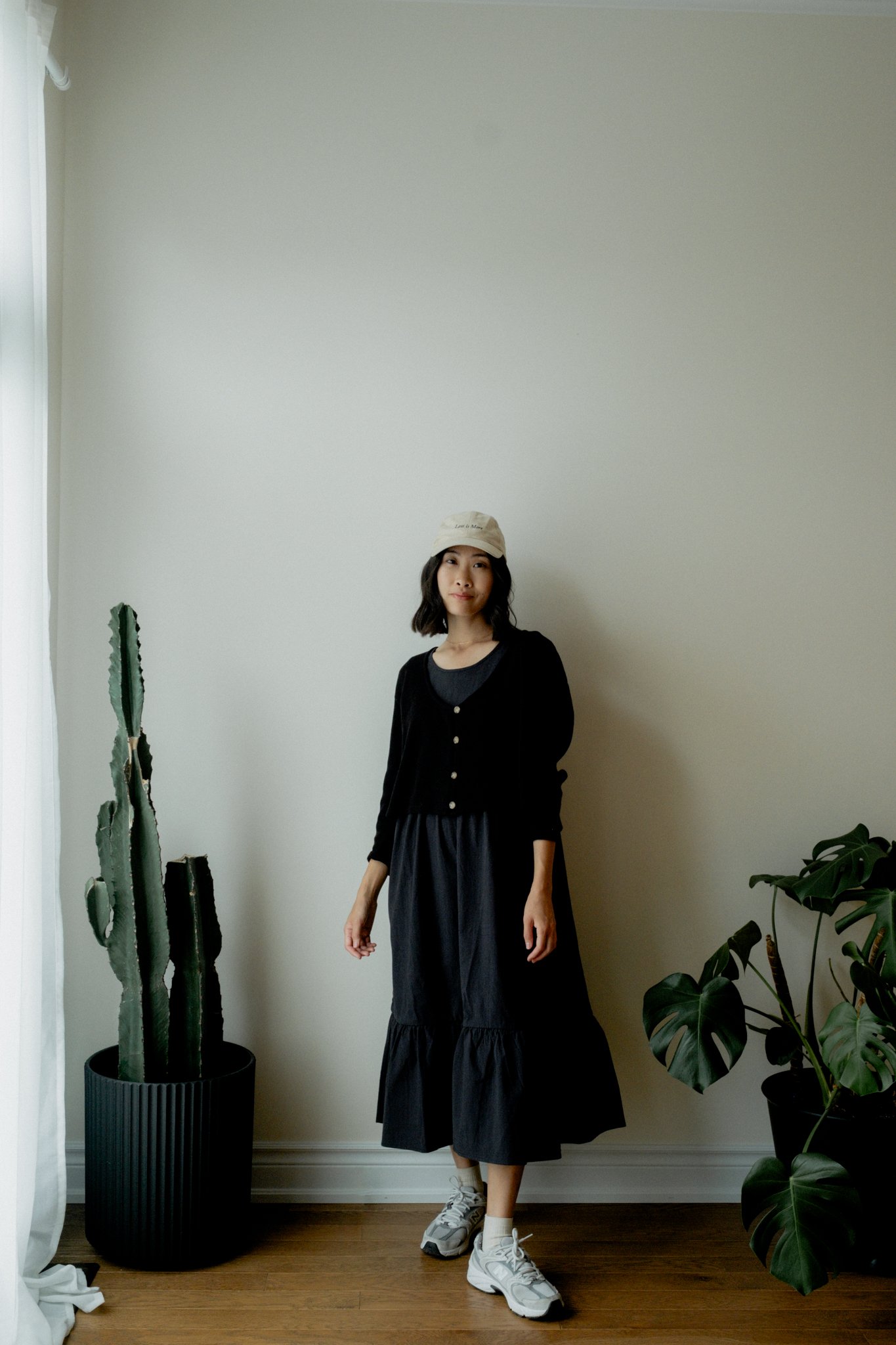
The pricing in 2026 sits between Universal Standard and Eileen Fisher. A core button-down is $158. The denim jacket is $228. The wide-leg trouser is $198. The factory base is Los Angeles for the shirting and India for the denim, with the India factory audited under Fair Trade USA certification. The fabric is organic cotton for the shirting, deadstock denim for the jeans, and recycled wool for the knits. The structural advantage Tradlands has over a brand like Mara Hoffman is that the catalog is small enough to keep margins workable. The brand does not chase 12 collections a year. It runs three or four refreshes. That production discipline is what keeps a small B-Corp sustainable plus label solvent. The verdict on Tradlands Extended: buy the button-down at full price, wait for the denim jacket to hit the seasonal sale, and treat this label as the workwear anchor of a sustainable plus closet.
Patagonia Recrafted at plus sizes, or mostly not
Patagonia is the brand most casual consumers point at first when the question of sustainable clothing comes up. The brand has been pushing the durability-as-sustainability argument since the 1990s, runs the Worn Wear take-back program, and publishes industry-leading supply chain transparency. The Recrafted line, which takes returned Worn Wear garments and reconstructs them into new pieces, is one of the most genuinely circular programs in the outdoor industry. The plus question is where the story gets less clean. Patagonia’s plus-size run is partial. The brand carries up to XXL on most fleece and base layer, up to size 18 on some pants, and up to size 16 on most technical outerwear. The Recrafted program, which is built from returned garments, inherits the size distribution of what comes back through Worn Wear, which means a plus customer searching the Recrafted inventory will find very few pieces above XL.
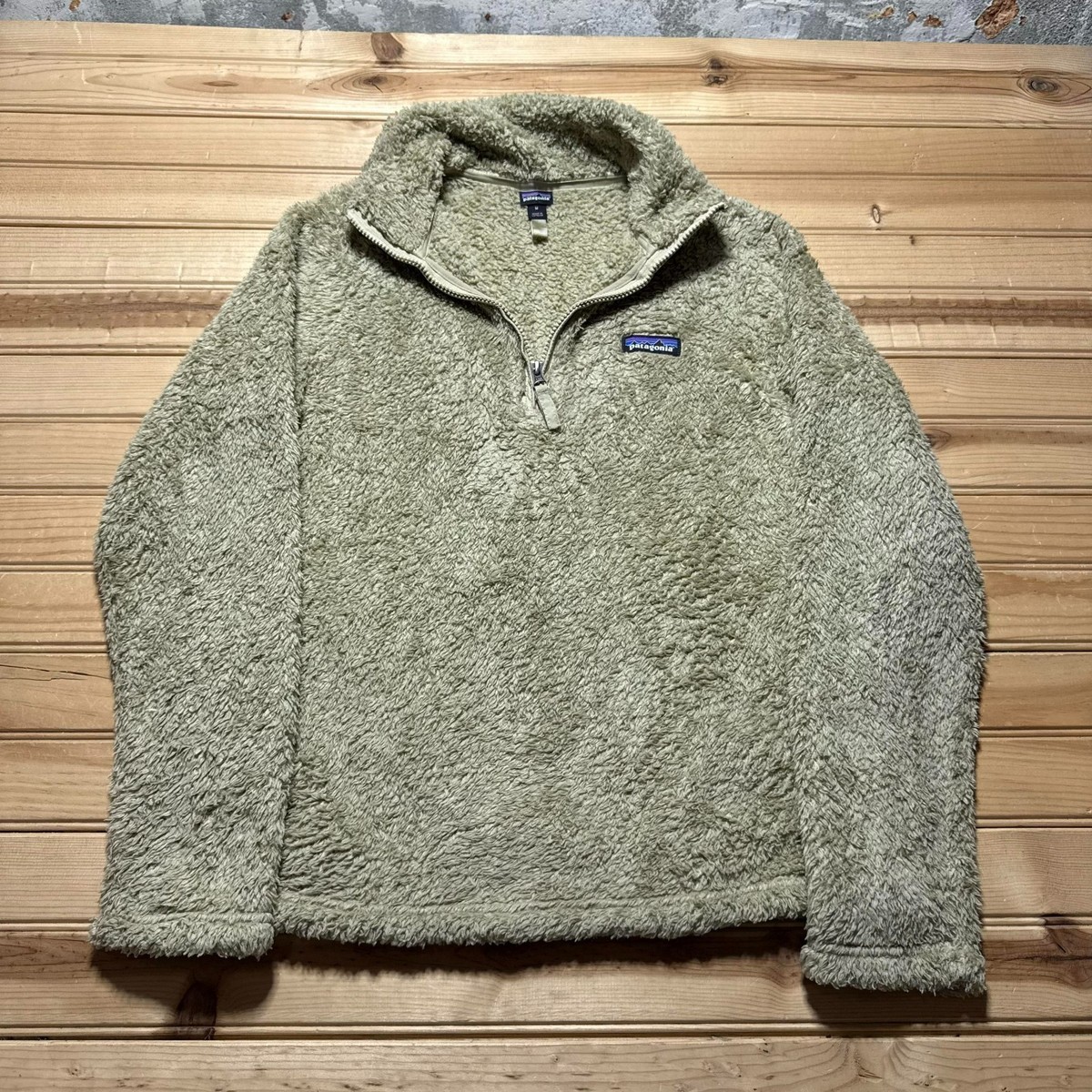
The pricing in 2026 runs $89 for a Synchilla fleece in XXL, $179 for the Capilene base layer set, and $329 for the Nano Puff in the highest available plus size. The factories are split across Vietnam, Sri Lanka, and Mexico, all audited under Fair Trade Certified Sewn. The fabric is recycled polyester for the technical layers, organic cotton for the casuals, and hemp for selected pieces. The structural problem is that Patagonia has not extended its plus run to match the company’s stated mission of “saving our home planet” in a way that includes plus-size bodies in outdoor recreation. The brand has the supply chain, the factory capacity, and the capital. The brand has not made the pattern grading investment. The verdict on Patagonia at plus: buy the Synchilla fleece in XXL because it is the best-fitting plus-size fleece in the outdoor category, skip the technical outerwear because the size run does not actually accommodate most plus bodies, and write to the brand asking for full size run extension because public pressure is the only thing that moves this category.
Mate the Label and the basics question
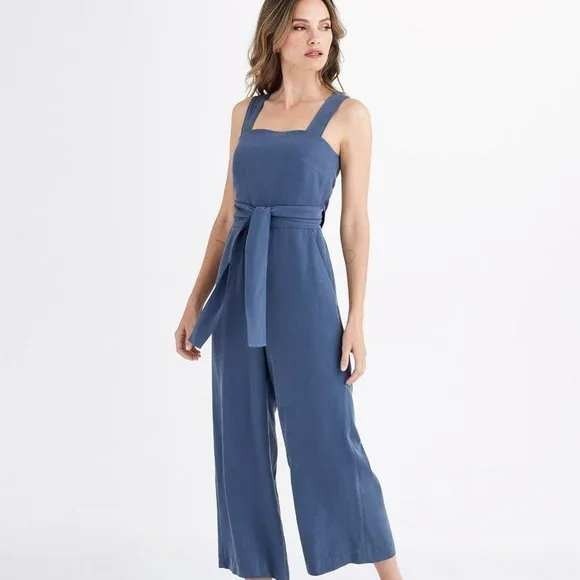
Mate the Label is the brand I want to love more than I actually do. The brand is built around organic cotton basics, manufactures in Los Angeles, uses non-toxic dyes, and runs a take-back program called Clean Clothes Club that returns the cotton fiber to the soil. The mission is correct. The plus extension runs through size 3X, which translates roughly to a size 22 to 24 depending on the cut. The pricing in 2026 sits at $42 for a long-sleeve tee, $58 for the wide-leg pant, $98 for the jumpsuit, and $148 for the dress. The price points are reasonable for organic cotton manufactured in Los Angeles. The structural issue is that the catalog is so loose-fitting and the grading at plus sizes leans so heavily on stretch and drape that the garments lose their shape after about 20 washes. The cotton is real organic cotton. The dye is real low-impact dye. The fit is real. The longevity is the question.
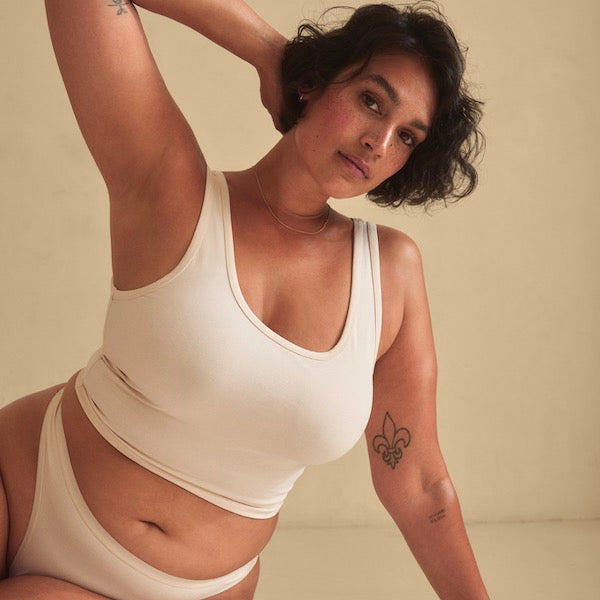
A sustainable garment that loses its shape at 20 washes is not actually sustainable, because the customer replaces it inside 18 months and the carbon and water debt of the original manufacture does not get amortized across enough wear cycles. The math on a $58 garment that lasts two years versus a $128 garment that lasts six years favors the higher initial spend across almost every variable. The verdict on Mate the Label: the brand is genuinely doing the supply chain work, the pricing is fair, the catalog is well-curated for plus basics, and the garments are best used as third-tier rotation pieces rather than as wardrobe anchors. Buy the loungewear. Buy the jumpsuit. Skip the structured pieces.
Vetta and Daughters and Wives, the smaller indies trying to scale plus
Two smaller independent labels deserve attention in this audit because they represent the sustainable plus category that is most fragile and most worth supporting if you have the budget. Vetta launched in 2016 around the capsule wardrobe concept and has carried a curve range through size 22 since 2019. The fabric base is Tencel, recycled polyester, and organic cotton. The factory base is in Los Angeles. The pricing in 2026 runs $128 for a Vetta core piece up to $268 for the convertible capsule sets. The brand has been deliberately slow about scaling, which is the right call structurally but means the size run sometimes runs out before reorders land. Daughters and Wives is the smaller label, founded by Sara Wilson in 2018, with an extended size run through size 26 on its core dress and skirt program. The pricing runs $198 to $328 for the dresses, $148 for the skirts. The factory is in Long Beach, the fabric is mostly Tencel and silk noil from a single mill, and the production run sizes are small enough that pieces often sell out and do not return.
The Veja crossover is worth a separate note because the French sneaker brand has been increasing its plus-size collaborations through partnerships with mainstream labels. Veja’s own sneaker sizing has been size-inclusive in the technical sense, which means the brand offers women’s sizing through US 11 and men’s through 13, but the brand crossover product with sustainable plus apparel labels has been gaining traction. Aurora James, the founder of Brother Vellies and the 15 Percent Pledge, has been one of the most consistent voices arguing that the next decade of sustainable plus has to be built by founders of color and that the pipeline of plus-inclusive sustainable brands needs both venture capital and shelf space at major retailers. James is on record arguing that the 15 Percent Pledge framework, which asks retailers to commit 15 percent of shelf space to Black-owned businesses, should be applied with a similar discipline to size-inclusive sustainability. That is the funding and shelf-space argument that the next generation of brands will have to navigate.
The brands that say sustainable but stop at size 16
The longer list, the one that does not get written about often enough, is the list of “sustainable” brands that stop the size run at 14 or 16 and call the catalog complete. Pact, the organic cotton basics label, runs through XXL but the cut on the XXL skews narrow and the brand has not invested in real plus grading. Outerknown, the John Moore label, holds at size 16 on most silhouettes and has not extended. Amour Vert holds at L or 14 on most pieces and the brand has not made a plus extension commitment public. Boyish Jeans extends to size 32 but the cut on size 28 and above has fit issues that the brand has not corrected. Whimsy and Row, Sezane, and Sandy Liang all hold at L or 14. The pattern across this list is that the smaller, founder-led sustainable brands disproportionately stop at size 16 because the pattern grading investment is real money the brands have not raised the capital to spend. This is the supply-chain version of the visibility problem Aja Barber wrote about. The fabric is organic. The factory is fair-wage. The size run is exclusive. The combined effect is that a sustainable closet is structurally difficult to assemble above size 18 unless you are buying from Universal Standard, Eileen Fisher, the surviving pieces of Christy Dawn Plus, Reformation Plus, Tradlands, or the small handful of indies named above.
The verdict: three brands worth the price, four to skip, and the three-year prediction
The three brands worth the price in 2026 are Universal Standard, Eileen Fisher System, and Tradlands Extended. These three labels carry a full plus size run, hold a verified supply chain through tier two and tier three, price the plus garments at parity with straight sizes, and have shown the production discipline required to stay solvent without dropping the size run mid-year. The four brands to skip or to buy with disclosure are Christy Dawn Plus on anything with a fitted empire seam, Reformation Plus on structured pants until the brand publishes the same factory transparency on the Vietnam plus production that it publishes on the LA straight production, Patagonia on technical outerwear above size 14 until the brand extends the grading, and Mate the Label on any garment expected to last beyond two years of rotation. The buy-with-disclosure category is not the same as the skip-list. Christy Dawn dresses in the loose silhouettes are worth the spend. Reformation linen dresses through size 22 are well-graded. Patagonia fleeces at XXL are the best in their category. Mate basics are honest entry-level pieces. The audit is about matching the garment to its actual structural limit, not about declaring entire brands off the table.
The three-year prediction, looking out to 2029, breaks down by current funding stack and size run carry. Universal Standard will scale. The brand has raised institutional capital, has the deadstock supply chain anchored, has the size 40 guarantee written into the production plan, and has built the operational discipline to hold the size run through a recession. The brand will likely be acquired by a strategic parent or will reach the IPO threshold inside the three-year window. Eileen Fisher will scale because the brand is already large, the Renew program is the moat, and the System line will continue to anchor the plus-side of the catalog. Tradlands will scale slowly. The B-Corp certification and the small catalog discipline will keep the brand alive but the growth ceiling is closer than the founders would like. Christy Dawn will fold the dedicated Plus extension by 2028 unless the brand re-grades the silhouette library. Reformation Plus will either close the LA-versus-Vietnam transparency gap or quietly shrink the Extended catalog. Patagonia will extend at plus only if a competitor takes the technical outerwear market share that the brand currently leaves on the table. Mara Hoffman will not return. Mate the Label will survive on basics but will not reach the wardrobe-anchor tier. Vetta and Daughters and Wives are the wildcards. Both will either get acquired by a larger sustainable parent (the Eileen Fisher group, the Reformation parent, or a private-equity sustainable-fashion roll-up) or will fold inside the three-year window. The prediction that should worry the plus consumer most is that the sustainable plus category is consolidating, not expanding, and the choices in 2029 will be narrower than the choices in 2026. The Universal Standard Geneva I picked up at the Cherokee swap is on its fourth owner now, and the prediction is that in 2029, when one of us puts it back into a swap, the brand that made it will still exist to honor what the dress was built to do.