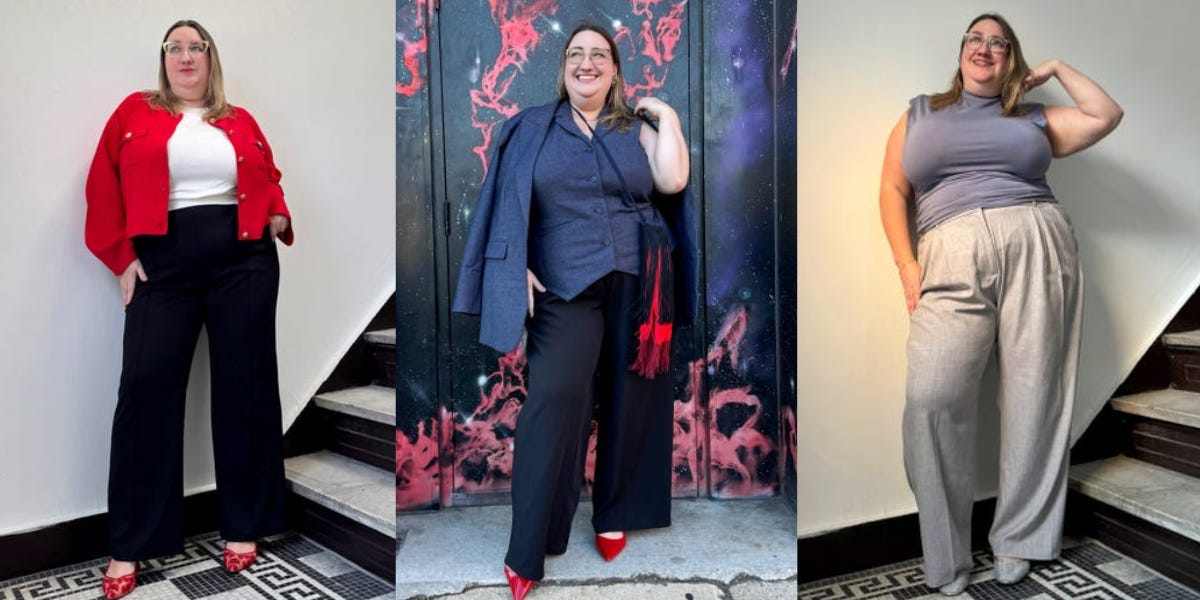
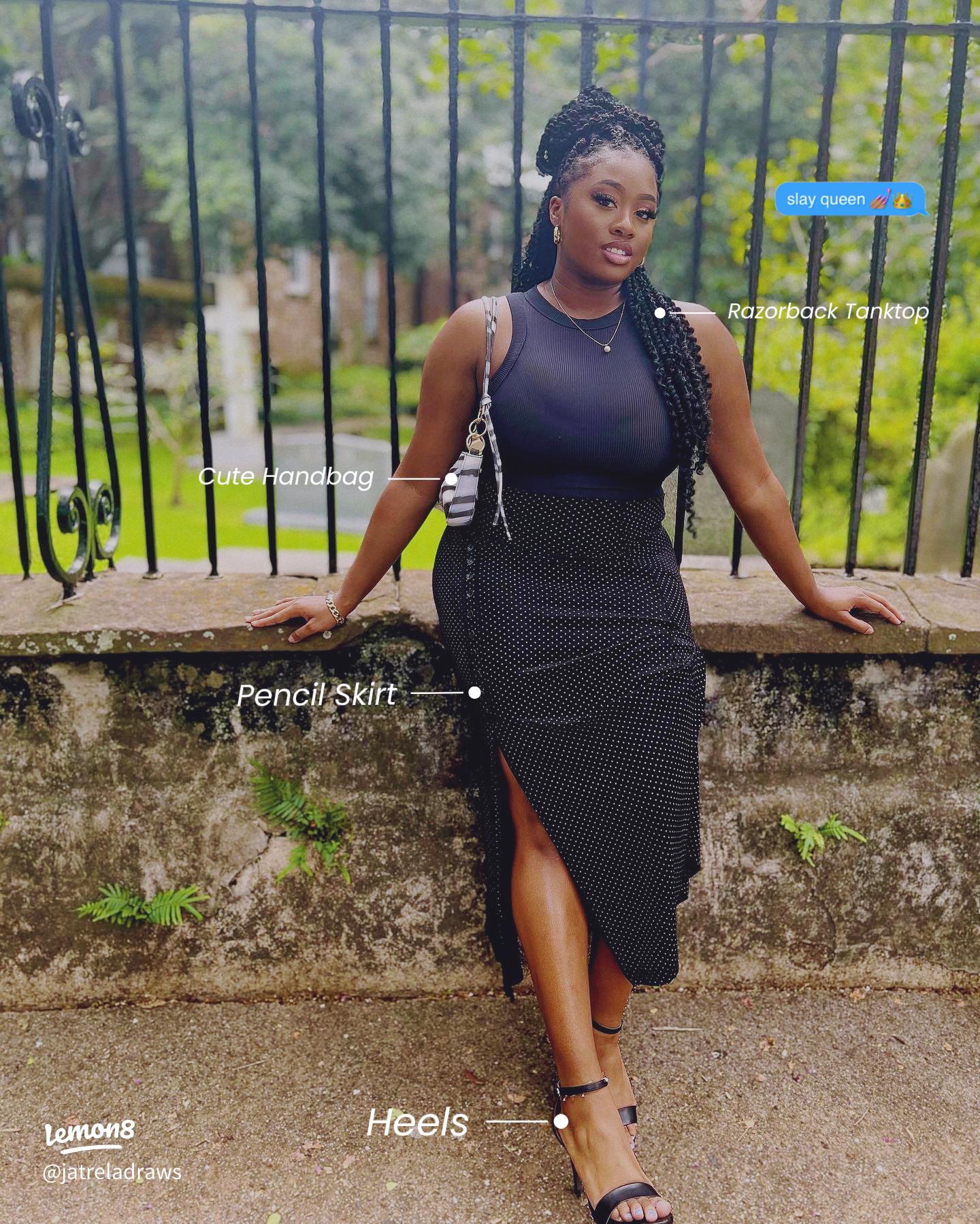
There is one question that separates a genuinely good extended-size workwear range from a badly executed one, and it is not about fabric or price. It is whether the brand drafted a separate pattern for the larger sizes or simply graded up a sample cut for a much smaller body. That choice is invisible on a product page and obvious the moment you put the garment on, because it decides where the waistband sits, whether the back waist gapes, and whether the shoulder seam lands on your shoulder. This guide is about the soft, overtly feminine end of officewear, the bow blouses and pencil skirts and puff sleeves, and which brands have done the pattern work at size 18 through 22.
Why feminine officewear is suddenly available again
The quiet-luxury era that dominated offices for a few years, with its cream knitwear and beige trousers and absence of decoration as a status signal, has receded. What replaced it is a return to overt femininity at work: bows at the neckline, ruffles down the placket, pencil skirts cut at or just past the knee, silk and silk-blend blouses with real shine, puff sleeves, kitten heels and ballet flats. The trade press has been calling it office siren since late 2024. Allison Bornstein’s three-word method, the styling framework that spread widely from TikTok and has since been written up across the fashion press, is the vocabulary most working stylists now use to pin an aesthetic down, and for this one the three words land somewhere near polished, feminine and deliberate.
Plus-size shoppers have historically been locked out of exactly this aesthetic, and there are structural reasons rather than conspiratorial ones. A bow at the neckline has to be anchored into a pattern drafted for the bust underneath it, or it sits flat like a sticker. A pencil skirt has to keep its seamed shape while being cut for a larger hip, which is harder than widening a straight skirt. Real silk at an office price point rarely gets extended past a 16 at legacy brands because the fabric cost leaves no margin for a second pattern. What changed over the last two years is that a handful of brands invested in that second pattern, and a handful more did not while marketing as though they had.
Abercrombie Curve Love: the pattern engineering story
The Abercrombie turnaround is one of the more striking retail stories of the past decade and it is directly connected to Curve Love. Fran Horowitz took over as chief executive in 2017 when the company was losing mall traffic and reputational ground, and the business that emerged years later was selling workwear and going-out clothes to adult women rather than logo tees to teenagers. The company has publicly credited Curve Love as one of the structural choices behind that shift. The premise the brand states is a separate pattern rather than a grade-up, cut for a larger hip-to-waist difference, with more room through hip and thigh, no gap at the back waist and a rise recalibrated for the curve.
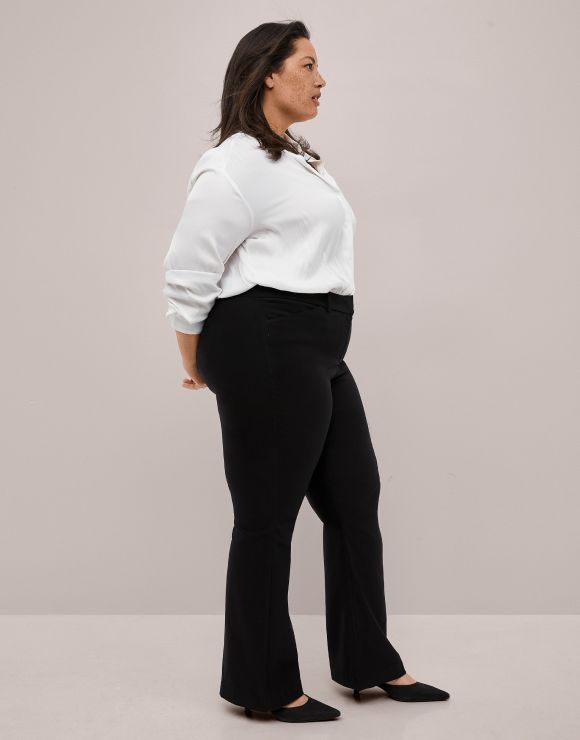
The workwear translation of that pattern is the Curve Love High-Rise Tailored Pant , which sits around the $89 mark at list as of late 2026 in a poly-viscose suiting cloth with elastane for recovery and a matte finish. The things worth checking when it arrives are the three that distinguish a re-drafted pattern from a widened one. Does the waistband sit flat against your lower back, or does it stand away at the centre back? Is the front rise high enough to hold a tucked blouse without rolling when you sit? Is there enough room through the upper thigh that the front of the leg hangs flat rather than showing a horizontal pull line? Those three checks will tell you more in thirty seconds than any review, including this one.
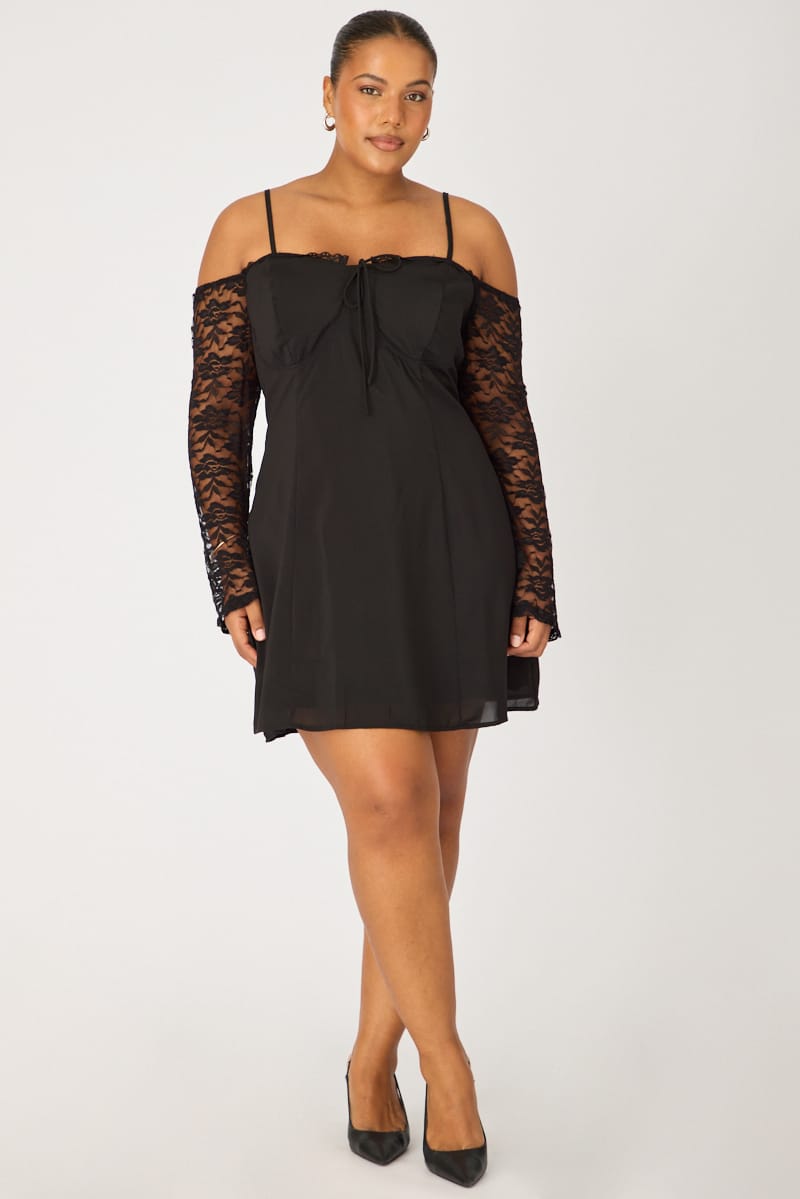
The bow-front mini dress in the same range, listing near $110, is the piece that shows whether a brand has taken the aesthetic seriously, because bow detailing is the easiest thing in fashion to fake. The question is whether the bow is anchored into the pattern or applied to a surface. Two things give it away. The bust dart should end where your bust actually ends, not an inch or two below it, and the side seam should follow the curve from waist into hip rather than running straight down the side of a widened rectangle. If both of those are right, the bow reads as structure. If they are not, the bow reads as decoration stuck onto the wrong shape, and no amount of grosgrain fixes it.
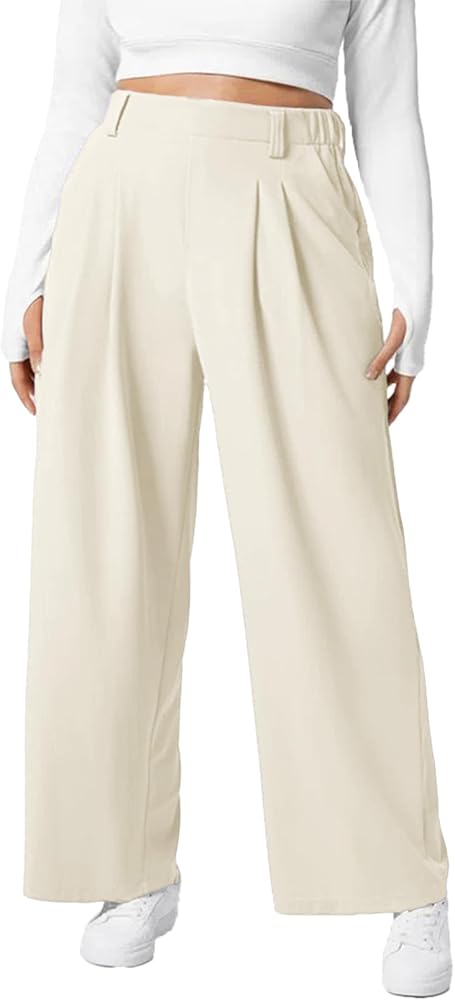
The wide-leg pleat-front trouser in the broader Abercrombie Plus catalogue, listing around $99, is the relief option for days you do not want a fitted bottom. Pleat-front trousers are the hardest silhouette to grade well, and the test is simple: the pleat should lie closed when you are standing still. If it gapes open at the front, the pattern has been widened at the hip without re-drawing the pleat placement, which is the most common failure in extended-size pleated trousers across the whole market. A pleat that stays shut, a fluid drape and a hem that breaks cleanly at the ankle is the whole job.
Banana Republic Curvy: the suiting that holds its shape
Banana Republic spent the first half of the decade moving away from casual mall suiting toward a more elevated position, and the Curvy assortment grew over the same period from a denim-led pilot into a real catalogue of suiting, blouses and dresses. What separates it from the long history of extended lines is that the brand built a separate fit block for the curvy range rather than scaling the straight-size sample, which is the same structural decision Abercrombie made and the reason both brands belong in the same tier.
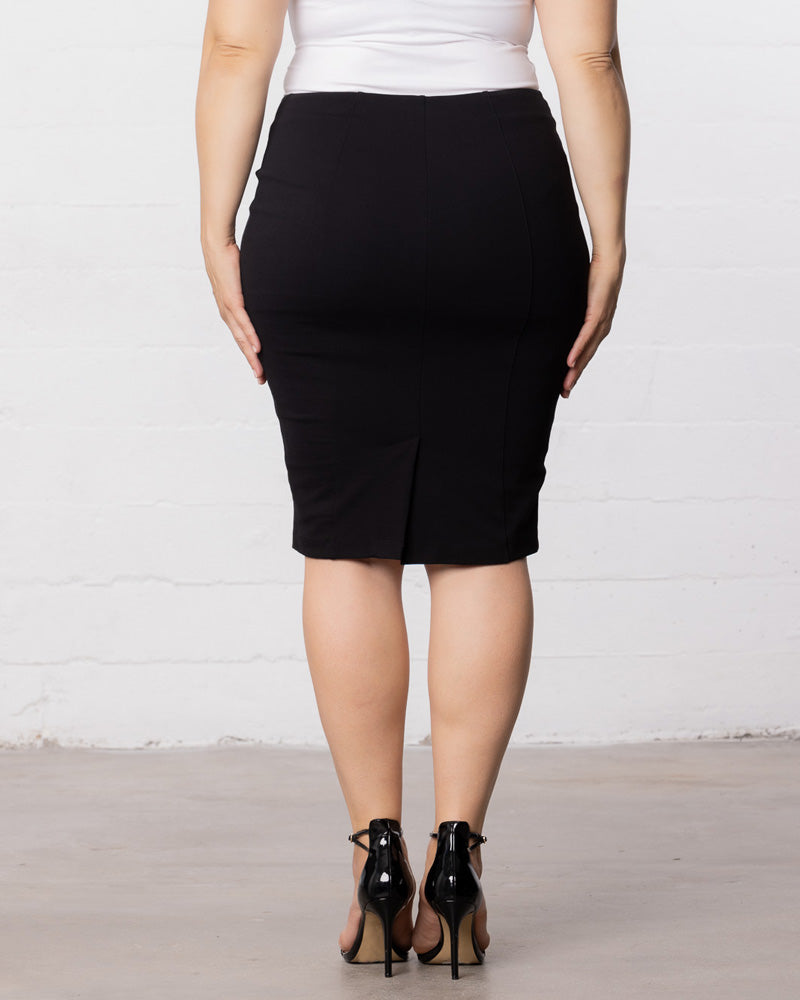
The Curvy pencil skirt, around $109 at list, is the piece to build a capsule on, and the detail that matters is where the widest point of the skirt falls. On a well-drafted plus pencil skirt it sits at the fullest part of your hip. On a widened straight-size pattern it sits lower, which is the geometry that makes a pencil skirt read as a tube rather than a curve. The second thing to test is the back vent. Walk in it. On a graded-up skirt the vent splits open at the slightest stride, because the hip circumference was increased without lengthening the vent or re-balancing the back panels. A vent that stays shut while you walk is the single clearest sign the pattern was drawn for this size.
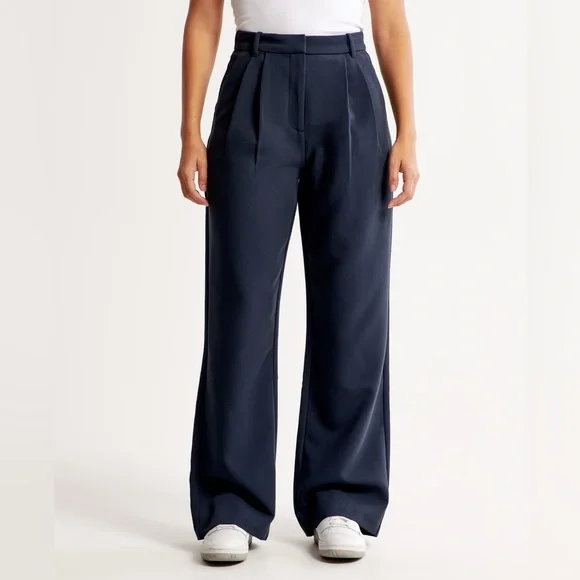
The matching tailored pant, listing nearer $119, is cut from the same block in a slim-straight leg. The useful thing about buying a skirt and pant from one fit block is predictability: if the skirt works, the pant will almost certainly work, which is rare enough in extended sizing to be worth paying for. The construction point to check is the leg taper. Thigh and calf circumference do not scale together on every body, and an aggressive taper that assumes they do produces a trouser that pulls across the thigh and hangs loose at the ankle, which is the exact opposite of slim.
The silk blouse question, and how to read fabric claims
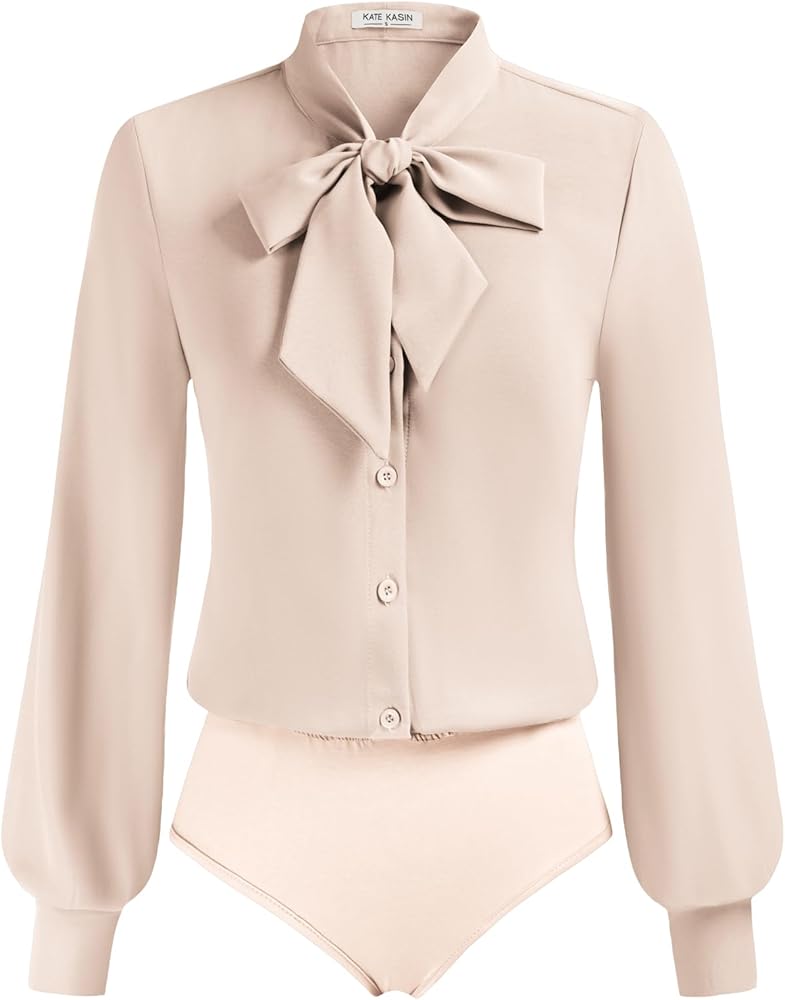
A washable-silk tie-neck blouse in the Curvy range sits around the $150 mark, and that is a real price for real fabric rather than a markup. It is worth knowing how to read the label here, because the language is deliberately slippery. A composition line reading one hundred percent silk is a fact. Words like silky, silk-feel and silk-touch are marketing, and they exist precisely so a brand can charge near a silk price for polyester charmeuse. Check the fabric content tab, not the product name. Silk drapes differently under a blazer, holds a tuck differently and feels different against the skin, and if you are buying one anchor blouse for a capsule, that difference is what you are paying for.
The fit failure to look for on any plus-size blouse is bust gape, meaning the horizontal gap that opens between buttons across the fullest part of the chest. There is a construction detail that predicts it: button spacing. More buttons placed closer together through the bust distributes the strain and stops the placket pulling open when you raise your arms, and a brand that has tightened the spacing on its larger sizes has thought about the problem. A placket with the same button count as the smallest size has not. French darts and a curved hem that stays tucked are the other two signs of a blouse drafted rather than scaled.
Loft Plus and where a lower price tier makes sense
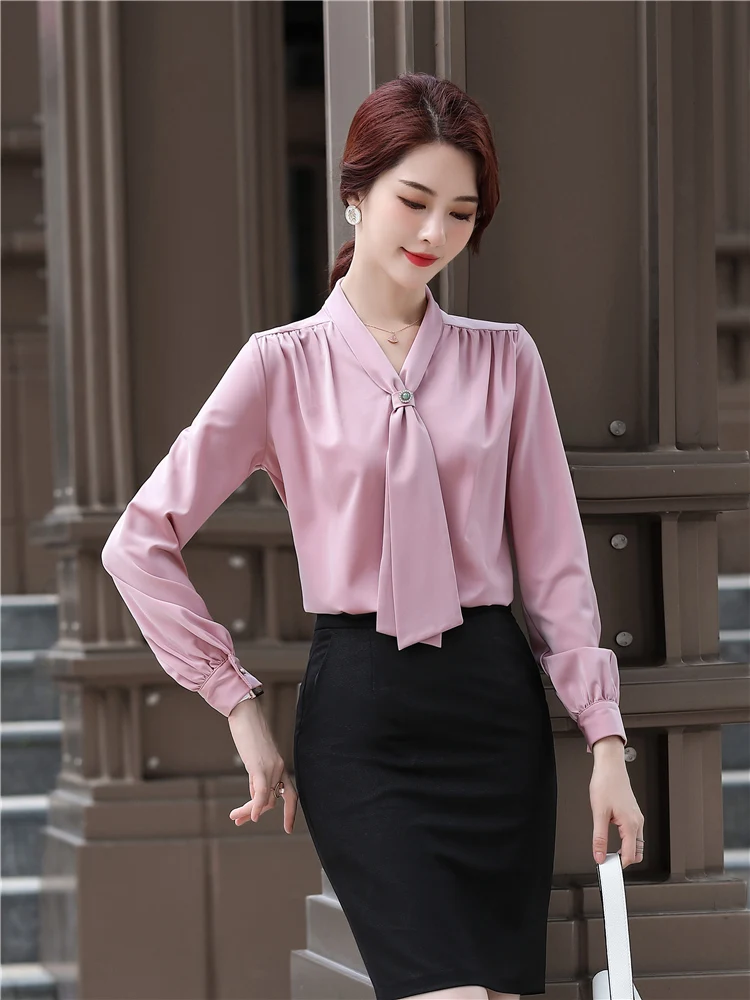
Loft sits a tier below on price and the plus program reflects it: a broader catalogue with less fit-engineering investment behind it. Where it genuinely delivers is the bow-neck blouse category, with rayon-blend wovens in the rough region of $69 to $89 that hit the aesthetic without pretending to be silk. That honesty is worth something. A smooth rayon blouse that washes at home and holds its color is a sensible way to own the look in three colors rather than one, and a tie-neck is a forgiving silhouette that survives a grade-up better than a fitted woven does.
The bottoms are where the lower investment shows, with the same back-waist gap and taper mismatch that define grade-up patterns generally. The sensible approach is a combined-brand capsule rather than brand loyalty: blouses from the lower tier, skirts and trousers from the brands that built a separate fit block. Nobody is handing out prizes for buying an entire outfit from one label, and mixing tiers is how you get the aesthetic without paying premium prices for the pieces where premium pattern work is not required.
Where the legacy brands still struggle
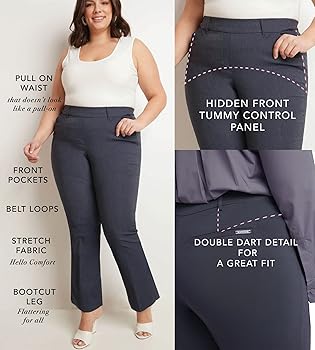
J.Crew’s extended sizing is the clearest illustration of the grade-up problem, and the frustrating part is that the straight-size versions of these trousers are genuinely good. The three symptoms to watch for are consistent across any brand that scales rather than re-drafts. A front rise that sits lower than it should, which makes the front pocket gape open every time you sit down. An aggressive thigh-to-knee taper that pulls across the upper thigh while hanging loose at the ankle. And a waistband curve drawn for a smaller body, scaled up without being re-curved, which stands away at the centre back.
Madewell’s extended program, under the same parent company, launched in 2022 and was narrowed after a later margin review, and the fit logic is the same. The fabric quality is good and the brand identity is consistent. The pattern is not re-engineered. The practical consequence is a budget question as much as a fit question: if a trouser needs the waistband taken in and the rise is still wrong, you are paying the purchase price plus alteration on a garment that will never sit as well as one drafted for the size. If you wear a 16 or 18 and your proportions sit close to the straight-size fit model, both brands can work. At 20 and above, you are paying twice for a compromise.
The brands compared
| Brand | Pattern approach | Price tier | Buy it for |
|---|---|---|---|
| Abercrombie Curve Love and Abercrombie Plus | Separate pattern for a larger hip-to-waist difference | Mid, roughly $89 to $110 at list | Tailored trousers, bow-front dresses, pleat-front wide legs |
| Banana Republic Curvy | Separate curvy fit block across suiting and blouses | Mid-high, roughly $109 to $150 at list | Pencil skirts, matching tailored trousers, washable silk blouses |
| Loft Plus | Grade-up, with forgiving silhouettes in the blouse range | Low-mid, roughly $69 to $89 at list | Bow-neck and tie-neck blouses in rayon blends |
| J.Crew extended and Madewell extended | Grade-up from the straight-size sample | Mid-high | Workable at 16 to 18, budget for alterations above that |
Choosing between the dress and the two-piece
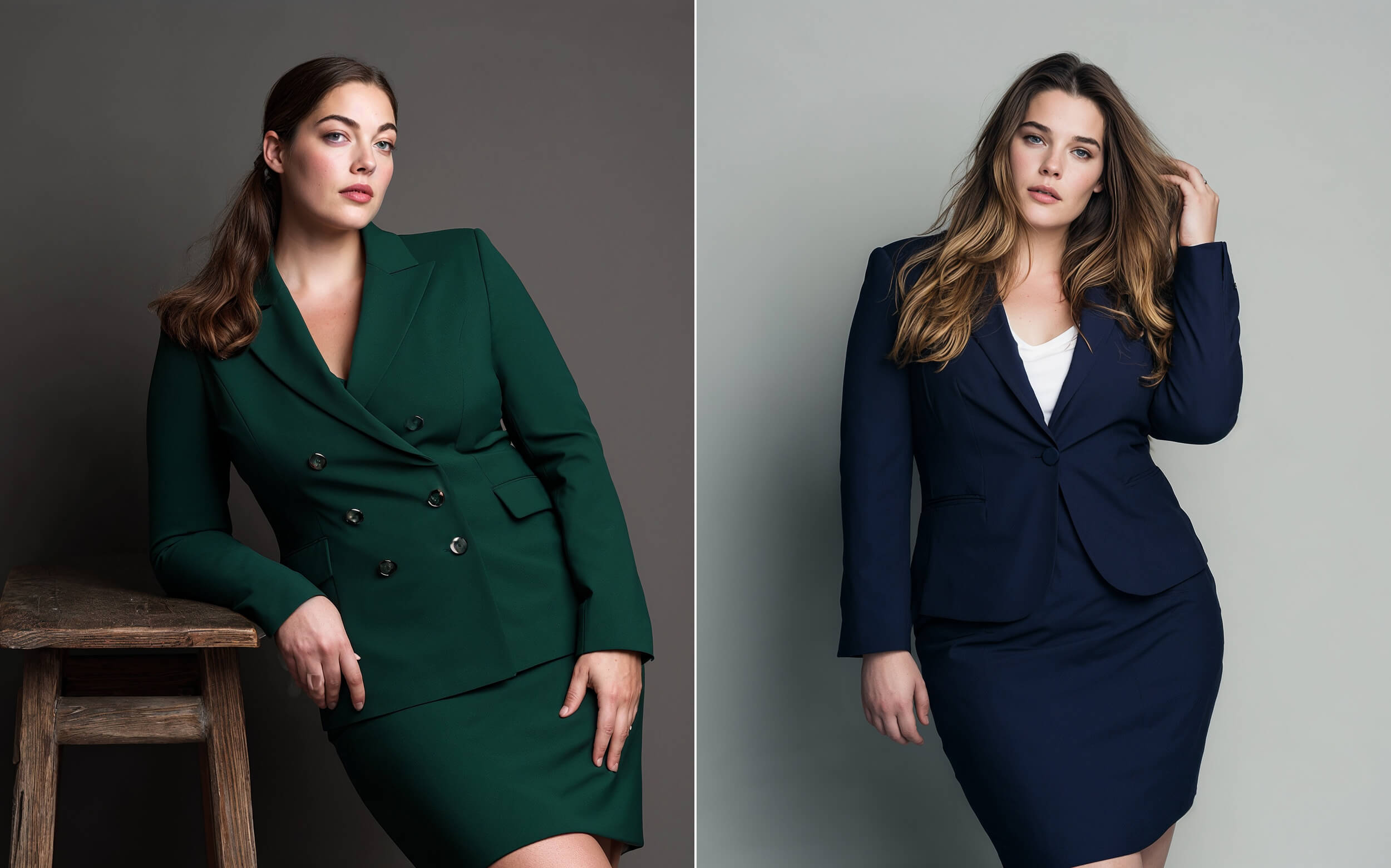
This aesthetic resolves into two reliable silhouettes, and which one to build around is a question of proportion rather than taste. A fitted dress is a single garment sized to one set of measurements, so it works best when your bust and hip measurements are close enough that one size fits both. Where those two numbers diverge significantly, a dress that fits the bust will pull at the hip, or a dress that fits the hip will be loose through the chest, and there is no styling trick that resolves it.
A pencil skirt with a blouse solves that by letting you buy each half at its own size, and the seam break at the waist becomes the structural moment that creates the shape. If your bust and hip are within a couple of inches of each other, start with the dress. If they are further apart, start with the two-piece and accept that you will be buying two sizes. The accessories that anchor both are the same: a closed-toe kitten heel or a ballet flat with a real sole, a structured top-handle bag rather than a slouchy one, and one piece of jewelry doing the work rather than three competing.
Sizing across brands without guessing
Nominal sizes are not comparable between these brands, so the only reliable method is to stop shopping by size number and start shopping by measurement. Take three figures with a soft tape: your natural waist, the fullest part of your hip, and your bust. Then open each brand’s own size chart, which is usually linked from the product page, and order the size the chart gives you rather than the size you wore somewhere else. Where you fall between two sizes on a fitted skirt or trouser, size to the hip and have the waist taken in, because taking in a waistband is a simple alteration and letting out a hip seam usually is not.
Two brand-specific adjustments are worth knowing. On a tie-neck or bow-neck blouse where you want a soft drape rather than a fitted line, going up one size gives you the drape the styling photographs show. And on any brand running a grade-up pattern, a fitted silhouette will need either a size up or a tailoring budget, so factor roughly $40 to $80 for alterations into the real price before you decide it is the cheaper option. A garment that needs no alteration at a higher list price is frequently the better buy.
Building the capsule from zero
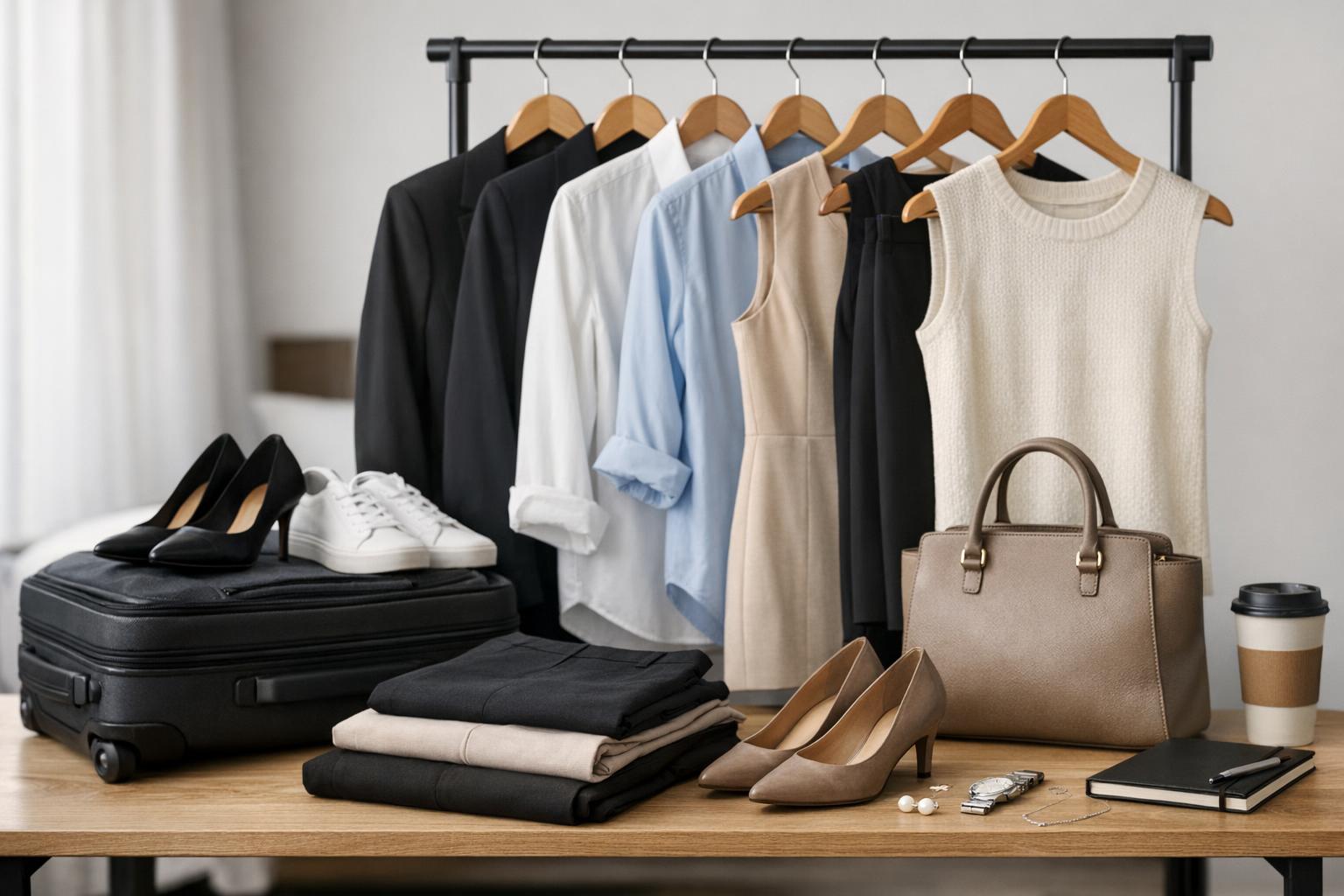
If you are starting with nothing and a budget around $600, the order of purchase matters more than the brand names. Buy the bottoms first, because they are the pieces where pattern engineering is most expensive to fake and where a bad fit is most obvious: one pencil skirt in black and one tailored trouser in black or navy, both from a brand with a separate fit block. Add one anchor blouse in silk or a good silk blend in ivory, which is the piece that lifts both bottoms. Then add two lower-tier tie-neck blouses in colors you actually wear. That is five pieces, roughly five days of outfits, and a sixth look if you add a bow-front dress later for evenings.
Order from each brand’s own size chart rather than from a number you remember, keep the receipts, and run the three checks on every bottom before you cut a tag: waistband flat at the centre back, front rise high enough to hold a tuck, and the vent or pleat staying closed when you walk. On blouses, raise your arms and look for gaping between the bust buttons. Those four tests take a minute and will save you more money than any discount code. The aesthetic is genuinely available in extended sizes now. What still varies wildly is which brands bothered to draft for it, and the checks above are how you tell the difference without taking anyone’s word for it.
A note on money information. This article is general information and not financial advice. It is not written by a licensed adviser and it cannot account for your own circumstances. Consider speaking to a qualified financial professional before making decisions about debt, credit, investing or retirement.